March 12, 2025: Floral Reminiscings

The California Ecology and Conservation class I’m teaching has moved south to Rancho Marino Reserve on the coast of San Luis Obispo County. April is my favorite time of year for wildflowers here, and the serpentine hills in the area are a top ten botanical destination in the state. So, with the students busy working on their research projects, I snuck away for a rare plant treasure hunt.

With over 5,000 native plant taxa in the state, despite all my time botanizing here, I’m not going to run out of new flowers to meet any time soon. However, in places like SLO, where I’ve spent a bunch of time, almost all the plants are familiar to me. It takes some research and planning to make first encounters. On this trip, I decided to hike the Reservoir Canyon loop trail, where there were records of two plants that would be new to me—Layia jonesii and Fritillaria ojaiensis.

Layia is a genus of 15 species in the Aster family. All of them are found in California and half of them are rare or range restricted. Their common name, Tidy Tips, refers to the neat appearance of the ray flowers, which each have three perfectly even lobes that often appear dipped in white. To me, they are one of the flowers that best emblemize spring in the state. They are low-growing, delicate annuals that love open grasslands and woodlands. Given the right conditions, they can carpet whole areas. My first encounter was with Layia platyglossa, which I saw on a trip to Fort Ord Reserve in coastal Monterrey my first spring in the state. There, huge fields of them carpeted the sandy soil while tons of native bees and butterflies visited. Among many subsequent encounters, I’ve seen L. fremontii ringing the edges of vernal pools in Merced, wondered at L. munzii as a large component of a spectacular superbloom in the Carrizo Plain, and successfully searched for the inconspicuous L. carnosa on coastal dunes.

These past encounters were on my mind as I began my hike, heading toward a location where the rare Layia jonesii had been previously collected. Upon arrival, I immediately found a lovely patch of Layia, and snapped some photos! I was already one for two!
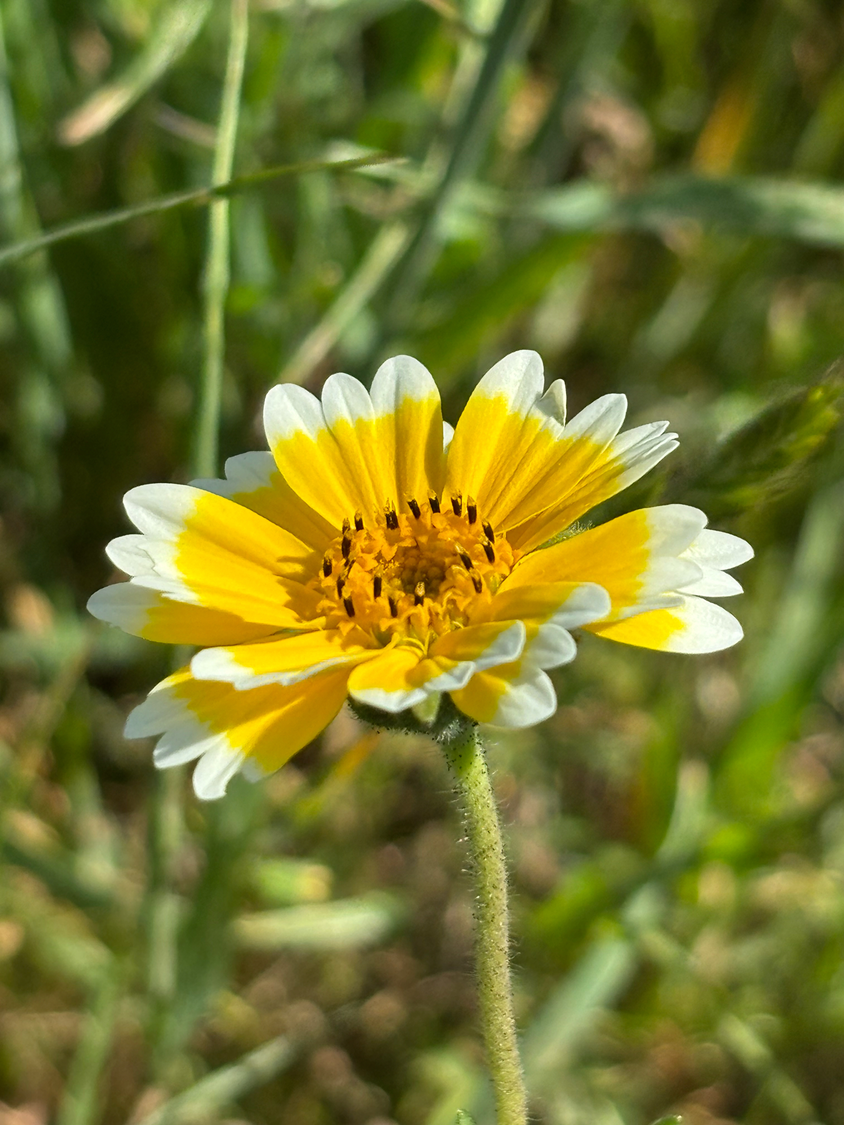
I next headed up the steep side of the mountain to the GPS coordinate where a friend had seen Fritillary ojaiensis just last week. Despite having looked for this species a couple times before without success, I figured this would be a slam dunk! Fritillaria, unlike Layia is not a particularly California genus. Although there are 20 species in the state, there around 100 others distributed across much of Europe and temperate Asia (although, strangely, not in Eastern North America). The name means “dice box” in Latin, which may refer both to the dark spotted petals of some of the species, or to the boxy shape of the fruit. My first Fritillary was a single Fritillaria affinis plant that was in bloom on the path between my office and the classroom where I was teaching on the UC Santa Cruz campus. I quickly fell in love. A couple times a week, I checked on its progress from bud to flower to fruit.

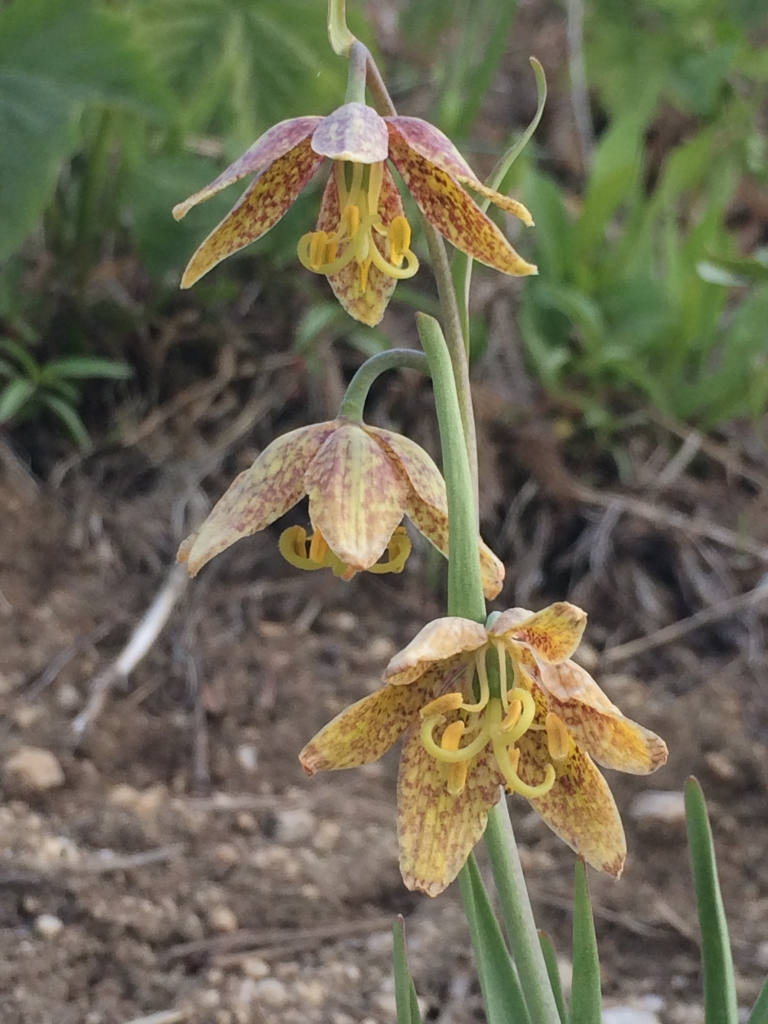
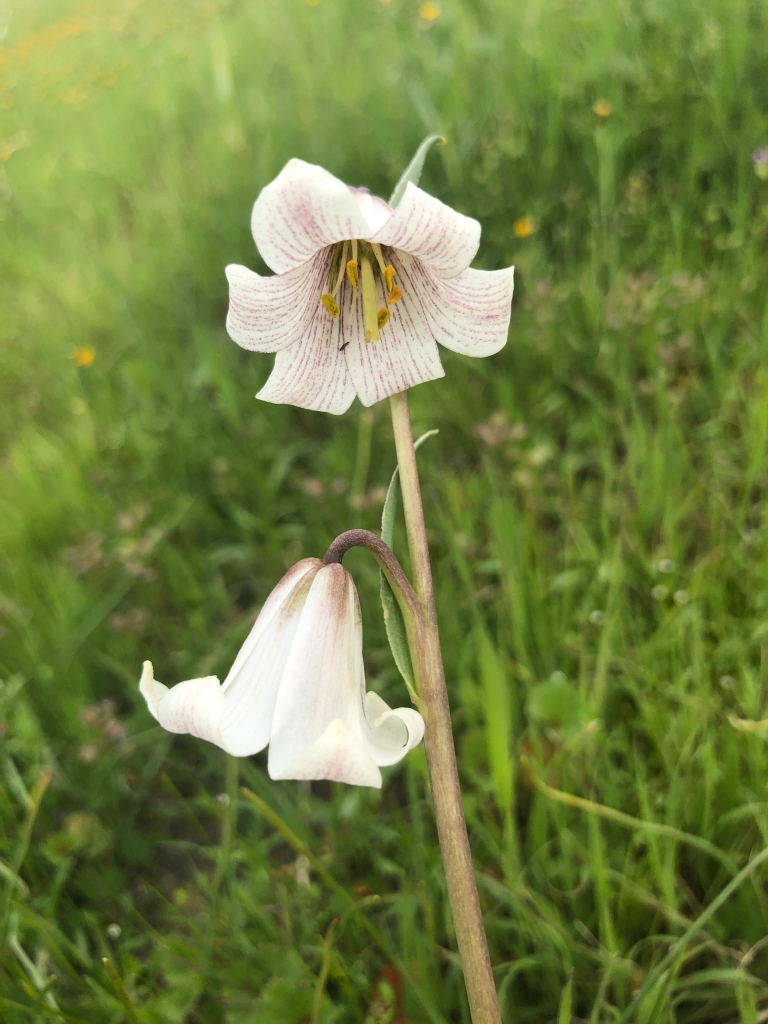
Since then, I’ve logged many hours tracking down most of the Californian species. They can be quite tricky to pin down, often blooming very early in spring, and skipping the bloom in some years by staying as a dormant bulb or a single basal leaf. The beauty, diversity, and weirdness of their flowers is worth the trouble, though. Check out my Fritillary appreciation post, which has photos of the past triumphs. Arriving at the GPS location, I immediately located the plants! However, they had all just finished flowering, or didn’t try to flower this (dry) year.

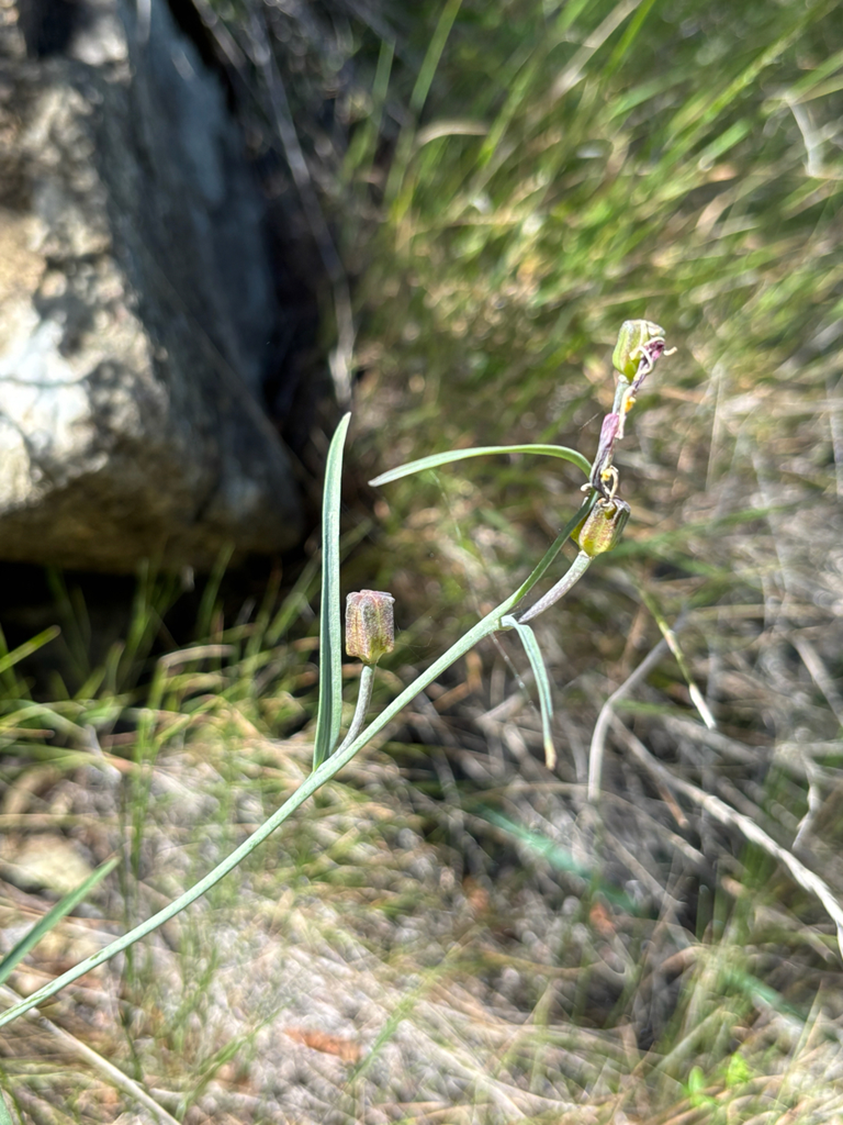
While the fruits and leaves are cool, I really wanted to see the beautiful maroon and yellow spotted flowers. It was okay. I had a back up spot. I decided to hike the rest of the loop before driving across town to it. I continued up the hill, reaching a beautiful wild-flower filled meadow at the top. There were a bunch more Layia in bloom. They looked exactly like the individuals from the L. jonseii spot, but that species wasn’t supposed to occur up here. Uh, oh. I took the time to carefully identify a plant using a dichotomous key, and it came out to the common Layia platyglossa. The pappus (fuzzy bit on top of the seeds) in L. jonesii was supposed to be lanceolate (wide at the base), but in these plants it was linear.

I looped back to the first location and worked the key there. Also Layia platyglossa. I hadn’t found my target, after all! I continued to search the area now that I knew what trait to focus on (something I should have looked up earlier!), but found patch after patch of L. platyglossa. I was about to give up when I noticed a patch in a depression in the meadow that seemed to be a bit farther along in flowering. I checked the fruits—lanceolate pappus!
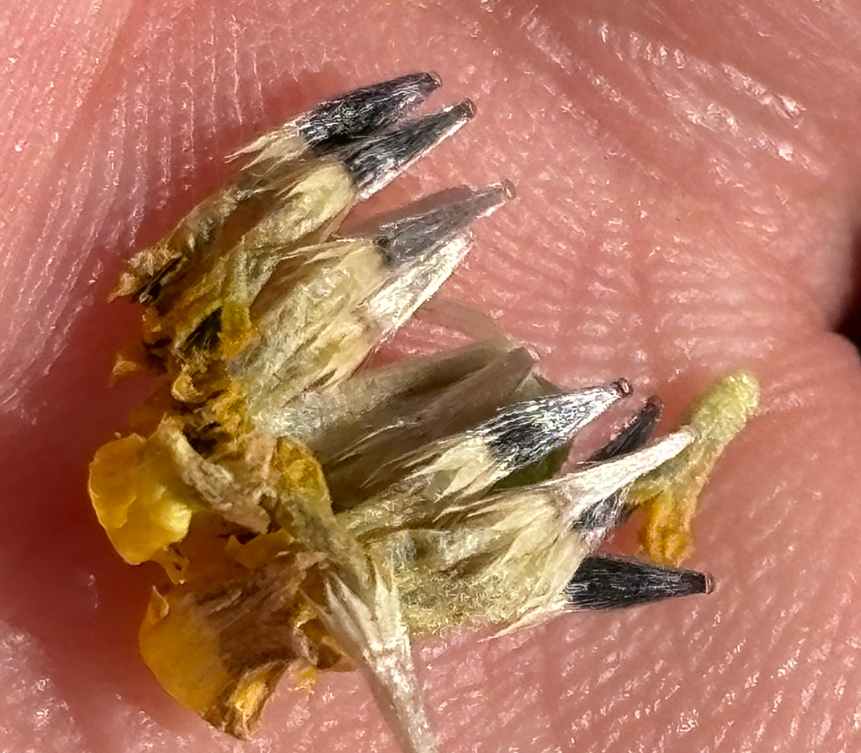
Here’s a shot of the flower of the rare Layia jonesii, known only from about a 20 mile stretch of coastal San Luis Obispo County. Maybe you can forgive my initial poor identification!

I grabbed a nearby L. platyglossa flower for direct comparison, and with the side-by-side, a couple differences do show up. The disk buds are a different color and the phyllaries are a different shape—that’s some real plant nerd content for you.
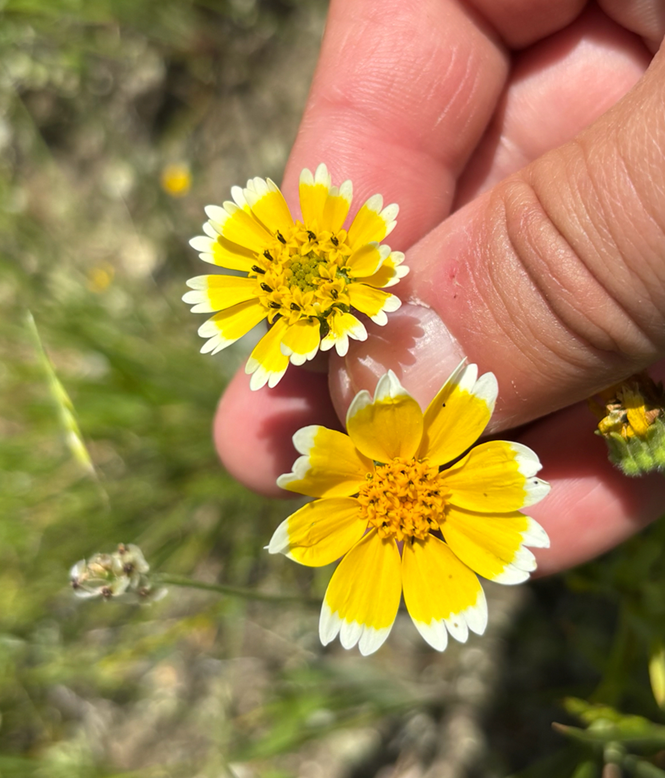
In the two photos, L. jonesii is top and right, and L. platyglossa is bottom and left.

I finished my hike and headed over to the other nearby spot that had Fritillaria ojaiensis records. Despite searching up and down a two mile stretch of canyon for a couple hours, I once again only found plants in fruit and plants that didn’t bloom this year. There was a moment when I got excited over a blooming Fritillaria biflora (Chocolate Lily), but this species is different enough that I didn’t have a repeat of the Layia fiasco!
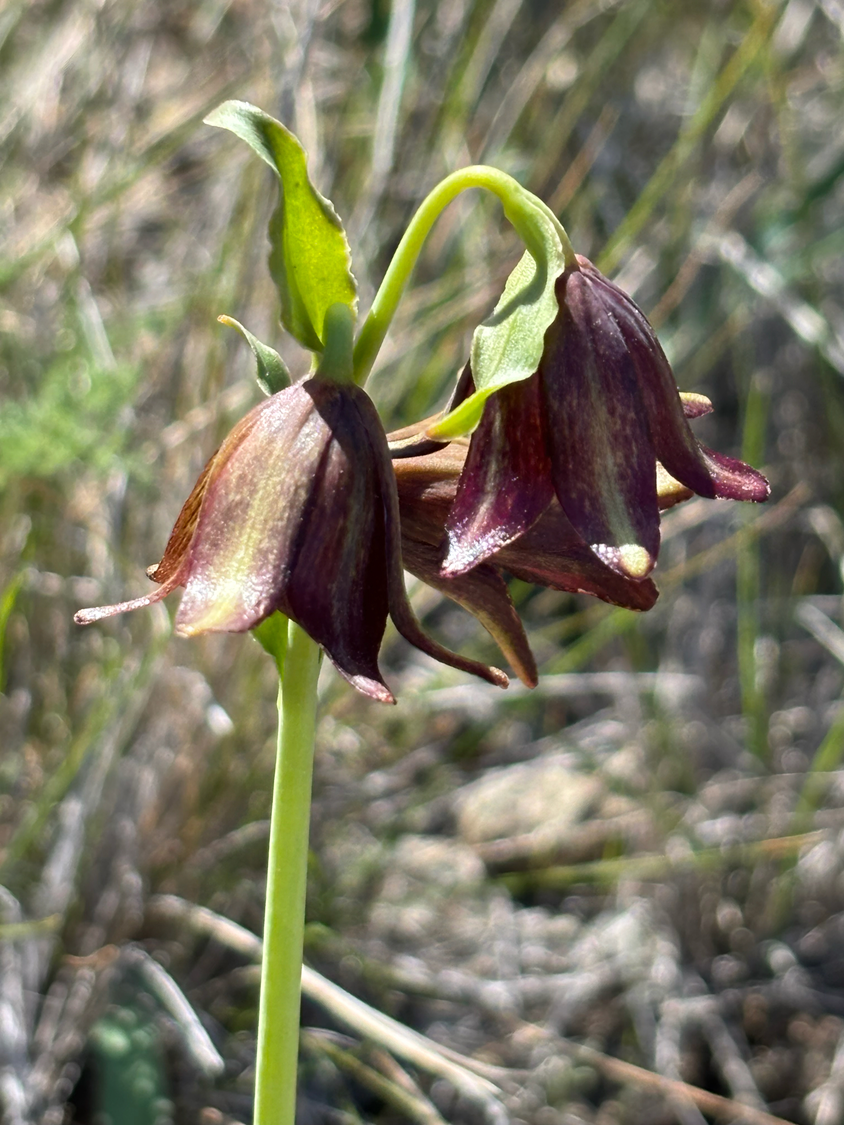
I’ll have to try again for a F. ojaiensis flower earlier in the season or in a wetter year! But even a botany trip with some missed targets is well worth it. Along the way, I saw so many amazing wildflowers, including some that were quite rare. Many of them brought back magical memories of California spring’s past.
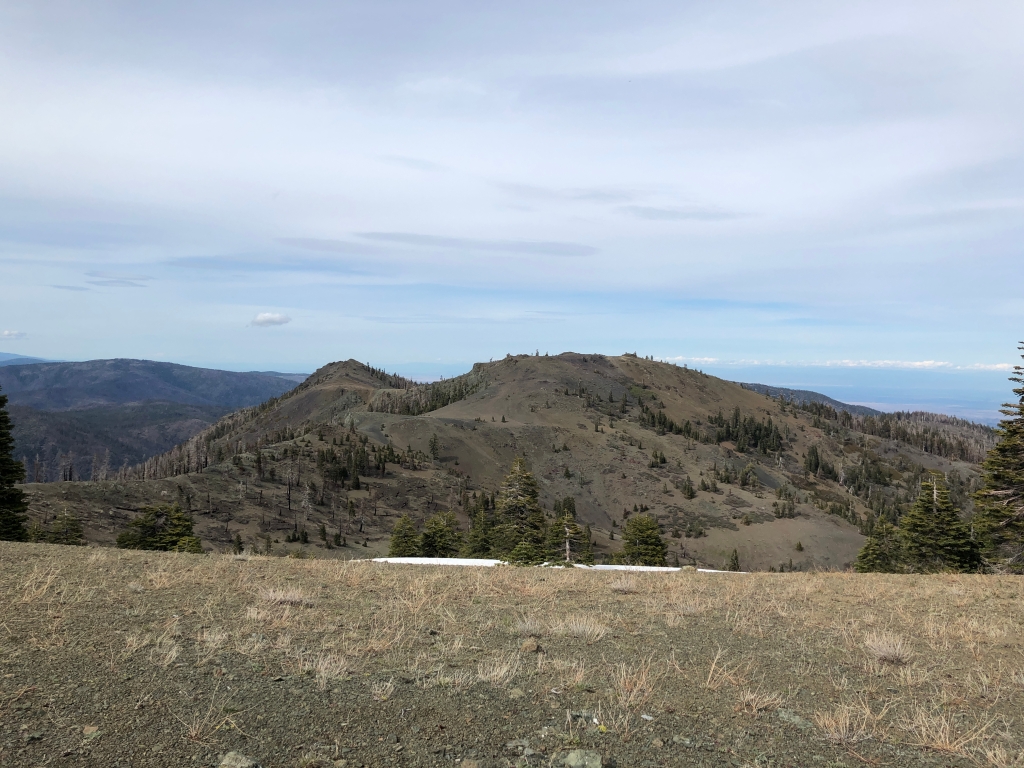
Fritillaria

A couple weeks ago, I went on an amazing hike last weekend to Snow Mountain–the highest point in Lake and Colusa counties.

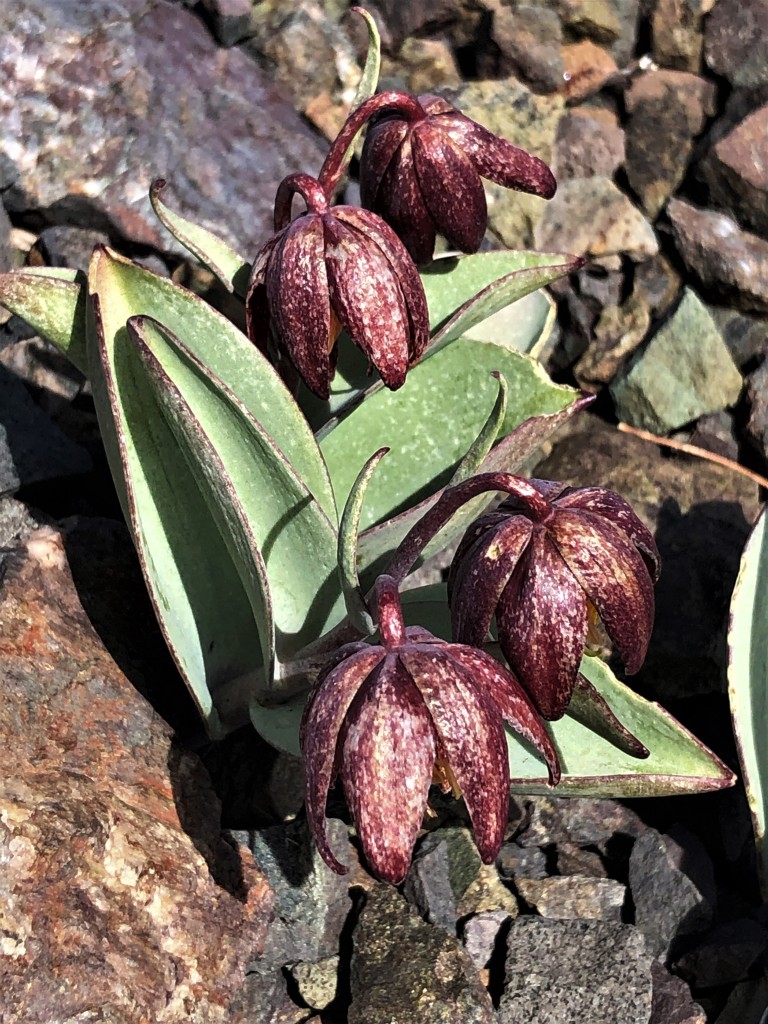
The rocky slope on the way to the summit was covered with an beautiful lily that I had not met before, Fritillaria glauca.

Fritillary lilies are just the type of plant I love–many of them are both beautiful and rare. Fritillaria glauca is only found on serpentine talus slopes at relatively high elevations in Northwestern California and Southwestern Oregon.

Because they are a favorite, I have gone on numerous trips over the past several years to find and photograph them. In fact, I’ve seen 13 of the 19 species found in California. I know because I’ve been using some quarantine time to organize my photos. That got me to thinking. It would be fun to bring back my blog to highlight some of my favorite plant genera. So here we are.

This is the first in hopefully a series of 10 or so genera posts. For each, I’ll give a brief overview and some cool facts to help you understand my obsession. Then, rather than dump in all my photos, I’m going to choose ten of my favorite pics that highlight some of the diversity and interesting features of the group. Okay, let’s go!

Fritillaria is a genus of about 115 species distributed across Northern Europe, Asia, and North America. So California is home something like 15% of the species–not bad, but nothing like the percentages in groups I’ll highlight later. They are closely related to true lilies in the genus Lilium, and like true lilies they have 6 identical tepals (petals + sepals). The easiest way to tell the two genera apart is to look for a nectary–an often oval-shaped glandular depression in the bottom half of the inside of the tepal. Fritillaria petals have them and Lilium petals don’t. Here, I’ll show you using Fritillaria glauca again.

The nectaries are the yellow spots. They’re not always that obvious to humans, but spending time staring at the inside of a lily is always a good idea. They definitely are obvious to pollinators–the nectar that’s produced there likely attracts a variety of bees, beetles and flies.

Fritillaries also tend to be smaller and bloom earlier than other lillies–in fact, they can be some of the first flowers to bloom in an area. One reason they may be able to get an early start is their genome size. Fritillaries (and actually, lilies in general) have some of the largest genomes of any organisms–orders of magnitude bigger than humans. They are perennials and spend the fall and winter underground as a bulb. While they appear to be dormant, they are actually doing a bunch of splicing and dicing of their genome, allowing them to pre-form a lot of next year’s structures. Having so much raw genetic material makes this process much easier. Pre-forming everything early is really important in California’s short spring growing season–the time of year when there’s both plenty of moisture and sunlight. In fact, a recent paper on Lilium found species from the coldest, driest locations (places with very short growing seasons) tended to have the largest genomes. I bet the same pattern occurs in Frittillaria.

The name Fritillaria means checkered (it’s a name shared with a genus of checkerspot butterflies), and refers to the cool mottled petals of many of the species, as exemplified below by Fritillaria atropurpurea.

This guy, one of the two common Sierra species, has many of the features of your basic Fritillary. Along with the brownish checkered pattern, the nodding flowers are widely spaced on a tall stem. Its habitat is also pretty typical–relatively dry, open woods or scrub. The most common coast range species, Fritillaria affinis also fits the mold.

In addition to these common woodland species, there are some much rarer ones. This includes two species that took me multiple trips to find. Fritillaria brandegeei from the forests of the Greenhorn Mountains in the Southern Sierras.

and Fritillaria pinetorum from, yes, pine forests in SoCal’s transverse ranges.

Both of these are specialists on granitic soils. In fact, many Fritillaries in the state are soil specialists. For unknown reasons, these specialists tend to be shorter with more clustered flowers than the more common generalists.

If you’re looking for rare plants in California, your first task is often to find serpentine soil. Fritillaries have their share of serpentine specialists including Fritillaria glauca and Fritillaria purdyi, an adorable species from the North Coast Ranges.

Maybe the showiest species in California, Fritillaria recurva also occurs on serpentine, although it can be found in other soils with scrubby vegetation throughout the Northern part of the state.

Its red color means hummingbirds are also likely frequent floral visitors in addition to the usual insect crowd. It also tends to be a fire follower, bringing amazing bursts of red in otherwise blackened landscapes.

There’s another type of soil that seems to bring out the weird in fritillaries. Heavy clay soils have tiny particles that hold onto water and nutrients, making it hard for plant roots to extract. They also tend to form extremely hard clumps covered in salt during the dry season. As with many edaphically extreme conditions, some plants have figured out how to deal with heavy clay, evolving to specialize on the stuff. Fritillaries seem to be pretty good at adapting to heavy clays, particularly in the low elevation grasslands of the state whey they often occur in huge populations. Fritillaria biflora of the coastal grasslands is a great example.

Some of the clay specialists have another unique feature–smell. Fritillaria agrestis has a common name that says it all–stinkbells!

The stink is likely a trick to bring in scat-seeking flies. But rather than an off-putting scent, my favorite fritillary flower Fritillaria striata has a fantastic fragrance.

The sweet smell and white color make hawkmoths a likely candidate for the main pollinator of this very rare plant of the Southern Sierran foothills. However, as with all the species of California fritillaries, we’re not sure. As far as I know, despite the amazing variety of color, shape, and orientation of these amazing lilies, their pollination biology has never been studied.

Return to the Trinities

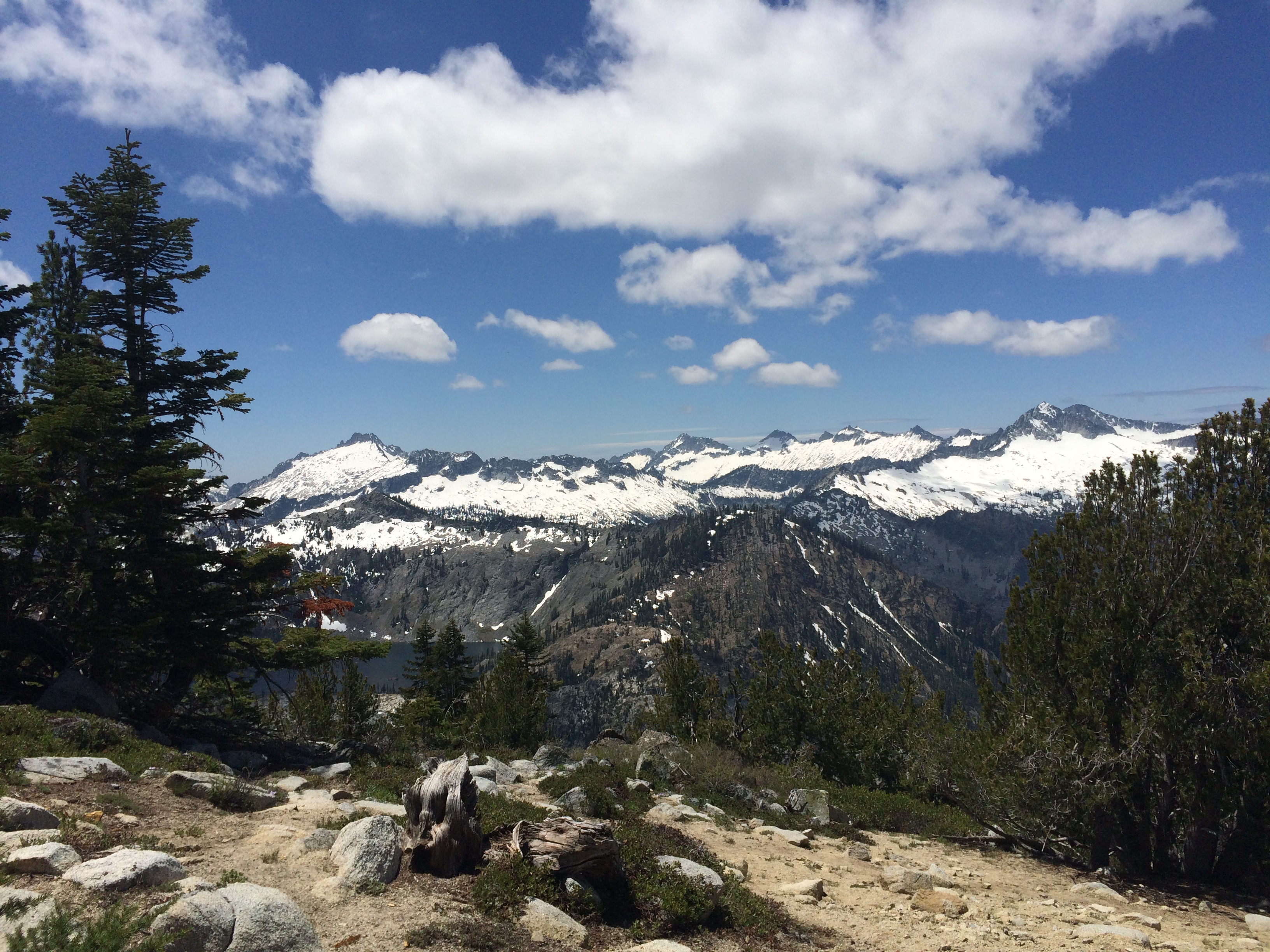
The Trinity Alps, the tallest mountains in the Klamath Ranges, are one of my favorite places to hike in California. My love is due to the combination of spectacular views:

2018-06-08 12.42.27

and excellent rocks.

2018-06-08 16.31.04

In the picture above, marble dominates foreground and Sawtooth Ridge in the background is granite. While both of these rock types have edaphic specialists–plants that only occur on that rock type, the Trinities are particularly famous (among geologists and botanists, anyway) for their large amounts of serpentine–the rock type that is home the most rare plant species.

I was really excited to hike to the Caribou Lakes  in the heart of the Trinities this past week because my previous Trinity trips occurred much later in the summer. There were many early-blooming species I wanted to catch up with. It turns out there were two problems with this plan. 1) There wasn’t that much serpentine along the route, and 2:

2018-06-09 09.25.33

Yeah. It’s really hard to botanize in the snow.

Not impossible though! Here’s a little plant in the tomato family (Solanaceae) that I stopped to photograph in pretty bad conditions

Chamaesaracha_nana

It’s a good thing I did, too. I’m pretty sure this is Chamaesaracha nana (Dwarf Five-Eyes), which is a species found in the Cascades, but according to my resources, it hasn’t ever been documented in the Kalamaths before. It was growing in a recently burned area, and unusual plants do sometimes pop up from the seed bank after fire. I will have to investigate this further.

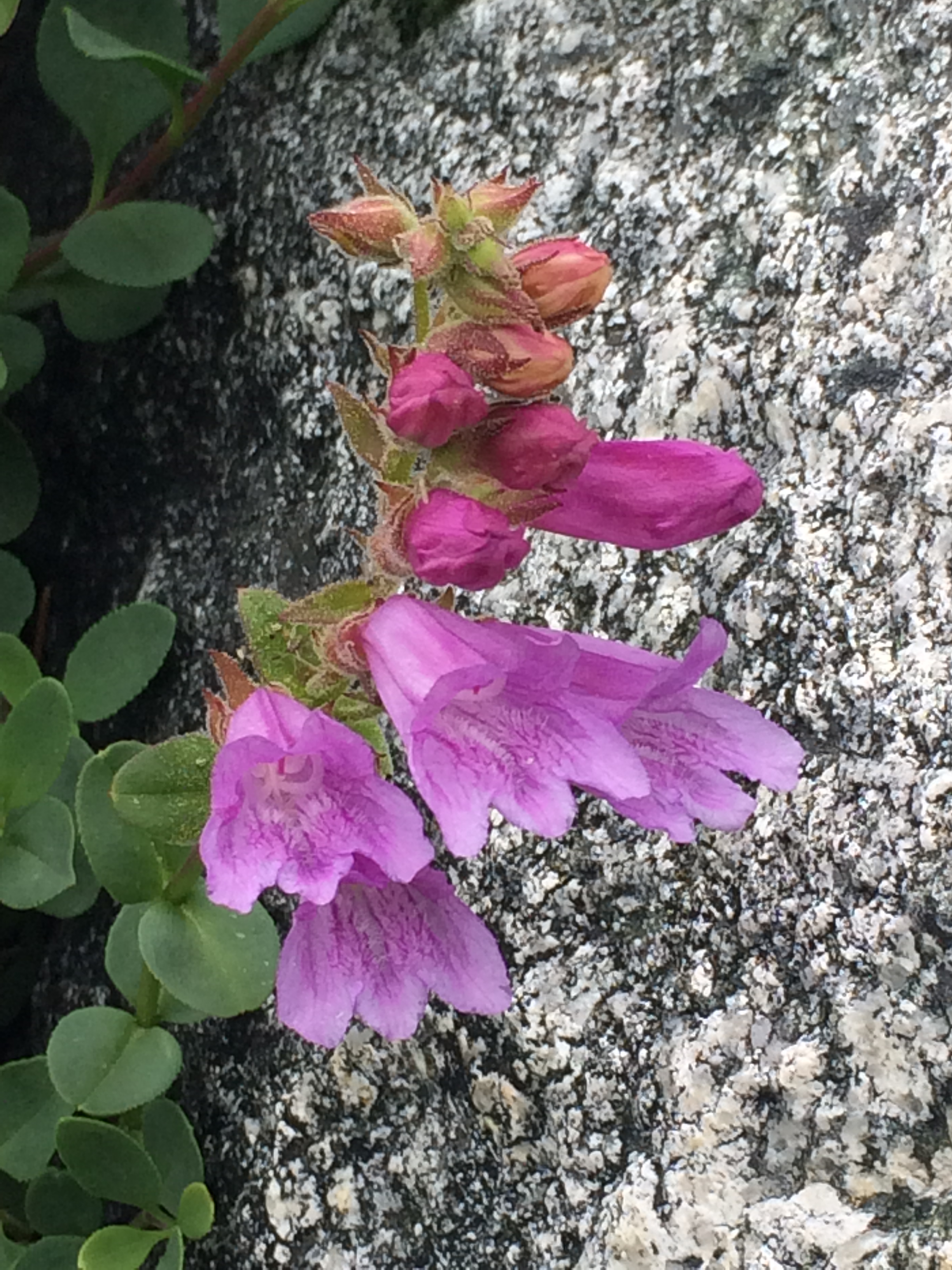
The trip wasn’t all snowy conditions, however, and I made sure to take some pictures while the sun was shining. First, three widely distributed pink flowers. Penstemon newberryi (Plantaginaceae) has one of my favorite common names, Pride of the Mountains. In addition to being here, it’s a commonly encountered flower on pretty much any hike in the Sierras.

Penstemon_newberryi

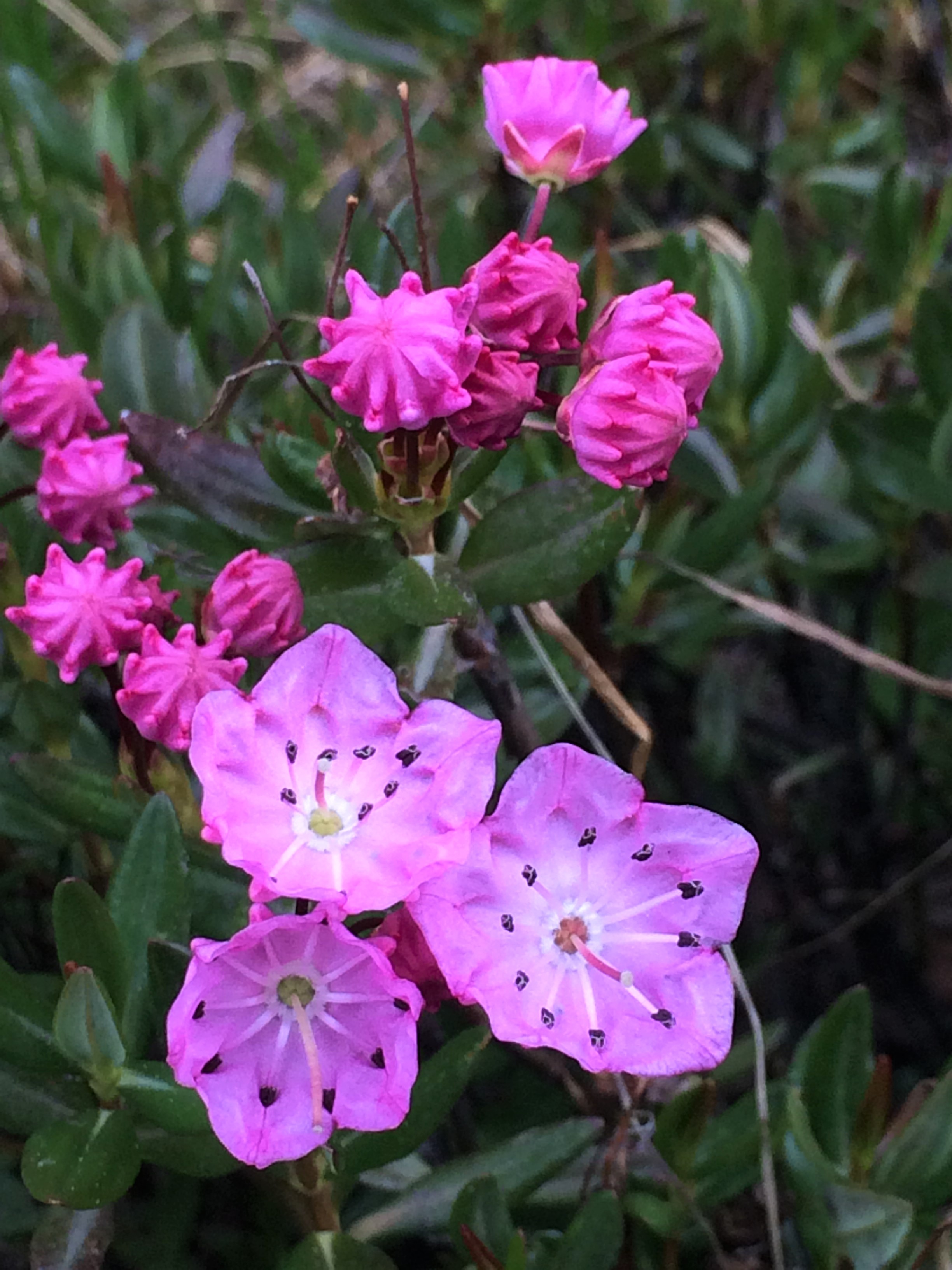
Kalmia polifolia (Bog Laurel, Ericaceae) is one of the few plants I learned while in college in Maine that I encounter commonly on the west coast. I love the folded buds.

Kalmia_polifolia_1

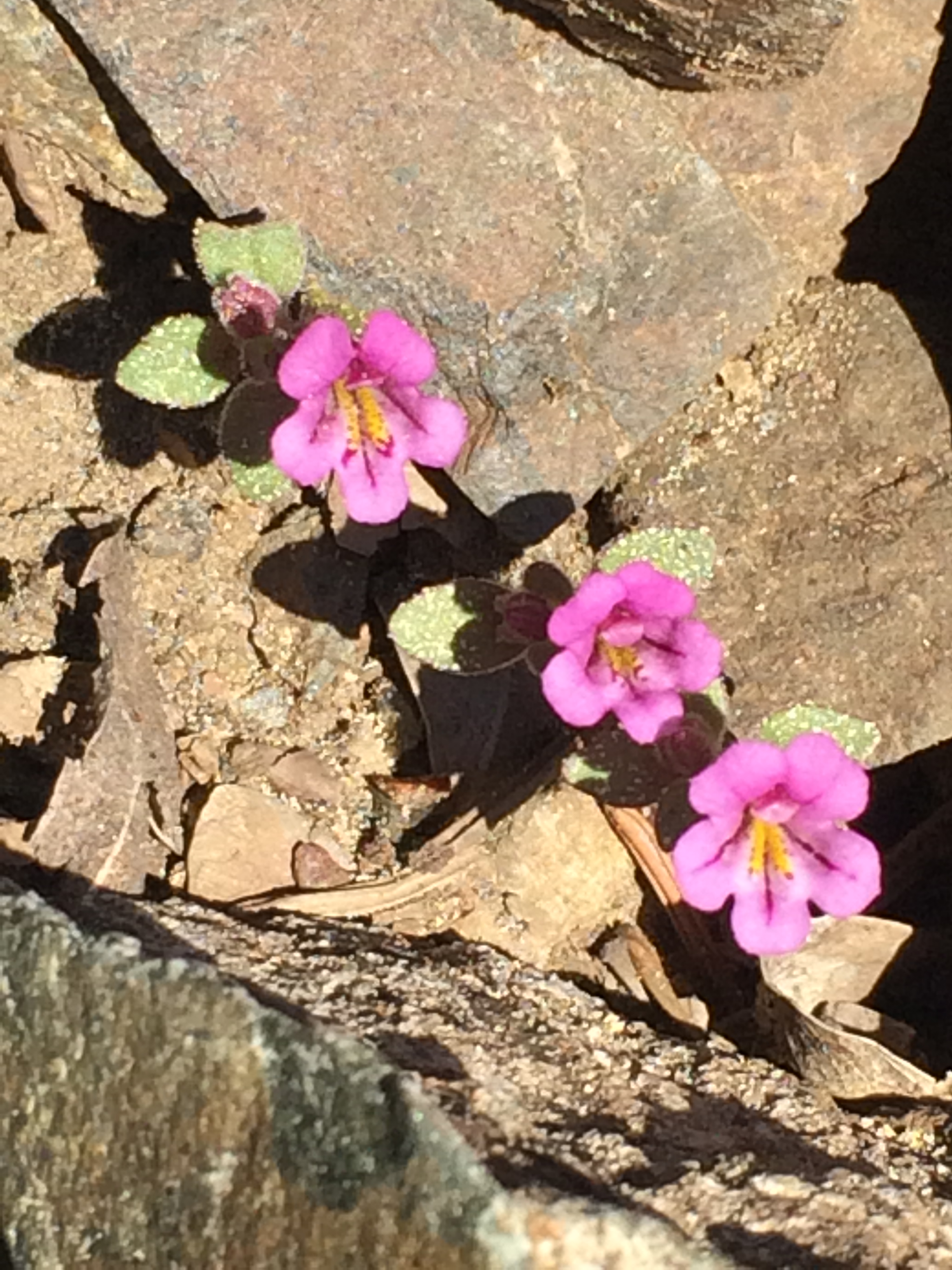
And Diplacus (formerly Mimulus) nanus (Dwarf Monkey Flower, Phrymaceae)

Mimulus_nanus

Next, a couple range-restricted species with tiny, yellow flowers: Eriogonum diclinum (Jaynes Canyon Buckwheat, Polygonaceae)

Eriogonum_diclinum

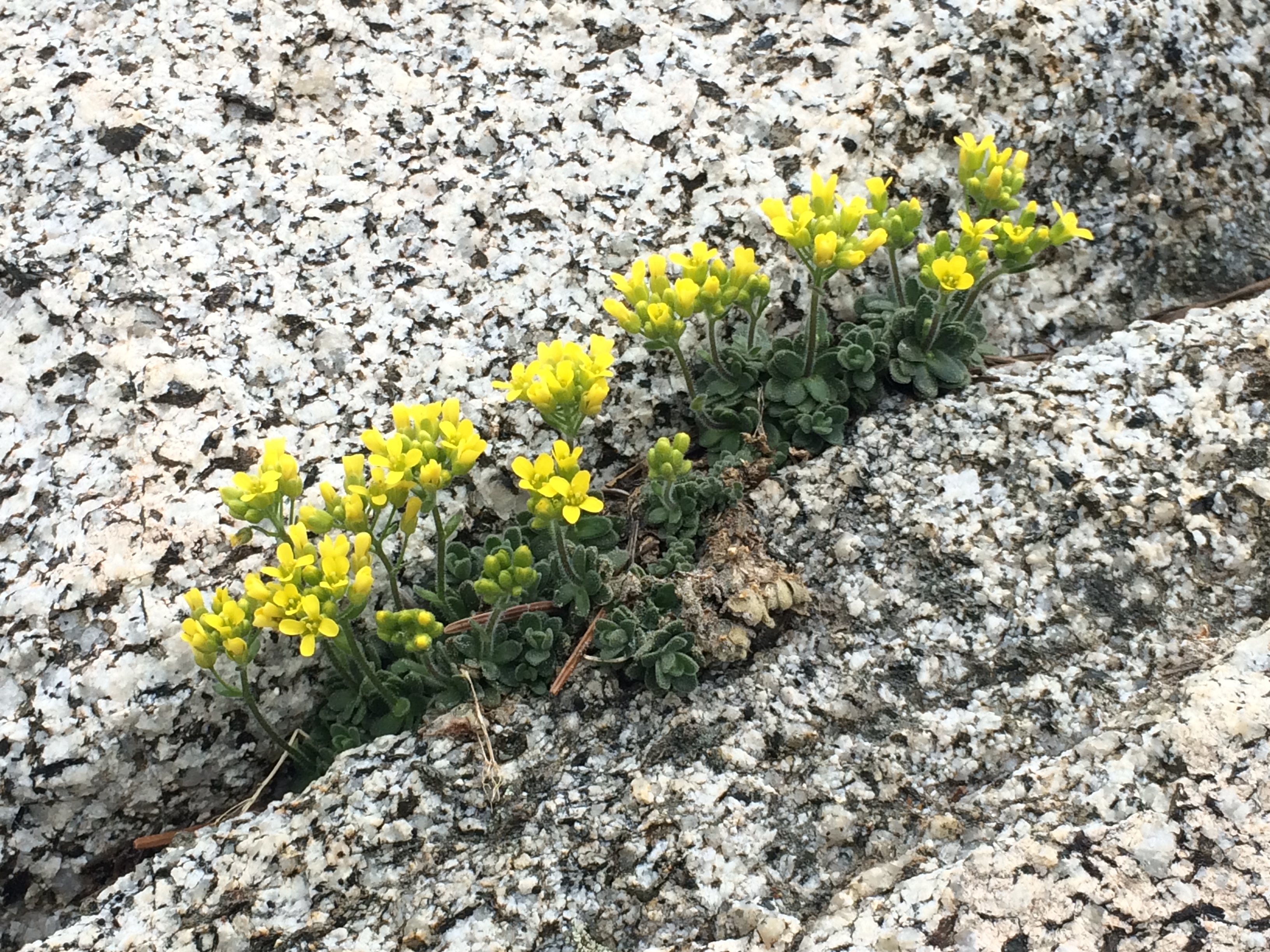
and Draba howellii (Howell’s Draba)

Draba_howellii_1

Per usual, I’ll end with the showy and rare. Lewisia cotyledon (Cliff Maids, Montiaceae)

and Cypripedium californicum (California Lady’s Slipper, Orchidaceae)

These last two beauties were the two species I most wanted to see. Therefore I would rate the trip a complete success, despite the snow!


San Luis Obispo

I day-tripped westward yesterday to a few locations in San Luis Obispo County (North of Santa Barbara and South of Monterrey) in what was likely my last coastal botany trip of the year. The trip was a bit of a mixed bag, as I couldn’t locate a few of my target flowers. I did, however, find the plant I most wanted to meet–the bizarre Calochortus obispoensis (San Luis Mariposa Lily, Liliaceae). This plant only grows on dry, rocky serpentine hillsides around the city of San Luis Obispo. Its habitat and bizarre appearance reminds me a bit of Calochortus tiburonensis (the Ring Montain Mariposa Lily) found in the North Bay last year (see post from May 25 of last year), but apparently it’s not that closely related within the genus. I guess serpentine just brings out the crazy in these plants.

Calochortus_obispoensis_2

A few more late season plants were hanging out on the same serpentine hillside, an uncommon congener, Calochortus argillosus (Clay-loving Mariposa Lily)

Calochortus_argillosus

and the rare Dudleya abramsii murina (San Luis Obispo Liveforever, Crassulaceae)

I also visited the immediate coast south of Morro Bay, for some sand dunes botany. Highlights here included Abronia maritima (Red Sand Verbena, Nytaginaceae)

Abronia_maritima

Chorizanthe angustifolia (Narrow-leaf Spineflower, Polygonaceae)

Chorizanthe_angustifolia

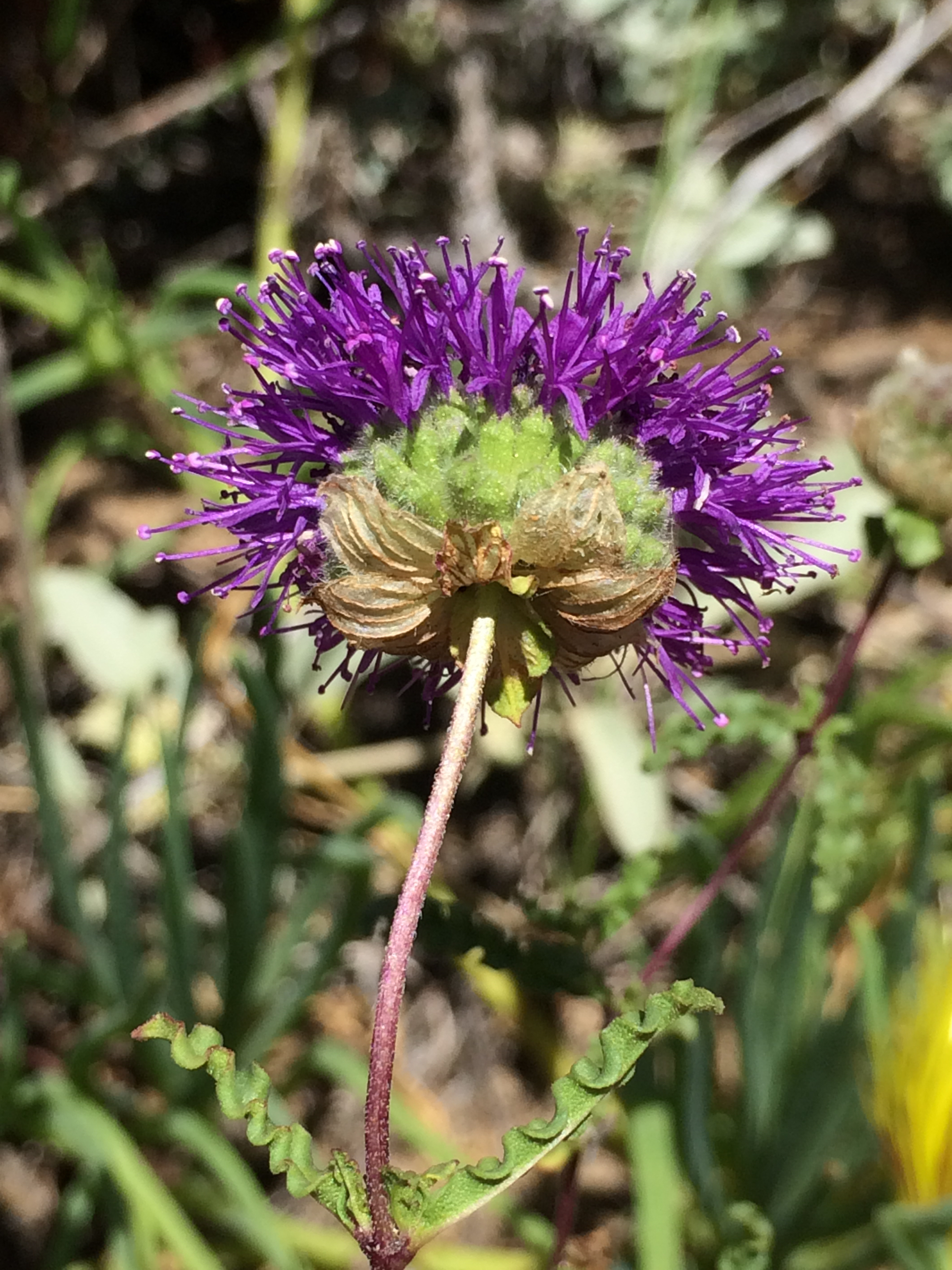
and Monardella sinuata (Curly-leafed Coyote Mint Lamiaceae). This last plant is not to be confused with one I posted a couple months ago, Monardella undulata (Wavy-leafed Coyote Mint, Lamiaceae), which is also a rare mint from the dunes of the South-Central Coast. The biggest difference is that this guy is an annual, while M. undulata is perennial. It seems crazy that in a genus of straight-leafed plants, two different species went curvy in the same area, but I guess that’s what happened!

Monardella_sinuata_2

I spent most of the late afternoon and early evening trying to chase down a couple showy inland rarities without success. I did get a couple tiny rewards for my efforts, rare plants with flowers only a couple millimeters wide. First, here’s another spineflower, Chorizanthe breweri (San Luis Obispo Spineflower, Polygonaceae). Spineflowers often form large carpets of plants in flat, somewhat disturbed areas. Therefore, so despite their miniature stature, they can be fairly easy to find. Their nifty, spine-tipped bracts and six-part flowers can only be appreciated at very close range, however.

Chorizanthe_breweri

Finally, here’s Nemacladus secundiflorus (One-sided Threadplant, Campanulaceae). Plants in this genus also can occur in large patches. However, their thread-like stems make them almost impossible to see. I’ve only ever found them when crouched down looking at other plants.