A big winter storm hit Winston-Salem on the night of January 10, dumping a few inches of snow onto our yard. The next morning was forecast to be sunny and calm—perfect snow day conditions! I decided to wake up early and do an hour-long bird feeder watch, beginning just before first light. Here is my log from that watch:
7:00 am: Begin observation
7:07 First bird—Marty the Northern Mockingbird perches on the lip of our raised flower bed
7:14 Northern Cardinal calls
7:16 Marty snacks on some bark butter I had smeared on a tree trunk
7:17 Yellow-Bellied Sapsucker calls
7:19 White-Throated Sparrow and Dark Eyed Junco flock arrives, a junco snags some bark butter
7:23 American Crow calls
7:24 Ruby-Crowned Kinglet arrives, snags some bark butter
7:25 Carolina Chickadee begins chattering, and then visits the main feeder—the first bird to do so.
7:26 Tufted Titmouse and White-Breasted Nuthatch calling in the trees overhead
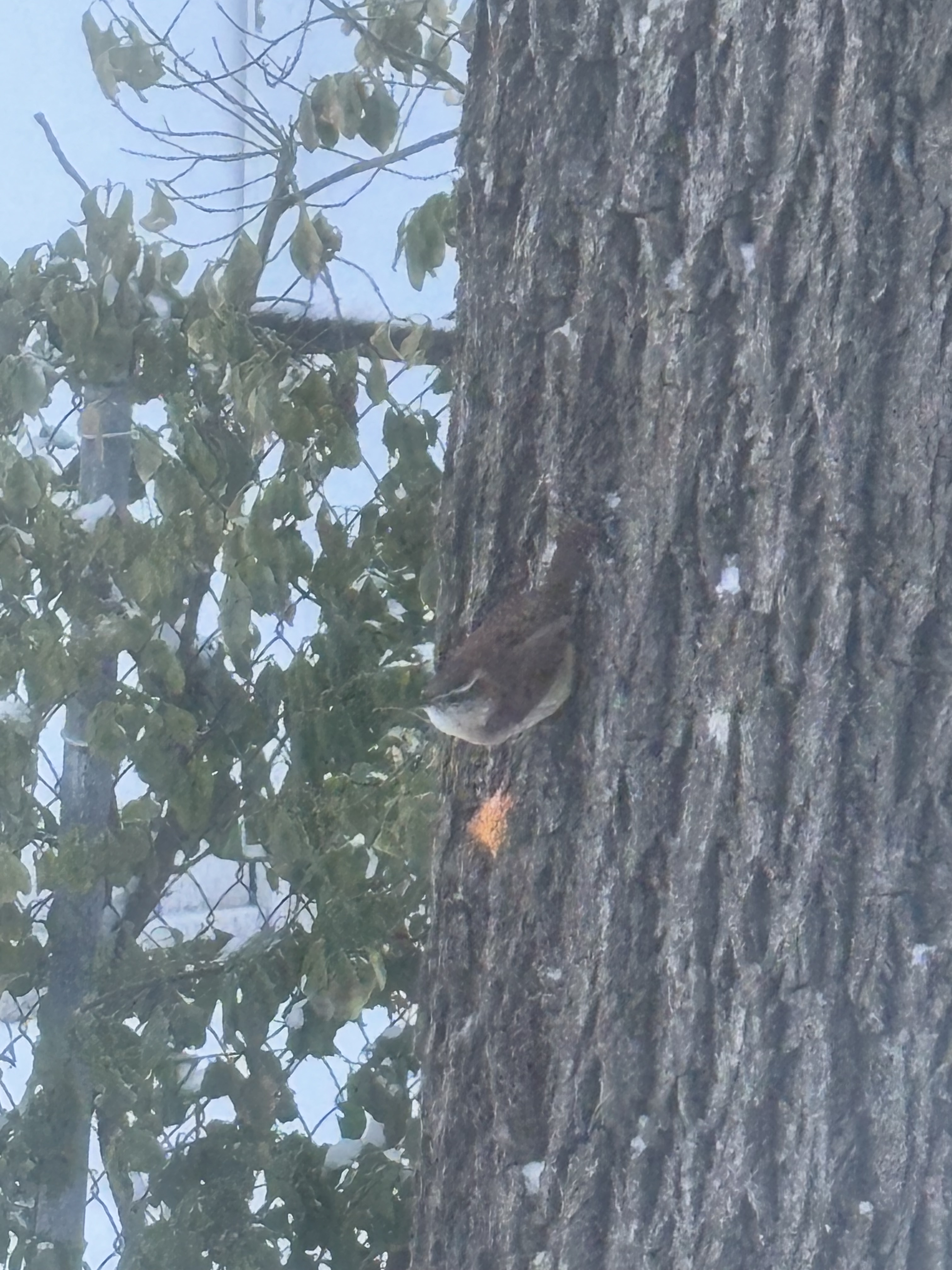
7:28 Carolina Wren begins singing vigorously, then eats some bark butter and fights with another wren
7:31 Sunrise
7:38 A flock of House Finches and American Goldfinches flies overhead, calling. A Blue Jay flies into the magnolia tree and begins yelling at everyone
7:43 Golden-Crowned Kinglet and Yellow-Rumped Warbler briefly stop by the yard, joining the flock of activity
7:50 Marty the Mockingbird perches on top of the feeder and begins chasing away other birds
7:57 Song Sparrow sings from the bushes at the back of the yard
7:59 Carolina Wren visits our small window feeder, so far, the only species I’ve seen do so since we put it up last week.
8:00 Mourning Dove flies by, the final species to make the count. End observation.
Total: 18 species
Most notable: Yellow-Rumped Warbler. A bunch of them winter in our area, but they don’t come to our back yard that often
Strangest miss: Downy and Red-Bellied Woodpeckers are usually around, and both showed up later in the day. Eastern Bluebirds are also common in our backyard, but they tend to visit us in the afternoons.
While I very much enjoyed my time, one hour-long watch by itself isn’t particularly laden with importance. The power of careful observation comes with time and repetition. Since moving here in March, I’ve now submitted 21 eBird checklists from our backyard and seen or heard 48 species. I’m starting to get a sense of what’s “normal”. As the seasons go by, it’s exciting to see migratory birds arriving and leaving, behaviors changing, birds molting, and fledglings appearing on the scene. My plan is to repeat my dawn feeder watch three more times this year. I’m excited to compare and contrast these seasonal benchmarks.
Zooming out, my hour-long observation becomes one data point out of the 103 million checklists submitted to eBird. These checklists come from over 1 million birders from across the world. At this scale, scientists can see patterns of migration, habitat use, and population increases and declines. The data helps inform important conservation decisions and even legislation. Not bad for a snowy morning spent in front of a window.
 botanicalramblings