Jenny just completed our road trip to Texas and back. I challenged myself to make a natural history observation on each of the 12 days. I’ll present those below along with an interesting fact that I did not know before doing some research.
Day 1, Montgomery, Alabama: Much to my surprise, White-Winged Doves (Zenaida asiatica), and not Mourning Doves were the most common dove in the city, their raspy songs echoing across the National Memorial for Peace and Justice. I think of White-Winged Doves as a desert species, seen soaring over saguaro or perching on mesquite. But their numbers have been dramatically increasing in the suburbs and cities of the Southeast, where they spend the winter. White-winged doves perform elaborate courtship displays, involving bowing, bill slapping, tail fanning, and spiraling display flights.
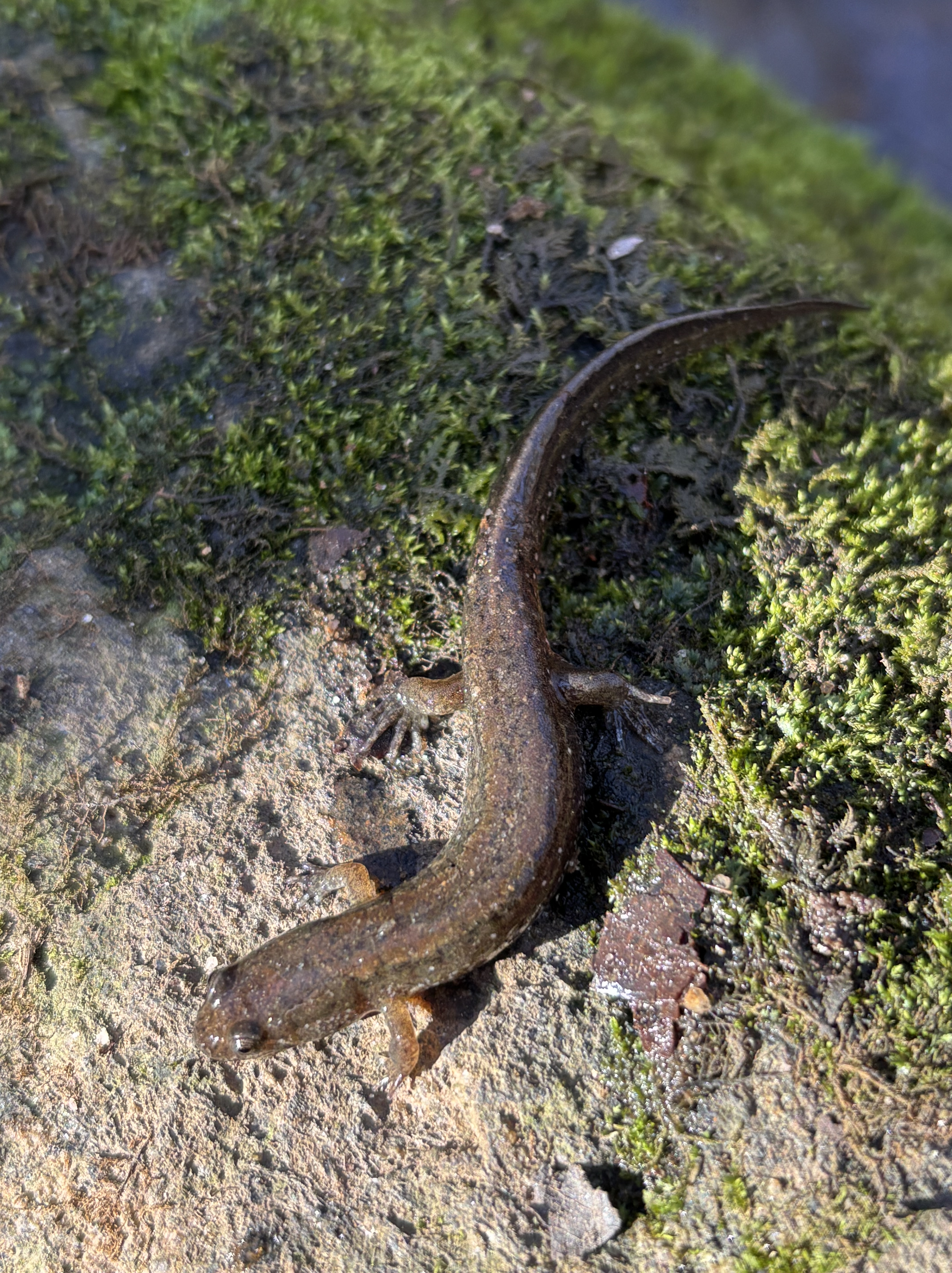
Day 2, Red Hills, Alabama: A red hills salamander (Phaeognathus hubrichti) poked its head out of its burrow before turning around and slithering, dragon-like, deeper underground. Jenny and I camped in the Red Hills specifically to look for this salamander that’s endemic to the area. It’s a super unique critter in appearance (it’s extremely long and skinny), behavior (it spends most of its life in narrow burrows on the sides of mossy ravines, waiting for invertebrate prey to wander by), and taxonomy (it’s the only species in its genus). It also wasn’t known to science until 1960, when it was accidentally discovered during a snail survey! In 2000, A third grade class successfully petitioned the Alabama state legislature to name it the state amphibian. Most populations were on private land (and thus imperiled) until state, federal, and private organizations collaborated to purchase a bunch of prime habitat for conservation. It’s heartening to know these types of conservation efforts are possible in the deep, rural south.
Day 3, Lafayette, Louisiana: Hundreds of galls formed by the wool-bearing gall wasp (Druon quercuslanigerum) galls covered many southern live oak (Quercus virginiana) trees in downtown Moncus Park.

I’ve recently become a bit obsessed with gall wasps, and these were the coolest species of the trip. Crazily this wasp has a life cycle with alternation of generations. I found the asexual leaf galls, where all the emerging adults will be clones of mom. In the spring, the species produces a sexual generation (males and females) on the flowers of the oak.
Day 4, Atchafalaya Basin, Louisiana: A northern cottonmouth (Agkistrodon piscivorus) reared back its head, revealing its namesake white maw, while rapidly shaking its tail against the dry leaves.

The display was very effective, as I quickly jumped back from this very venomous snake. Unlike Crotalus and Sistrurus rattlesnakes, this genus of pit vipers, which includes copperheads, doesn’t have a tail tip made up of hollow, loosely connected scales. Therefore, it was interesting that it produced a warning vibrating sound anyway. Cottonmouths are swamp dwellers, very at home in the water where they eat mostly fish and frogs. They are one of the few snakes that can live in salt water, and are even capable of swimming out to barrier islands.
Day 5, Galvaston Island, Texas: A small mixed flock of Snowy Plovers (Anarhynchus nivosus) and Piping Plovers (Charadrius melodus) foraged in the surf near a larger group of Sanderling (Calidris alba). The movements of the two species were very similar, as they stopped and started, picking small invertebrates from the wet sand. Both the plovers are small shorebirds that nest on beaches, with snowies breeding along the pacific and gulf coasts and pipers along the Atlantic. Both are threatened by habitat loss and have very active conservation programs to protect them. Beaches along the Gulf of Mexico in winter are the only place to observe such a mixed flock. Because they seem so similar in looks and behavior, I had assumed they were closely related. It turns out they are on entirely different branches of the plover tree. Piping Plovers are more closely related to the ubiquitous Killdeer, while Snowy Plovers are allied with the oddball Mountain Plover, among others. Many of their similarities, it seems, are the result of convergent evolution—the two species hitting on similar strategies in the face of similar selective pressures.
Day 6, Aransas Peninsula, Texas: A Whooping Crane (Grus americana) family struts around a recently burned savannah, looking for grub (maybe literally). The attentive parents seemed to keep the buffy-headed youngster was under constant watch.

Whooping Cranes are the tallest and one of the most endangered birds in North America. There are only about 700 in the wild, but that’s far more than their nadir of only 15 birds in 1938. The cranes were our whole reason for a detour to the gulf coast, and watching them was well worth the trip. The population that winters at Aransas breeds in Wood Buffalo National Park in northern Canada. The juvenile we saw flew south with its parents and will remain with them through the long northern migration this spring. Then it will join up with a flock of other young birds until it finds the perfect life partner through the magic of dance at age 2 or 3. Pairs usually take a couple of years before starting a family. They often don’t successfully hatch an egg before their 5th birthday.
Day 7, Austin, Texas: Large numbers of ball moss (Tillandsia recurvata) plants grew on deciduous trees in the downtown. It was fun to see such a tropical-looking plant growing on trees that had lost their leaves for winter.

One of the most northern members of the bromeliad family, these hardy beings must be amazingly pollution tolerant to make a living constantly exposed to the polluted city air. Despite a reputation of being harmful to the tree, ball moss doesn’t steal any water or nutrients and doesn’t increase the chances of limb breakage. In fact, they host a nitrogen-fixing bacteria in their tissues that converts atmospheric nitrogen into forms that can be used by the plant. Therefore, when they fall to the ground at the end of their short life, they enrich the soil with extra nutrients, benefitting their host plant.
Day 8, Austin Texas: An impressively large Monk Parakeet (Myiopsitta monachus) nest rests on the side of a telephone pole.

Monk Parakeets are the only parrots that nest colonially and the only ones to make an entirely stick nest. This unique adaptation likely makes them successful at maintaining feral populations in surprisingly temperate cities—there’s warmth in colonial living. Originally from Argentina, Monk Parakeets can now be heard loudly squawking in Santiago, Mexico City, Madrid, Rome, Athens, Tel Aviv, Singapore, New York, and, incredibly, Chicago. Clearly sophisticates, outside their native range, these birds don’t do suburbs.
Day 9, Cascade Caverns, Texas: Several Cascade Caverns salamanders (Eurycea latitans) of varying shades from nearly white to dark gray-brown moved slowly through cave pools.
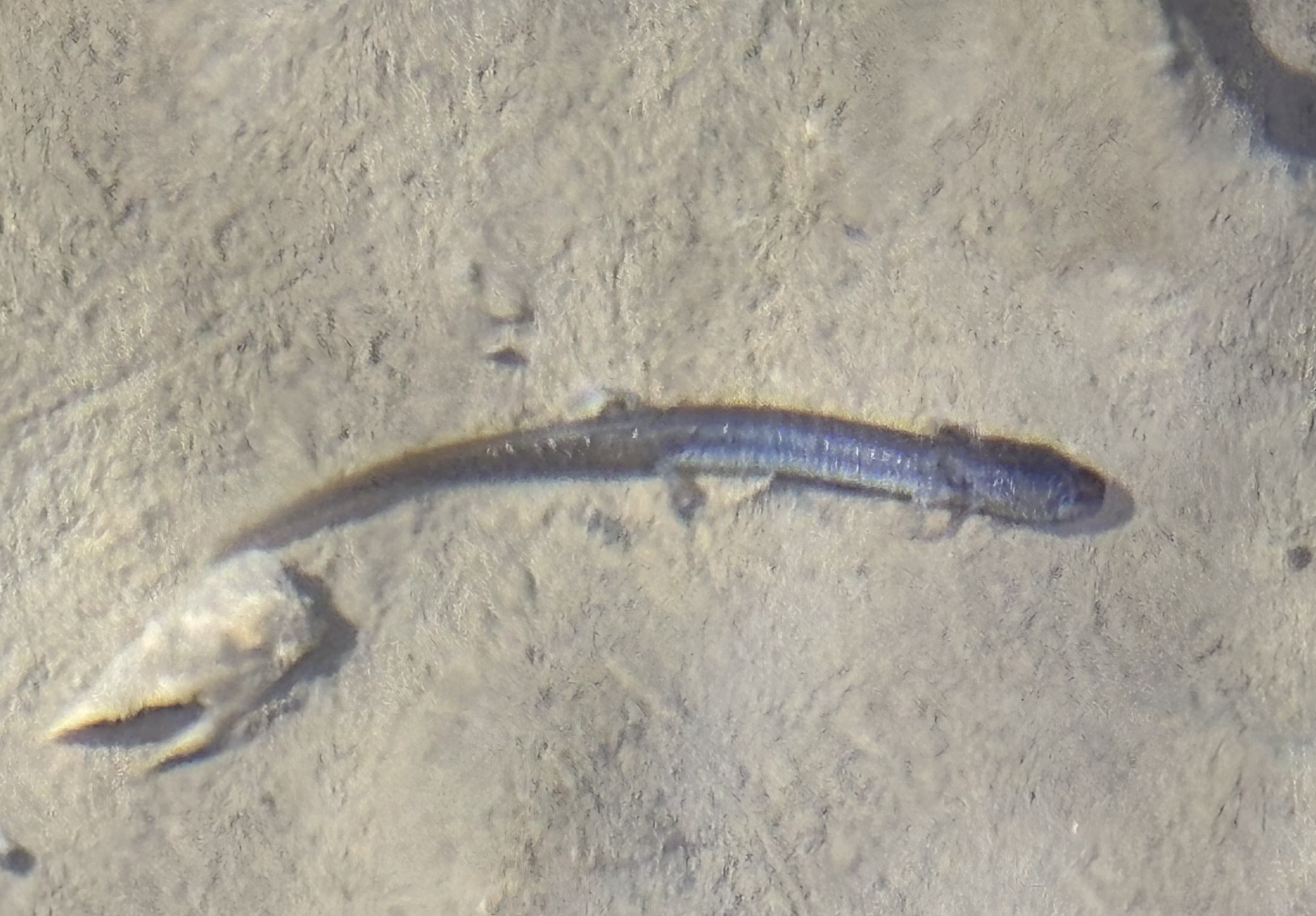
The Edwards Plateau in central Texas has porous limestone bedrock, which is prone to forming caves. This holey habitat, while dark, has plenty of water and a constant temperature, making it a great place to live if you’re a spider or isopod. With food to be had, salamanders moved in to occupy the top of the food chain. Central Texas is home to around 11 species of salamanders in the genus Eurycea. Elsewhere, species in this genus have an aquatic larval form that lives in streams before emerging as skinny, yellowish adults. However, the Texan, cave-dwelling troglophiles often never metamorphose, becoming sexually mature while still retaining gills. The denizens of the deepest caves often don’t have pigmentation or even eyes. The species we saw is more variable than most. Some individuals have tiny, non-functional eyes and a pale color, while other, usually darker individuals can see. In fact, some individuals in some populations will actually metamorphose. When we shined a light on them, some definitely reacted more strongly than others.
Day 10, Austin, Texas: Small, reddish Texas fox squirrels (Sciurus niger limitis) chased each other in the back yard of our Airbnb. Small is relative here—fox squirrels are the largest tree squirrel in North America. Nevertheless, Austin squirrels were decidedly more dainty than those I’ve seen (non-natively) in California cities or (natively) in the Midwest. They also have an extremely different color pattern than those found in North Carolina and other Southeastern states. Northern and Western squirrels are reddish on their face and belly with gray backs. Those I’ve seen in the North Carolina pine woods have pale bellies, black shoulders and faces, and have a white patch of fur above their nose. They look like an entirely different species. The story of fox squirrel coat color goes back to the last glacial maxima. As glaciers advanced, fox squirrels were driven into refugia in Florida and Southeastern Texas. It turns out coat color in this species evolves very quickly, and these two populations evolved different patterns in isolation before quickly expanding their range back across most of eastern North America. Those that moved onto the Edwards Plateau in central Texas evolved a smaller body size due to the hot dry climate—a common pattern seen across many animal species. Despite the dramatic differences in appearance, all fox squirrel populations are genetically quite similar and can freely interbreed. Hence, they are all considered the same species.
Day 11, Hot Springs, Arkansas: Chunks of beautiful Arkansas Novaculite were scattered across a recently-burned hillside on a trail in Hot Springs National Park.
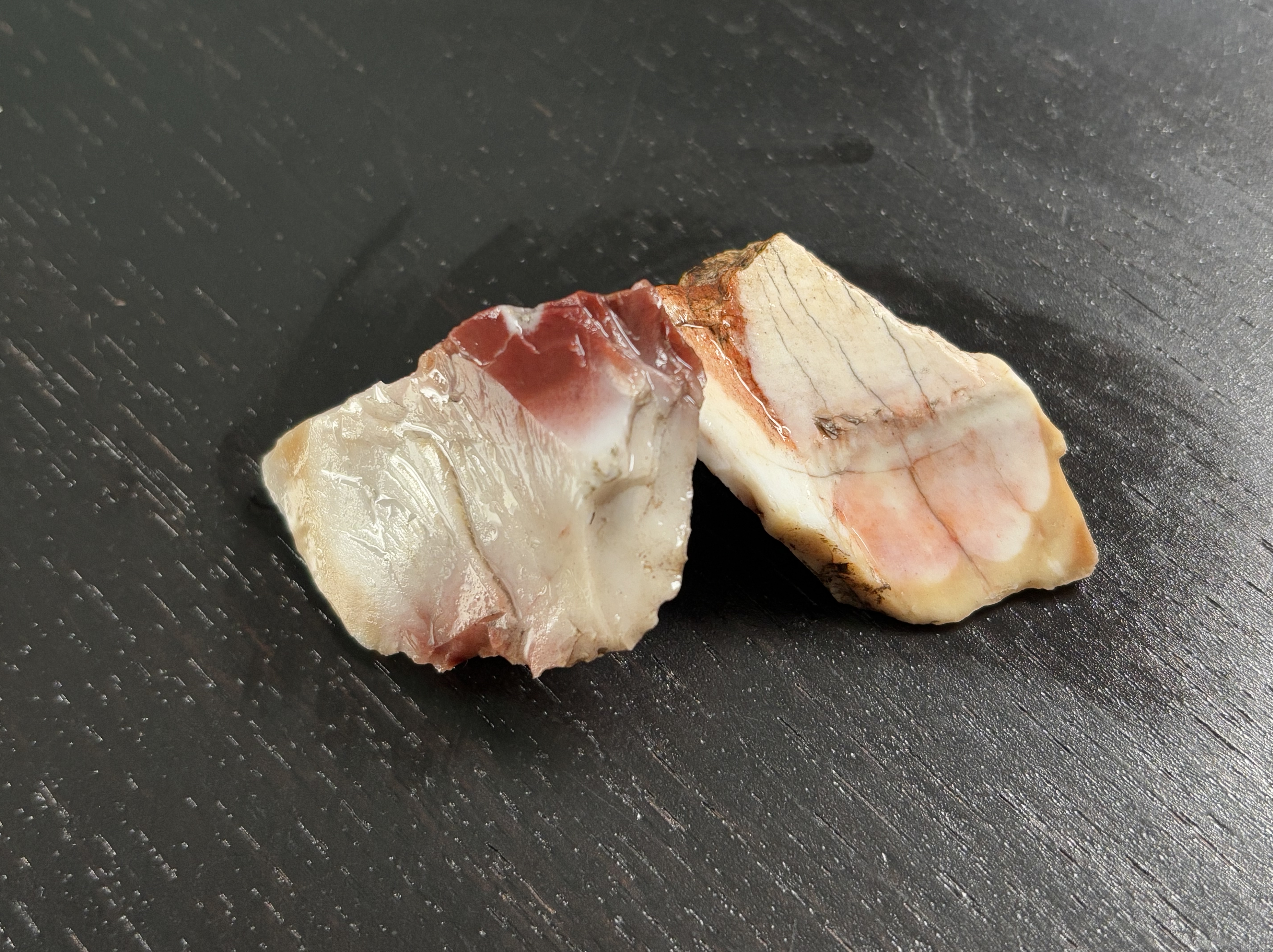
Novaculite is a form of chert—a hard, fine-grained rock that’s comprised mostly of quartz (silicon dioxide). The colors in it are traces of iron, aluminum, and other metals. It formed as tiny particles of marine animals like sponges and zooplankton were deposited when Arkansas was deep underwater during the middle of the Paleozoic (~450-350 million years ago). As water became land and the Ouachita Mountains rose up to around 10,000 feet, the deposits were lightly metamorphosed (pressure cooked) giving them that slightly shiny look. This uplift occurred ~300 mya—still pre-dinosaur era when pretty much all land was in the super-continent Pangea. Since then, the Arkansas Novaculite has just been sitting around, resisting erosion as best it can (which is still going well, especially relative to the shale and sandstone around it!). It’s a fairly rare rock—only found here, the Middle East, and Japan. In all three places, novaculite has been mined since prehistoric times for arrow and spear points, and, more uniquely, sharpening stones. Apparently its 3–5-micron quartz particle size is perfect for putting the final edge on a metal blade. You can buy a novaculite “Arkansas Stone” for sharpening your high-end knives online right now!
Day 12, Ozone Falls, Tennessee: Beautiful ice formations festooned the rocks, moss, trees, and ground near one of the most impressive waterfalls I’ve seen in the East. Vast expanses of needle ice carpeted the bare dirt, reaching several centimeters in length.

Needle ice is an amazing demonstration of the high capillarity of water. It forms when the ground is above freezing and the air is below freezing, as can occur on a cold night after a relatively warm day. Capillary action pulls unfrozen ground water to the surface through narrow channels between soil particles. There it freezes. As more water moves in to take its place, the frozen bits are pushed up in long, skinny columns. This process occurs where there is flowing ground water, ensuring a constant source of building material. It also requires and a high amount of silt and organic content in the soil, which produces the medium-sized spaces where capillary action works best. Stream banks often have the right combination of these ingredients. Once you’re done admiring its beauty, one of life’s simple pleasures is to stomp on it. The crunch is so satisfying!
The falls were our last stop before making it home. It definitely added a fun element to the trip to make a natural observation even on days that were more focused on interesting culture and tasty food!

 botanicalramblings