Jenny, Poppy (our dog) and I just returned from a backpacking trip in the Mount Rogers National Recreation Area in Virginia. Despite some rain and routing snafus, the trip was very successful on a few fronts. First, Poppy did a great job on her first backpacking trip, carrying her own food and not pulling on her leash very much at all! Second, we found a number of amazing and rare salamanders (see my Instagram). And finally, we had plenty of trail snacks!
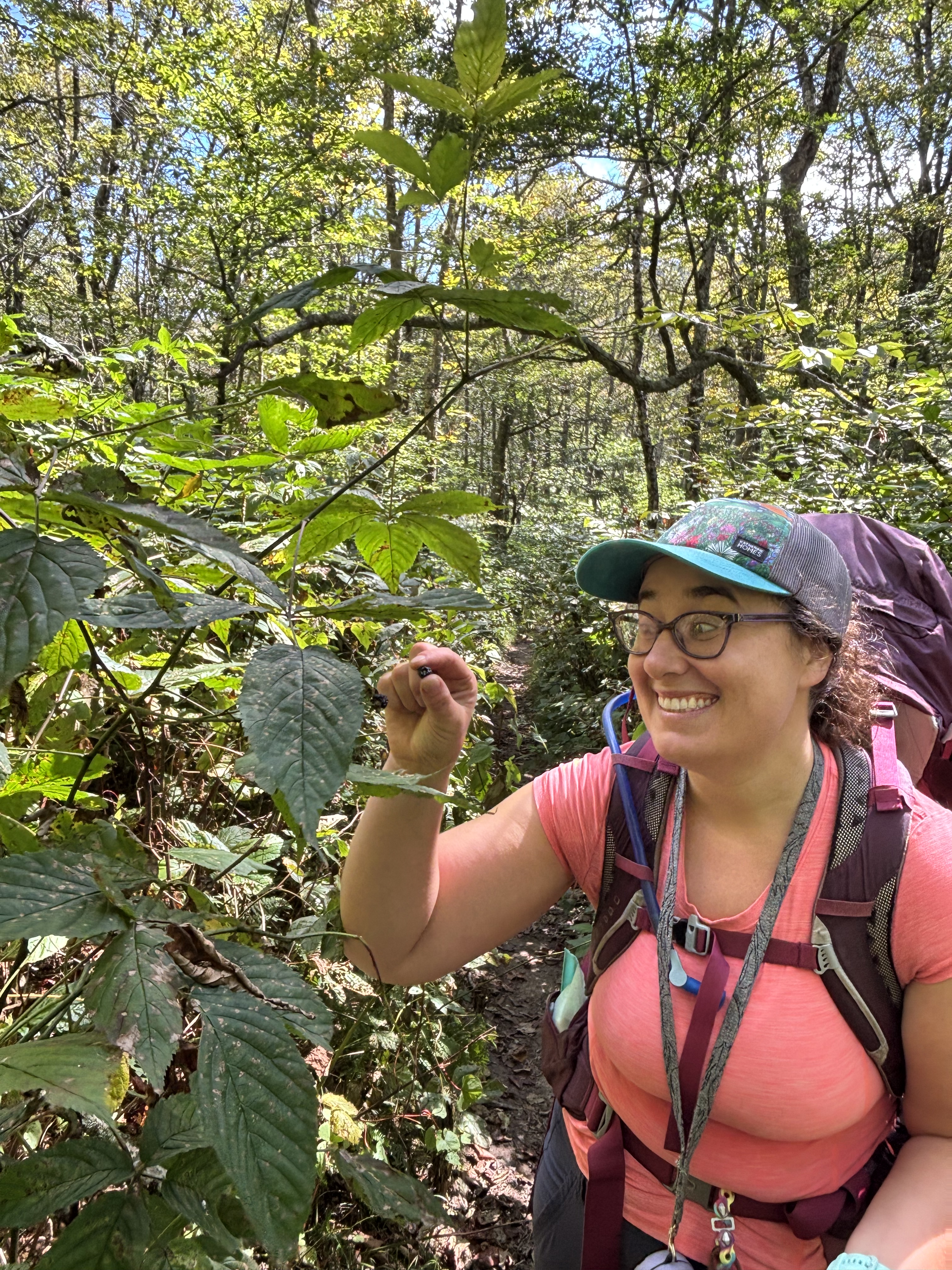
One of the best parts about hiking in the mountains in late summer and fall is the abundance of edible plants. It’s so convenient to grab some tasty fresh berries from a bush rather than take off a heavy pack and settle for a stale granola bar. Yes, there are many species of poisonous plants and mushrooms–I wouldn’t recommend eating anything without identifying it first. But I do have a PhD in botany, and I might as well put it to use!
The two most common berries we snacked on were Rubus allegheniensis (Allegheny blackberry) and Vaccinium erythrocarpum (bearberry). They were both abundant in the shrub balds—treeless expanses along some of the ridges at the highest elevations of our hike. We also found some Cantharellus lateritius (smooth chanterelles) just before dinner, and added the mushroom into our pasta. While I had never the three of these previously, I had eaten close relatives before. The genus Rubus includes all blackberries, raspberries, dewberries, and our personal favorite, thimbleberries. Vaccinium is the genus for all blueberries, deerberries, and cranberries. And the California golden chanterelle (Cantharellus californicus) is the first wild-foraged mushroom I collected myself. Honestly, the flavor on all three was just okay relative to their congeners. But that’s being a bit of a trail snack snob—the berries were juicy, sweet and bountiful, and the mushroom added a nice depth of flavor to our pre-packaged meal.
The Southeast actually has a higher diversity of edible plants and mushrooms than the West Coast. Therefore, there are plenty of future new snacking opportunities along the trails ahead. I’m looking forward to trying the two species of pawpaw (Asimina)that grow natively in the state.
 botanicalramblings