September 7: Life as a Dragonfly

Since getting hooked on identifying odonates in California this summer, I have definitely brought my new obsession back east. In the last month, I’ve found 10 species of damselflies and 19 species of dragonflies in North Carolina. It’s unfortunately the tail end of the season, so with the exception of a few fall-flying species, I’ll have to wait until early next summer to continue my quest.

In the meantime, I want to talk a bit about how one finds dragonflies. Like most hunts, success comes from thinking like the quarry. What habitat requirements do dragonflies need to hunt, mate, and escape predation? What time of day and weather conditions are ideal? Do they fly high in the air, or stay close to the ground? The answer, like most things in nature, is that it depends on the species!

Due to their aquatic larval stage, water is the first thing to which all dragonflies must attend. Different species of larvae prefer different aquatic conditions, and, with some exceptions (such as saddlebags and Aeshna darners), the adults stay close to the preferred type. The biggest divide comes between species that need still waters such as ponds and lakes, and those that need flowing water of rivers and streams. Large groups of odonates can have similar preferences for larval habitat—for instance, most species in the Skimmer Family (Libellulidae) prefer ponds, while those in the Cruiser Family (Macromiidae) are usually in flowing water. But preferences can vary even within genus. I caught this Blue-fronted Dancer (Argia apicalis) at Salem Lake.

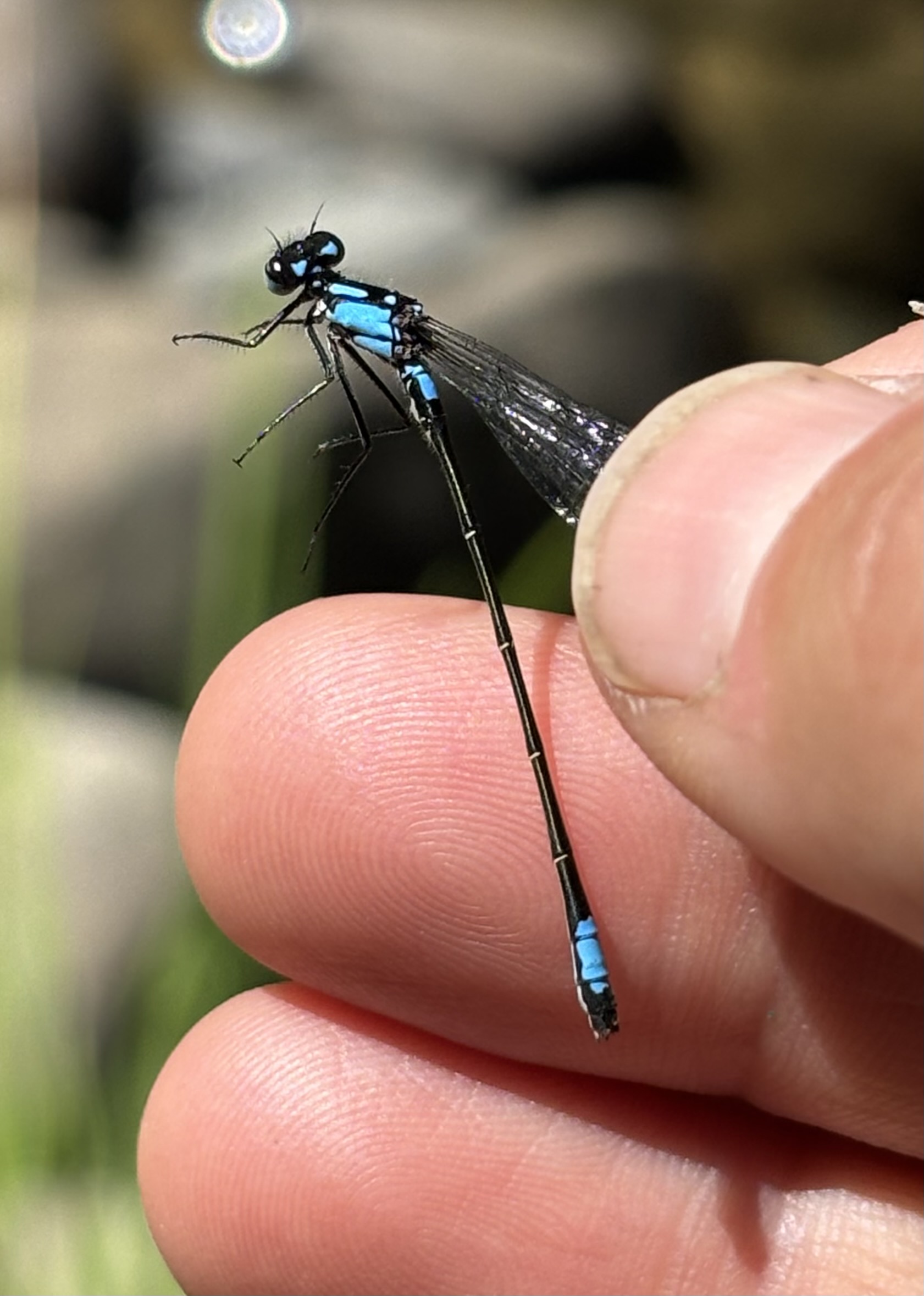
On the other hand, this Blue-tipped Dancer (Argia tibialis), a stream specialist, would never be seen there!
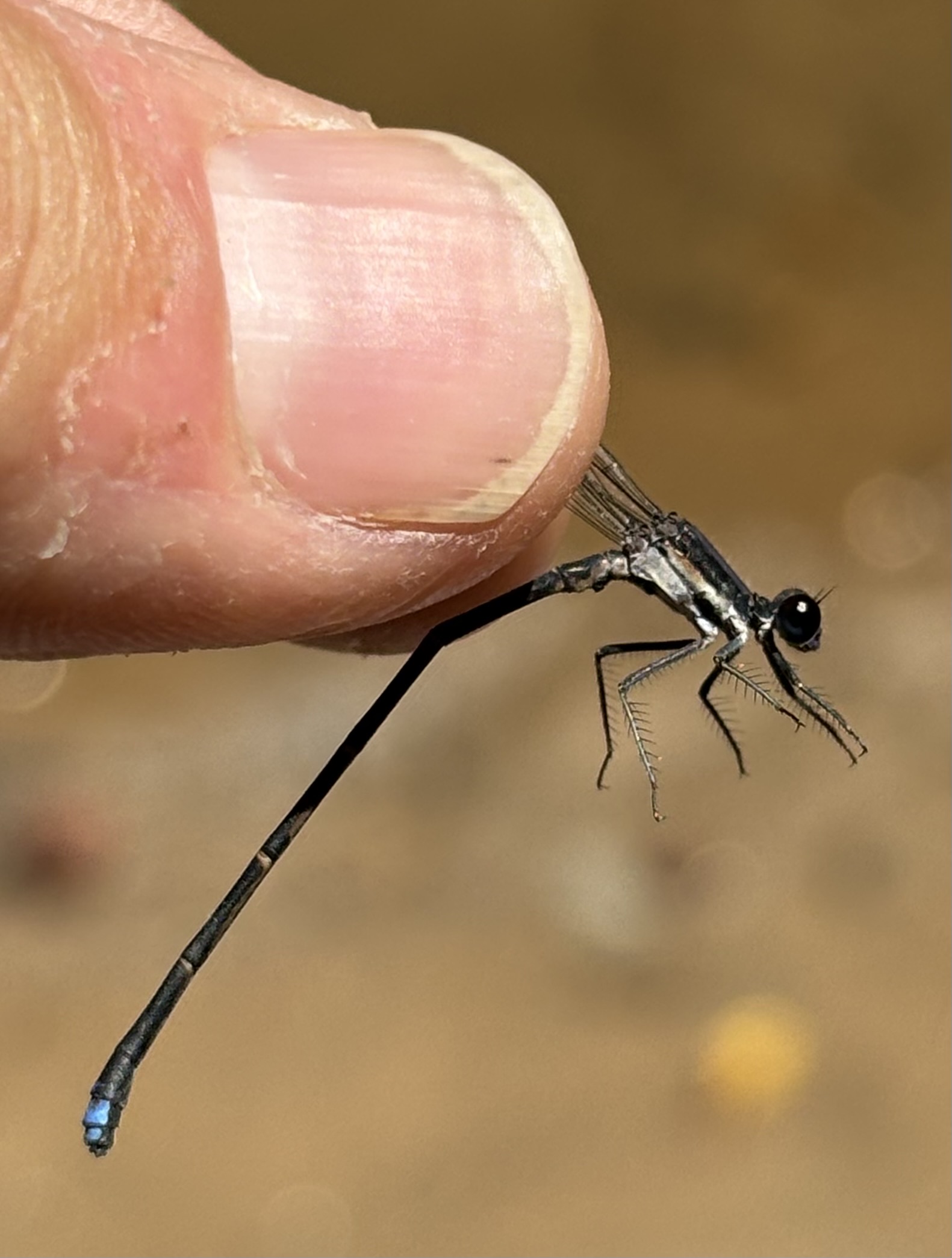
Beyond movement, water quality, substrate type (sandy, muddy, or rocky bottom), amount and type of aquatic vegetation, and the presence of aquatic predators such as fish will determine which species can breed at a body of water. The most unique larval habitat of species I found this month goes to the Seaside Dragonlet (Erythrodiplax berenice), which amazingly lives in salt water!

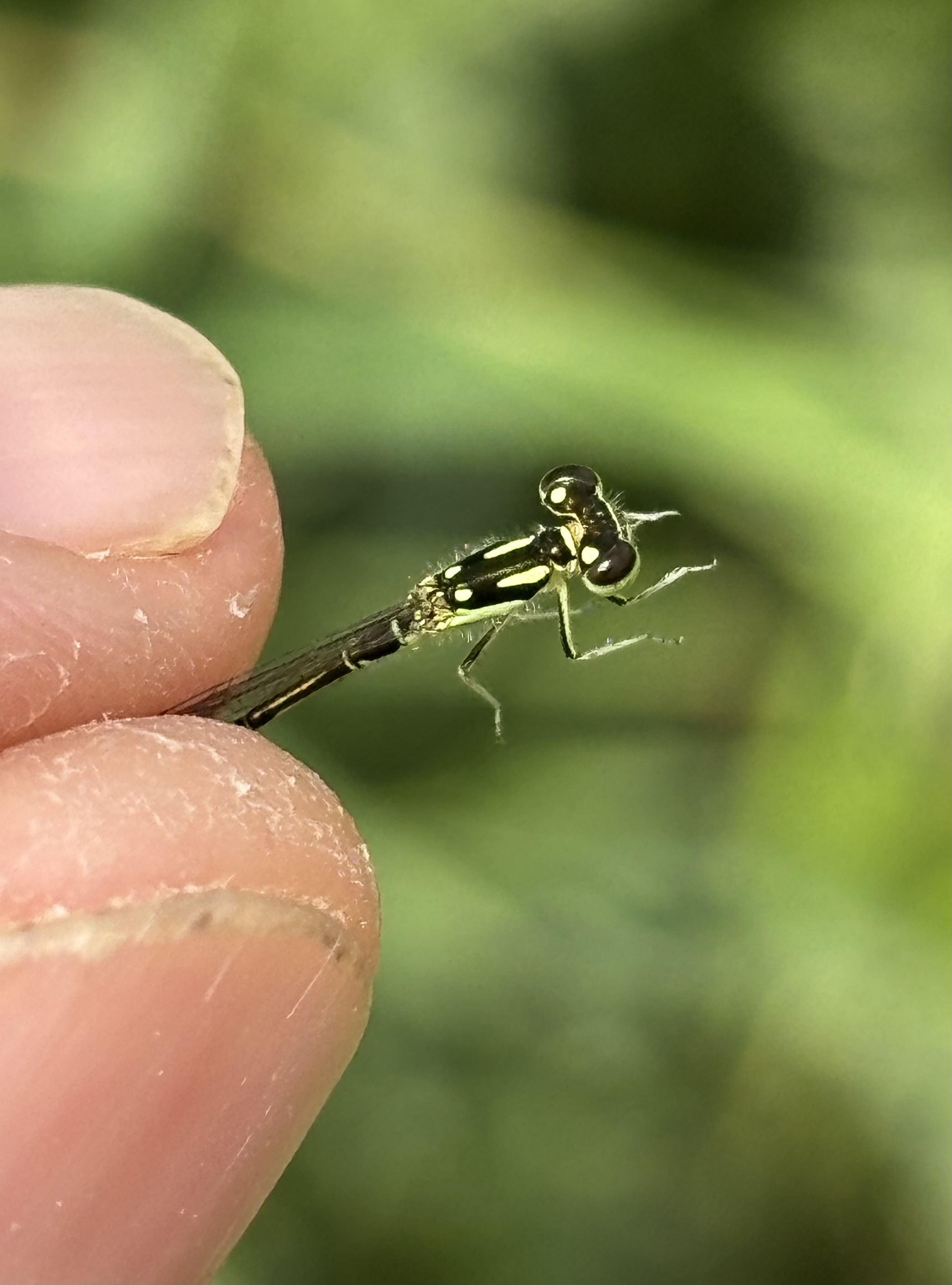
Just like birds, different species of dragonflies can be found in a variety of different microhabitats within a site, from the ground up to the tops of the trees. Males of the species tend to be very territorial, chasing away other individuals, and frequently other species. Females can also be territorial, but are more likely to hide from the advances of the males, who are aggressively pursuing matings. A top-notch territory will have good oviposition sites and plenty of other insects to eat. Small, weak-flying species such as this Fragile Forktail (Ishnura posita) look for lots of vegetation in which to hide.
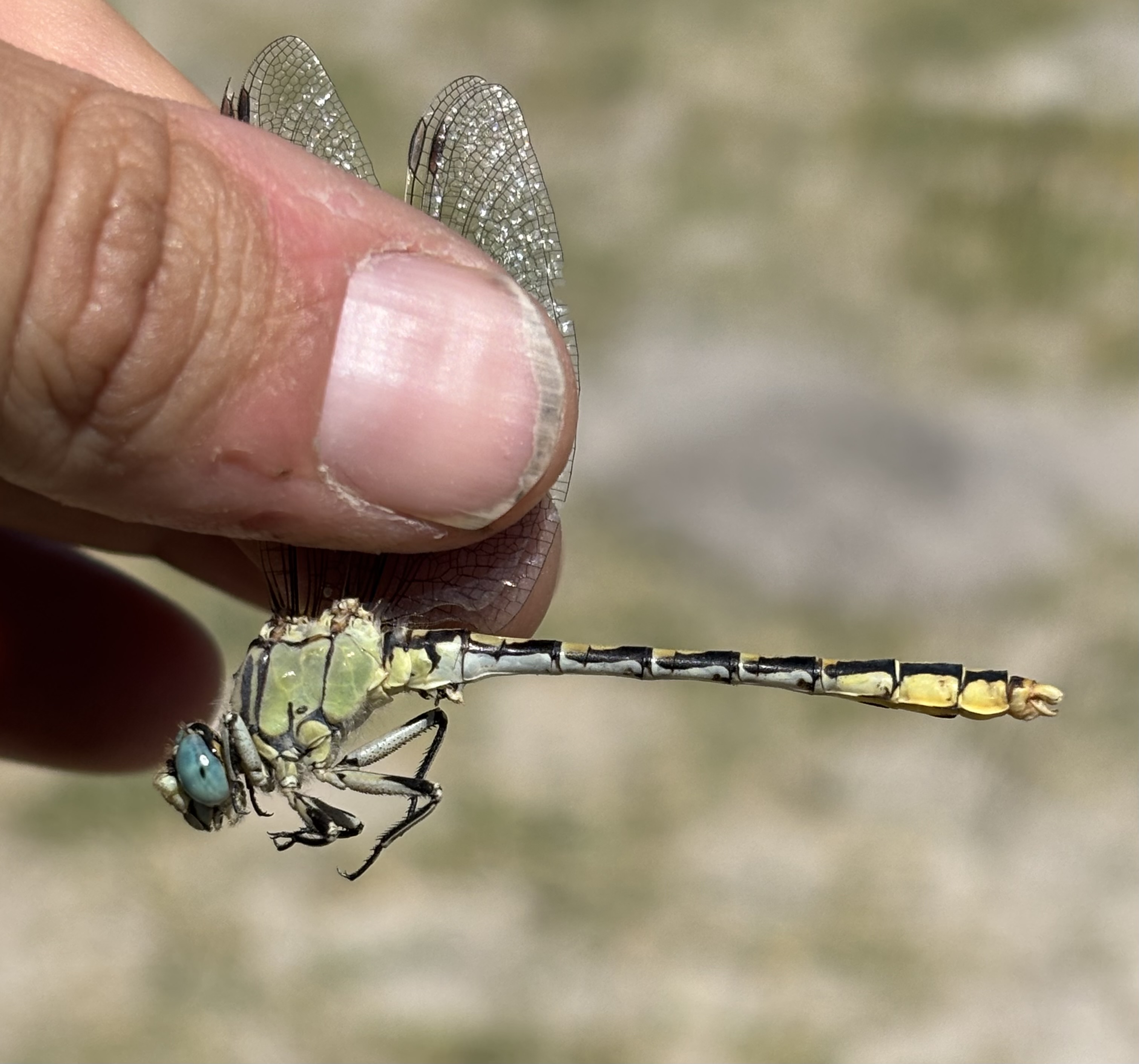
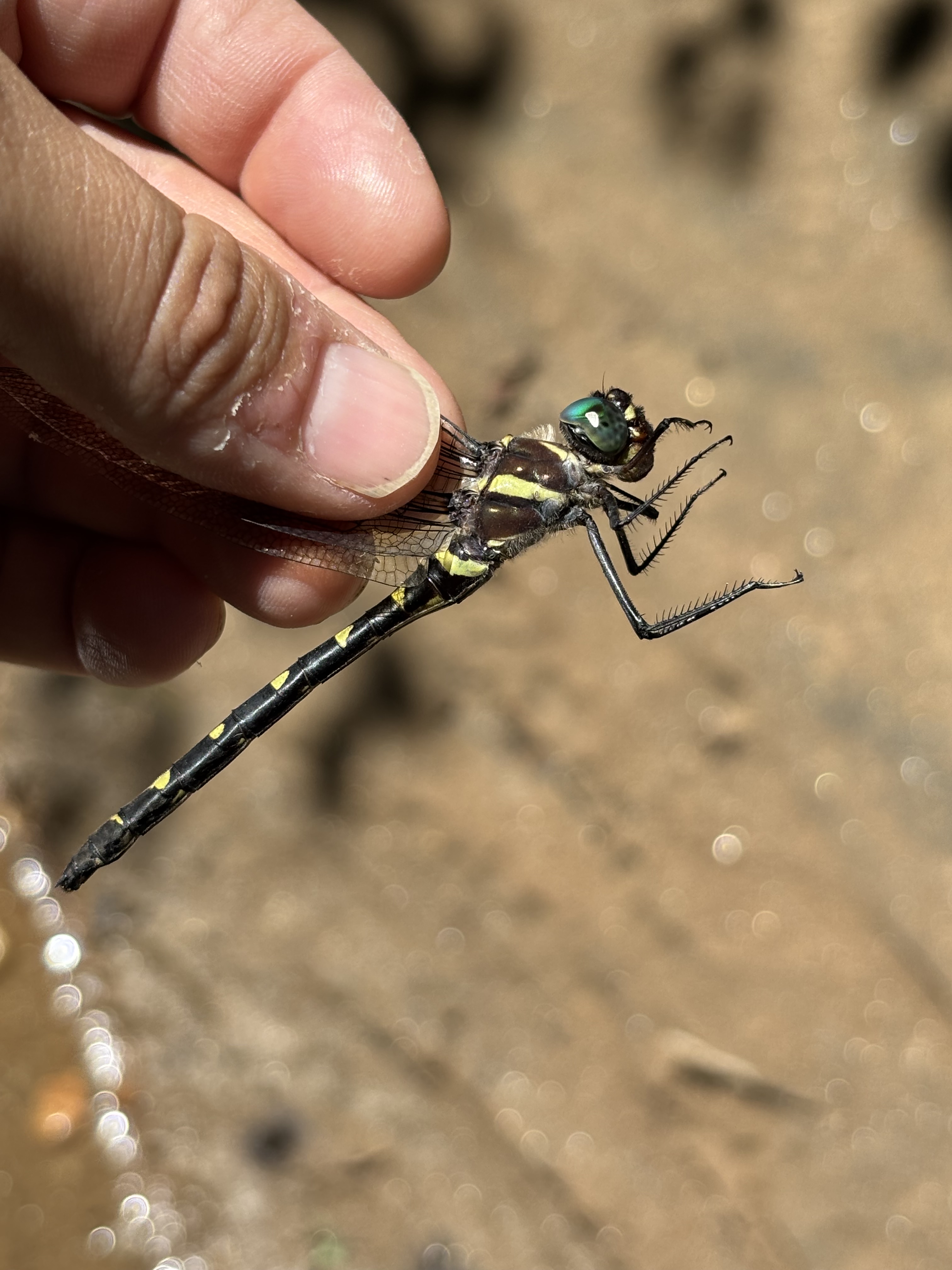
On the other hand, this Dragonhunter (Hagenius brevistylus) is the top insect predator in the streams where it’s found, eating other large dragonflies. It boldly goes wherever it wants.

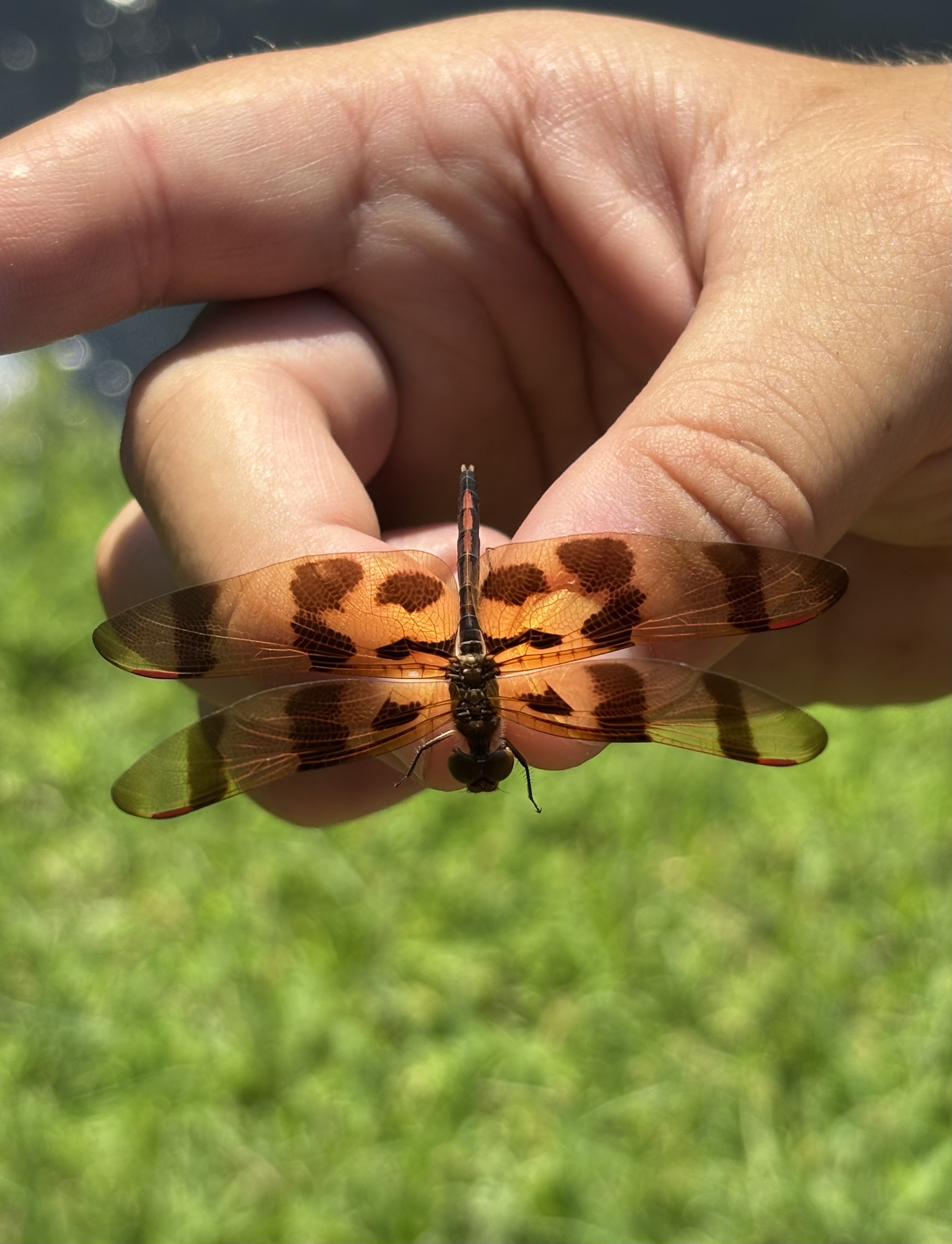
One big split in dragonfly behavior is between perching and patrolling species. Perching species, like this Halloween Pennant (Celithemis eponina) watch for food, friends, and foes from the top of a branch or grass blade.  While perching, they can orient their body toward or away from the sun in order to thermoregulate.
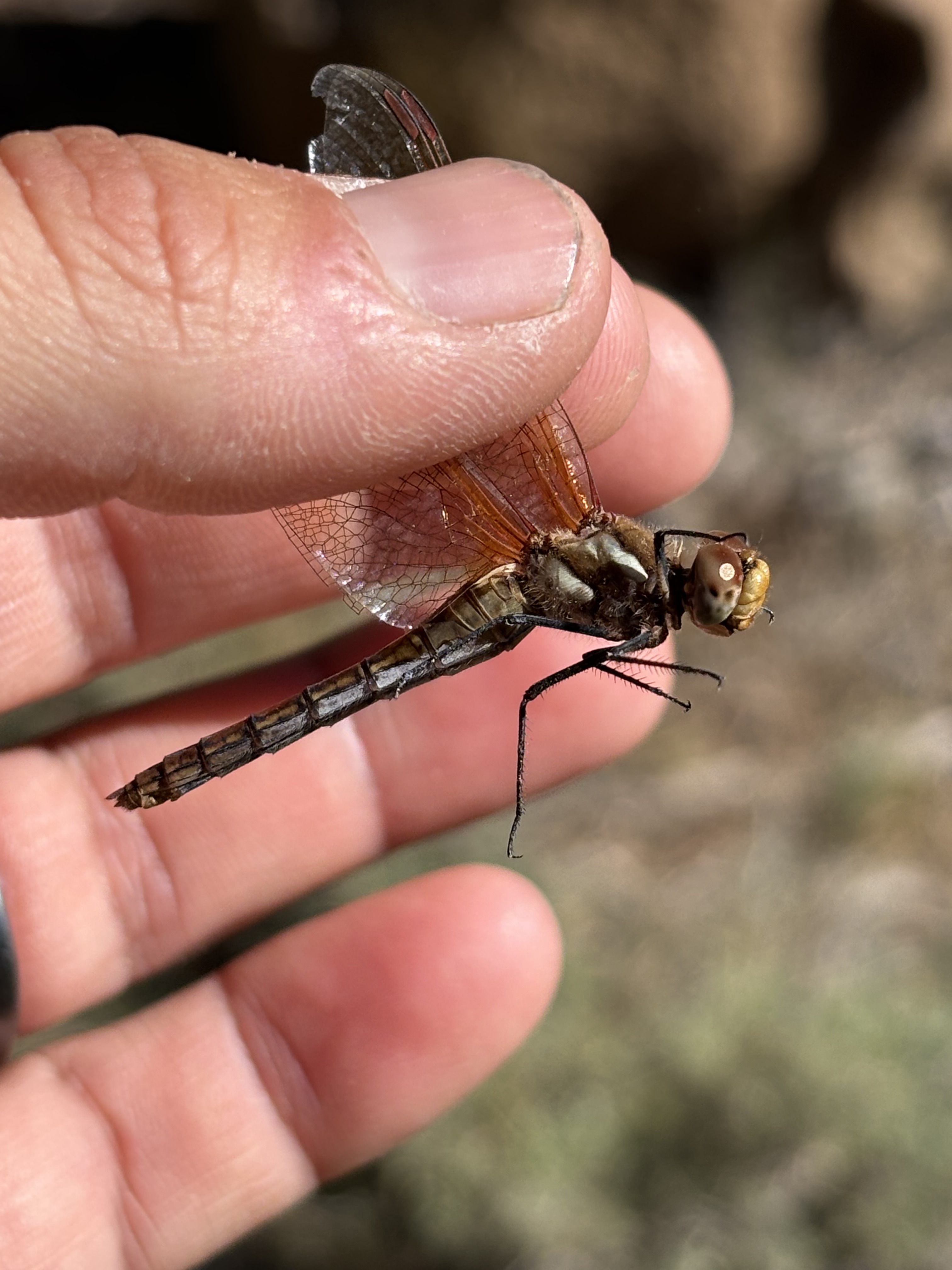
Patrollers, such as this Swift River Cruiser (Macromia illinoiensis), have linear territories of shorelines or sections of streams than they continuously traverse. They are often harder to catch with a net than the perchers!
The size of a dragonfly’s territory varies quite a bit among species, as well. On the small end, species like this Eastern Amberwing (Perithemis tenera) tend to stay within a 15 foot diameter.
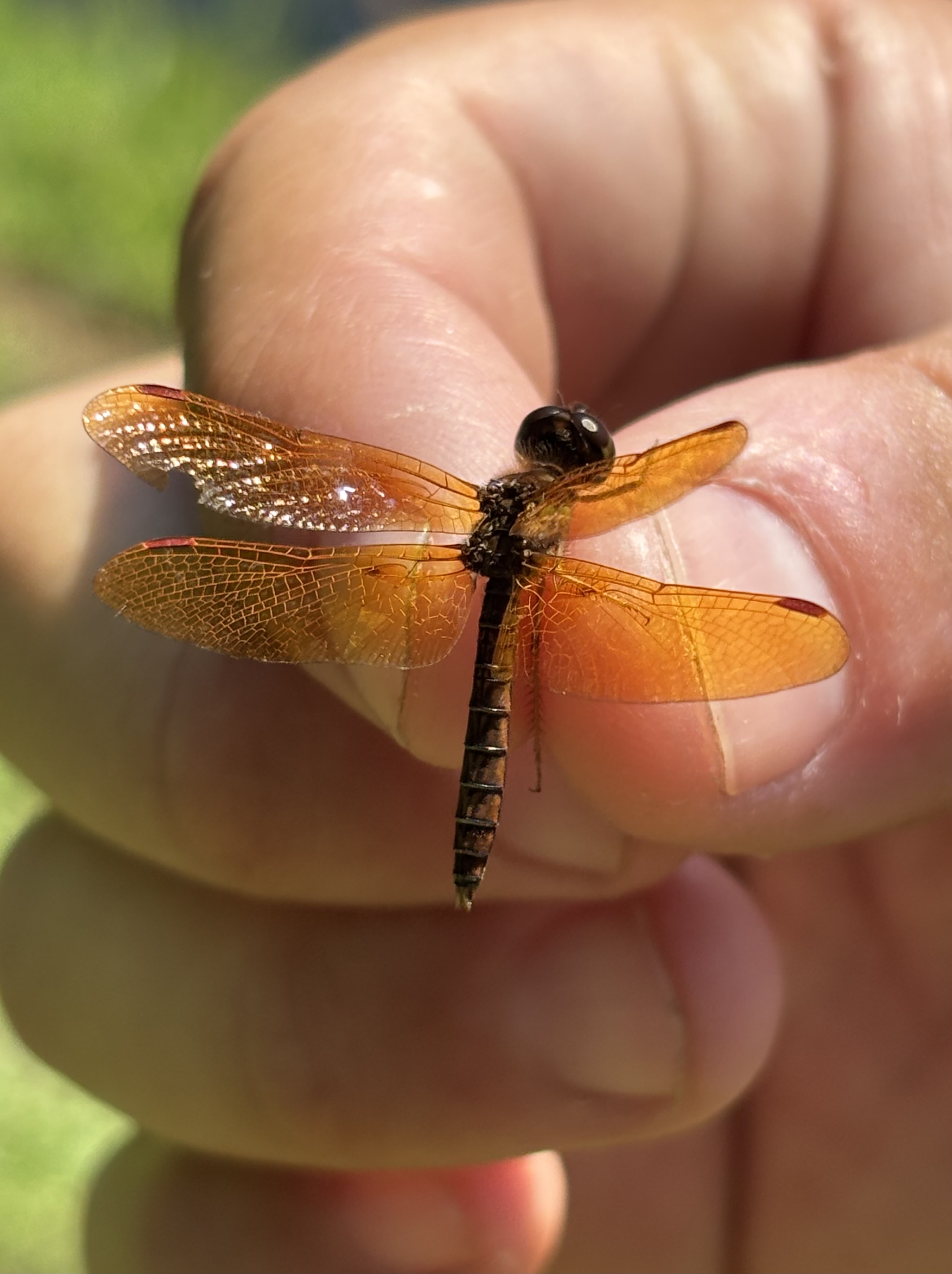
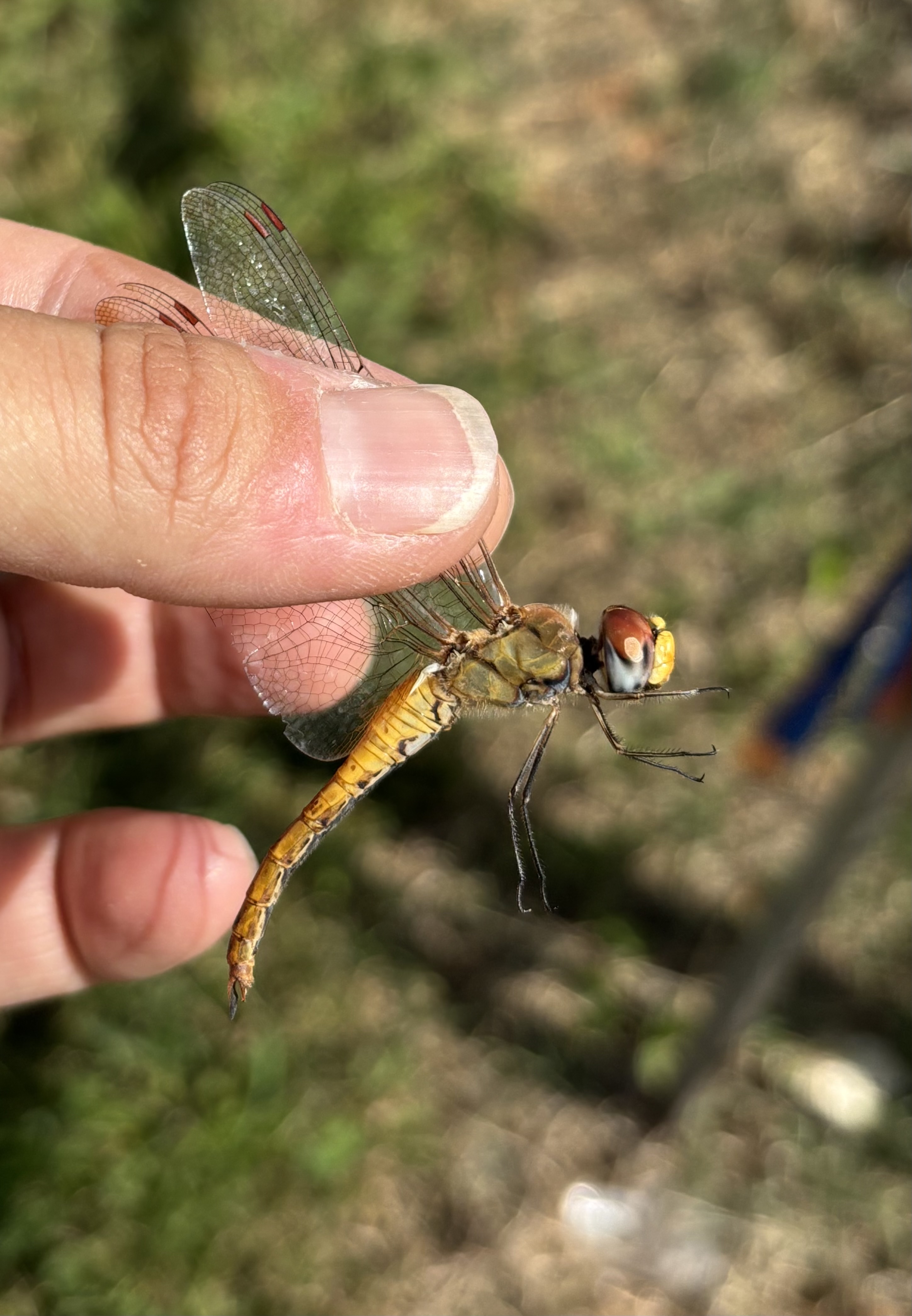
Other species, such as the Comet Darner (Anax longipes), defend entire ponds. Finally, a few species, such as this Wandering Glider (Pantala flavescens) are migratory, with individuals travelling hundreds of miles.
The more I look for and learn about odonates, the more amazed by their beauty and variety. With over 100 species left to find in North Carolina, and many more within road trip distance, I know I’ll be chasing after these flying wonders for years to come.

August 12 2025: The Great Odonate Race Results

The summer 2025 run of my California Ecology and Conservation class concluded today, and with it, my mission to see as many damselflies and dragonflies as I could across the 50 days.  

As we always do, we started the course at Blue Oak Ranch Reserve (BORR) near San Jose. This reserve has a few permanent ponds without any fish—perfect habitat for a number of widely distributed species that breed in still water. While I hadn’t yet conceived of the contest, I couldn’t help but notice five species of dragonfly including the Western Pondhawk (Erythemis collocata), the Black Saddlebags (Tramea lacerata), and the largest species I would see, the Common Green Darner (Anax junius).

After a week, we headed north to Angelo Coast Range Reserve. Odonate habitat here is extremely different—fast flowing rivers and streams that cut through dense forests. That meant there was very little overlap in species. Dragonfly highlights here included the impressive Western River Cruiser, and three species in the Clubtail Family, the Bison Snaketail (Ophiogomphus bison), the Pacific Clubtail (Phanogomphus kurilis), and the Grappletail (Octogomphus specularis).

I also worked on learning my damselflies. These smaller cousins to dragonflies can be tricky to identify. Separating forktails (Ischnura), dancers (Argia), and bluets (Enallagma) involves paying attention to wing position and leg hair length. Telling apart species within these genera often comes down to looking at reproductive parts at the ends of abdomens with a hand lens. Some species are unmistakable however, including the jewel-like American Rubyspot (Hetaerina americana) and the California endemic Exclamation Damselfly (Zoniagrion exclamationis).

I found 16 species at Angelo, 14 of which were new for the list.

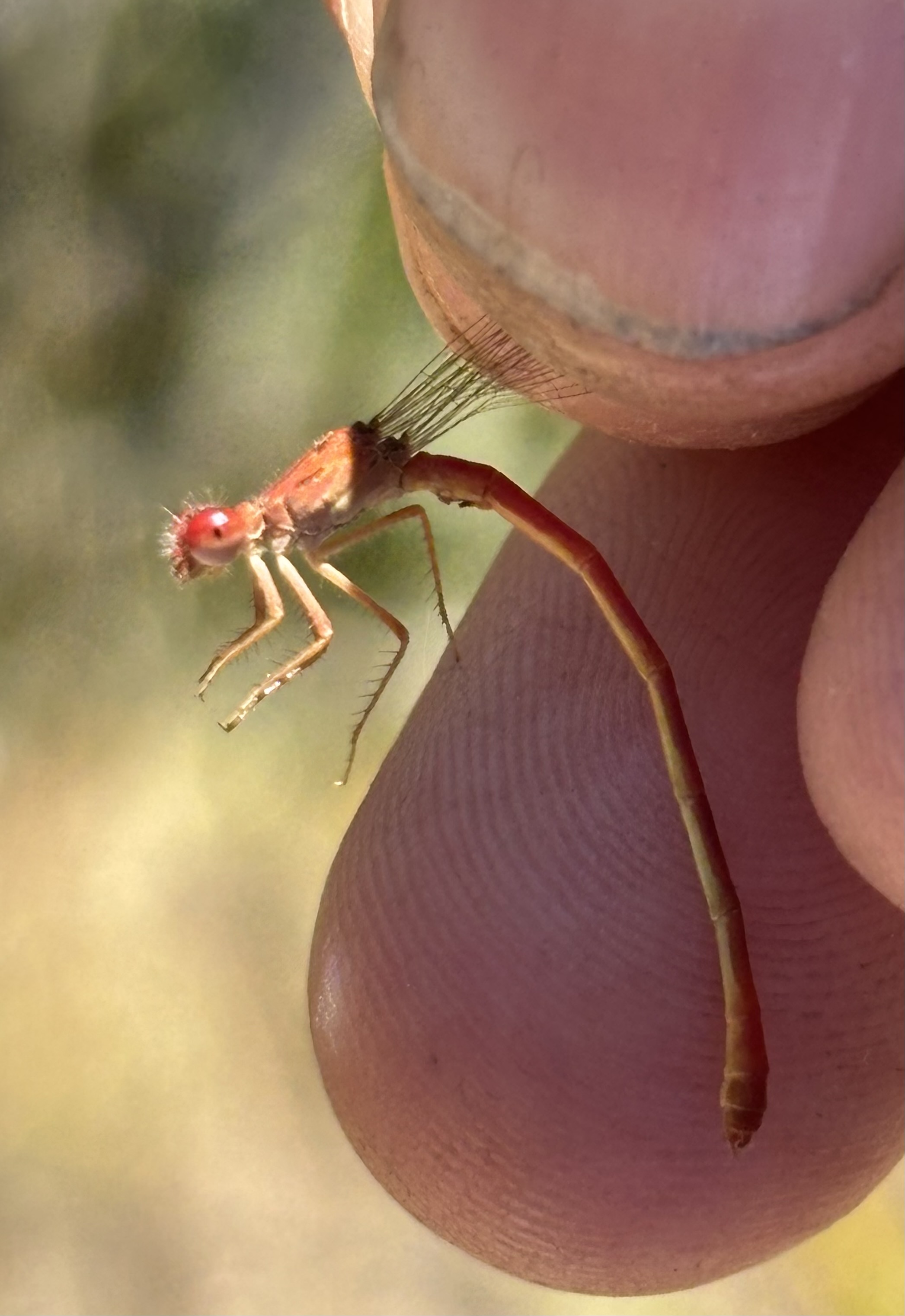
After 10 days at Angelo, we moved to Sagehen Creek Reserve in the Northern Sierra. Unlike most taxa in California, odonate diversity actually peaks to the North and at higher elevations. Therefore, I had high expectations for this stop. It did not disappoint. In addition to the amazing highlight of the Black Petaltail (Tanypteryx hageni) which I mentioned in a previous post, the meadows and streams around camp had some new damselflies, such as the Western Red Damsel (Amphiagrion abbreviatum), and some great Meadowhawks, including the Red-Veined Meadowhawk (Sympetrum madidum).

On my off day, my teaching assistant, Eric, and I spent a good chunk of the day odonate hunting, visiting some small ponds near the trail to Castle Peak and some larger ones near Donner Lake. The former spot netted four new species including the Four-spotted Skimmer (Libellula quadrimaculata) and the American Emerald (Cordulia shurtleffii).

The latter added five more, including the Dot-tailed Whiteface (Leucorrhinia intacta) and the Emerald Spreadwing (Lestes dryas). The Sagehen tally ended up at 18 new additions and 24 species in total.

Next, the class went to Sierra Nevada Aquatic Research Laboratory (SNARL) in the Owens Valley. This part of California is biogeographically part of the Great Basin, and thus has many critters that aren’t found in the rest of the state. A trip to the Owens River turned up a Great Basin Snaketail (Ophiogomphus morrisoni), and a lap around an alkali lake (complete with hot springs) netted Desert Whitetail (Plathemis subornata), Alkali Bluet (Enallagma clausum), and Bleached Skimmer (Libellula composita). The snaketail and skimmer, in particular, are beautiful and uncommon species—highlights for sure! I left SNARL with 10 new species (23 total).

The final new stop for the summer was Rancho Marino Reserve. Unfortunately, the combination of cloudy weather, dried-up wetlands, and teaching obligations kept my list lower here. I did manage to find nine species, but only three were new. We then returned to BORR, where I identified the local damselfly species, such as this Desert Firetail (Telebasis salva) having failed to do so during the first stint.

When I set out on the Great Odonate Race, I figured finding forty species over the 50 days of the class would be a challenging, but possible goal. I ended up tallying 53 taxa—just under half of the 108 species found in the state! Here is the complete accounting of my list:

Also see my insta (@botanicalrambler) for more pictures. I’m now totally hooked on Odonates. They are beautiful creatures with really interesting behaviors. Identification involves catching them and examining them with a hand lens—a fun but doable challenge. Conveniently, they also peak in abundance in the middle of summer, when birding gets a bit boring. I’ve already bought a guide to the Eastern species and plan to take my new obsession home.