The summer 2025 run of my California Ecology and Conservation class concluded today, and with it, my mission to see as many damselflies and dragonflies as I could across the 50 days.
As we always do, we started the course at Blue Oak Ranch Reserve (BORR) near San Jose. This reserve has a few permanent ponds without any fish—perfect habitat for a number of widely distributed species that breed in still water. While I hadn’t yet conceived of the contest, I couldn’t help but notice five species of dragonfly including the Western Pondhawk (Erythemis collocata), the Black Saddlebags (Tramea lacerata), and the largest species I would see, the Common Green Darner (Anax junius).

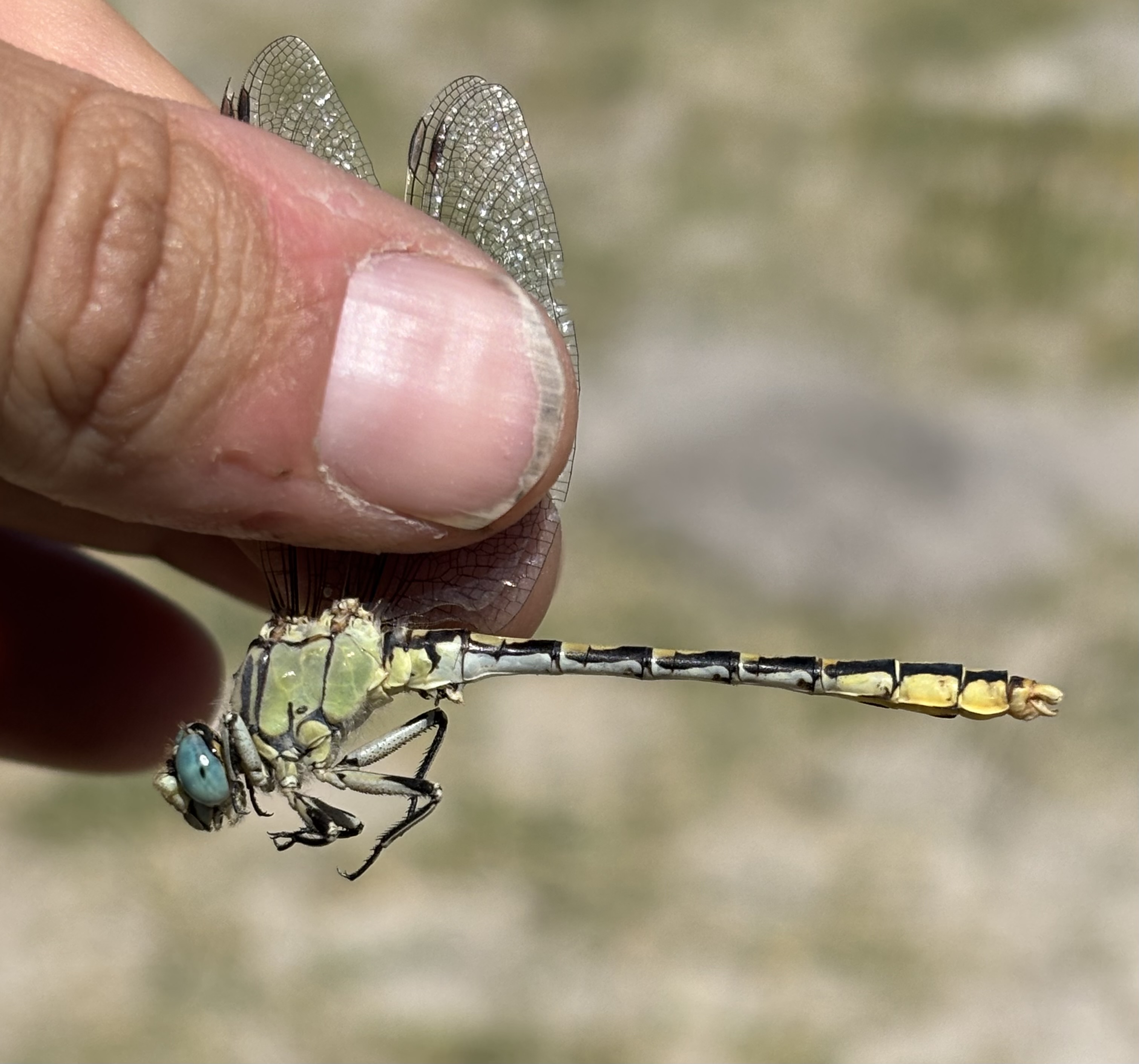
After a week, we headed north to Angelo Coast Range Reserve. Odonate habitat here is extremely different—fast flowing rivers and streams that cut through dense forests. That meant there was very little overlap in species. Dragonfly highlights here included the impressive Western River Cruiser, and three species in the Clubtail Family, the Bison Snaketail (Ophiogomphus bison), the Pacific Clubtail (Phanogomphus kurilis), and the Grappletail (Octogomphus specularis).

I also worked on learning my damselflies. These smaller cousins to dragonflies can be tricky to identify. Separating forktails (Ischnura), dancers (Argia), and bluets (Enallagma) involves paying attention to wing position and leg hair length. Telling apart species within these genera often comes down to looking at reproductive parts at the ends of abdomens with a hand lens. Some species are unmistakable however, including the jewel-like American Rubyspot (Hetaerina americana) and the California endemic Exclamation Damselfly (Zoniagrion exclamationis).
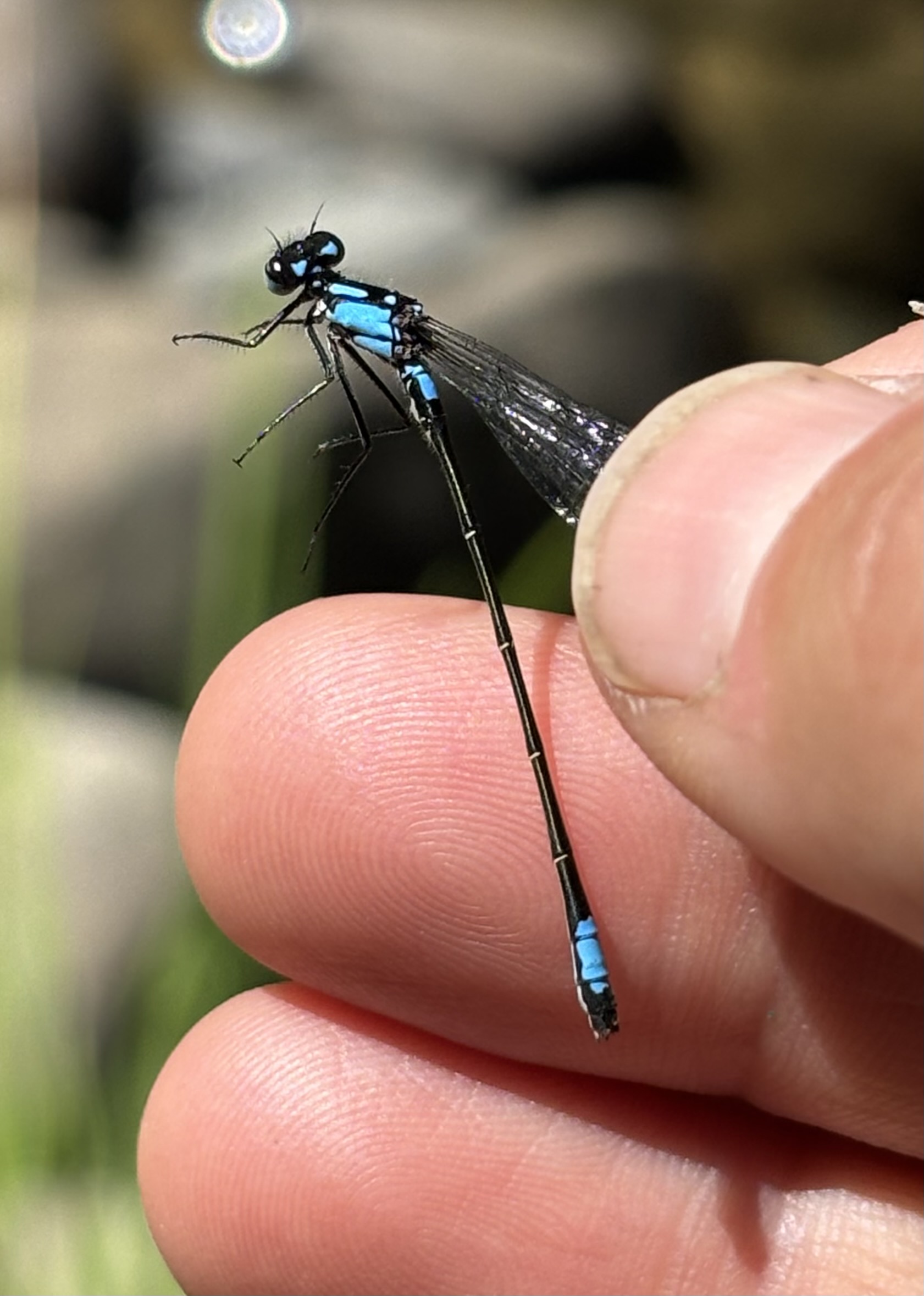
I found 16 species at Angelo, 14 of which were new for the list.
After 10 days at Angelo, we moved to Sagehen Creek Reserve in the Northern Sierra. Unlike most taxa in California, odonate diversity actually peaks to the North and at higher elevations. Therefore, I had high expectations for this stop. It did not disappoint. In addition to the amazing highlight of the Black Petaltail (Tanypteryx hageni) which I mentioned in a previous post, the meadows and streams around camp had some new damselflies, such as the Western Red Damsel (Amphiagrion abbreviatum), and some great Meadowhawks, including the Red-Veined Meadowhawk (Sympetrum madidum).
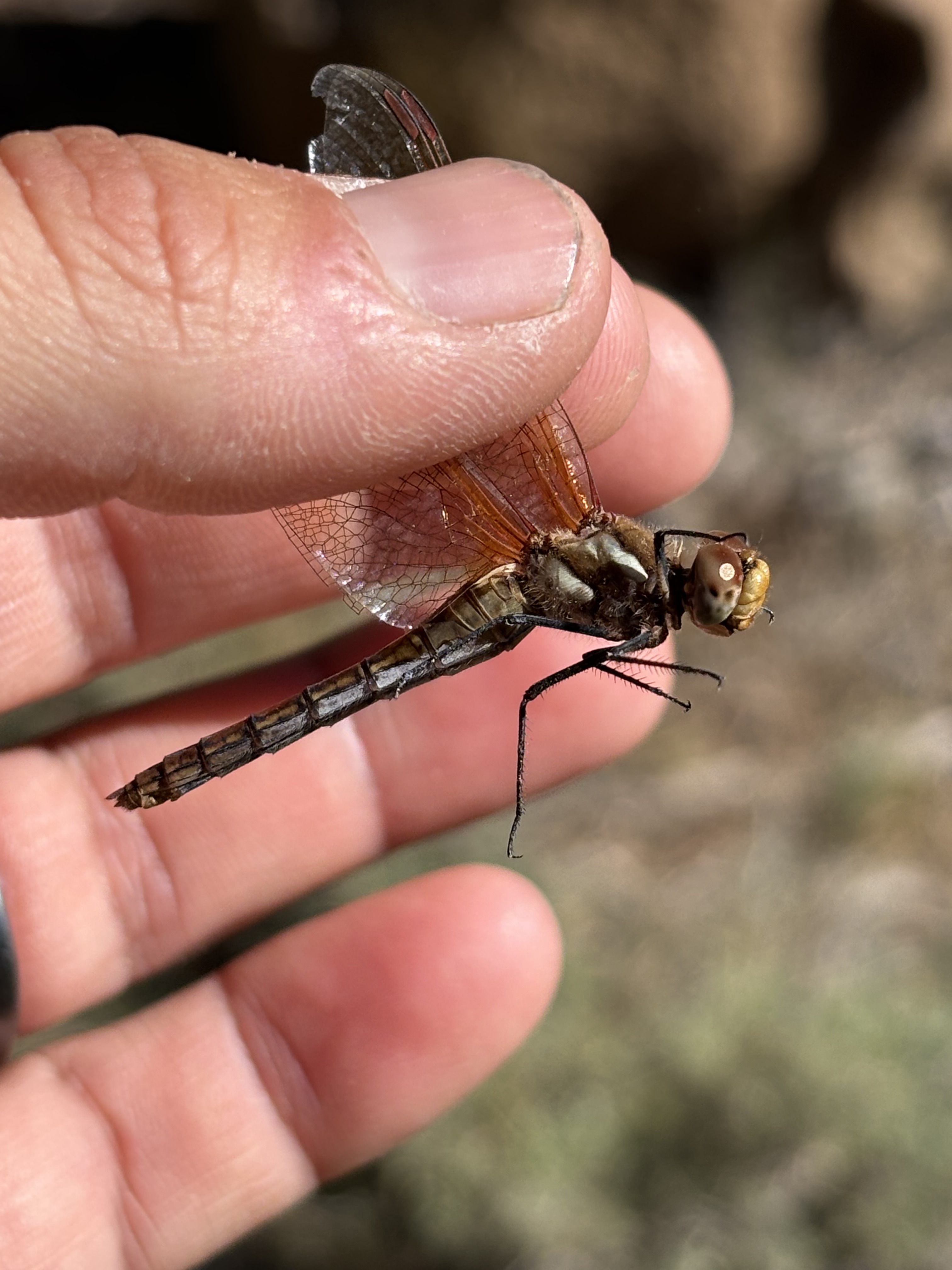
On my off day, my teaching assistant, Eric, and I spent a good chunk of the day odonate hunting, visiting some small ponds near the trail to Castle Peak and some larger ones near Donner Lake. The former spot netted four new species including the Four-spotted Skimmer (Libellula quadrimaculata) and the American Emerald (Cordulia shurtleffii).
The latter added five more, including the Dot-tailed Whiteface (Leucorrhinia intacta) and the Emerald Spreadwing (Lestes dryas). The Sagehen tally ended up at 18 new additions and 24 species in total.
Next, the class went to Sierra Nevada Aquatic Research Laboratory (SNARL) in the Owens Valley. This part of California is biogeographically part of the Great Basin, and thus has many critters that aren’t found in the rest of the state. A trip to the Owens River turned up a Great Basin Snaketail (Ophiogomphus morrisoni), and a lap around an alkali lake (complete with hot springs) netted Desert Whitetail (Plathemis subornata), Alkali Bluet (Enallagma clausum), and Bleached Skimmer (Libellula composita). The snaketail and skimmer, in particular, are beautiful and uncommon species—highlights for sure! I left SNARL with 10 new species (23 total).

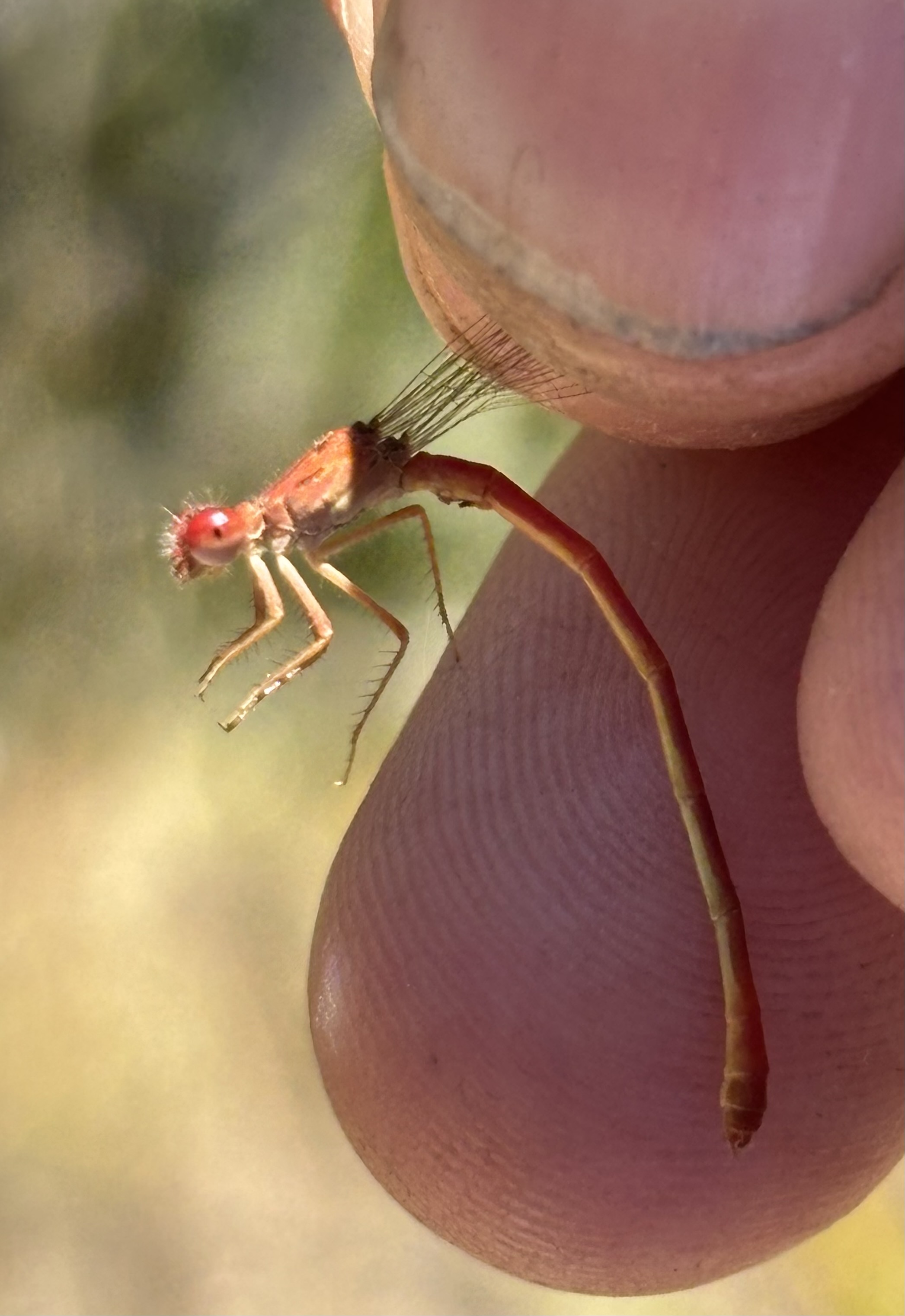
The final new stop for the summer was Rancho Marino Reserve. Unfortunately, the combination of cloudy weather, dried-up wetlands, and teaching obligations kept my list lower here. I did manage to find nine species, but only three were new. We then returned to BORR, where I identified the local damselfly species, such as this Desert Firetail (Telebasis salva) having failed to do so during the first stint.
When I set out on the Great Odonate Race, I figured finding forty species over the 50 days of the class would be a challenging, but possible goal. I ended up tallying 53 taxa—just under half of the 108 species found in the state! Here is the complete accounting of my list:

Also see my insta (@botanicalrambler) for more pictures. I’m now totally hooked on Odonates. They are beautiful creatures with really interesting behaviors. Identification involves catching them and examining them with a hand lens—a fun but doable challenge. Conveniently, they also peak in abundance in the middle of summer, when birding gets a bit boring. I’ve already bought a guide to the Eastern species and plan to take my new obsession home.
 botanicalramblings