4. July 13, 2025: The Great Odonate Race
I’ve always been intrigued by dragonflies and damselflies (insect order Odonata). They are amazing arial acrobats, ruthless hunters, and come in a beautiful assortment of colors. However, while I can recognize some species, I haven’t put a lot of time into identifying them. For most insect orders, the prospect of getting an ID to species is a daunting one. But with dragonflies, there are a learnable number. For example, according to the excellent field guide by Tim Manolis, Dragonflies and Damselflies of California, there are only 108 species in the state. This book is an amazing reference for telling apart closely related species.
Odonate activity peaks in mid-summer, and diversity is greatest North and the mountains of the state. On this run of CEC, we’re heading to the right locations at the right times of year. Therefore, I’ve decided to see as many species as I can over the 50 days of the class. I arbitrarily set my goal at 40 species. I’ve enlisted my teaching assistant Eric on my quest. He’s a keen naturalist and a great nature photographer, which will come in handy when attempting to identify hard-to-catch species. I’ll wait to reveal most of what I’ve seen until the conclusion of the course in a month. But I’ll quickly show off my favorite find so far—Tanypteryx hageni, the Black Petaltail. Here’s a male perching on a vertical surface, as they are wont to do. The male is the sex with the titular petal-shaped end of the abdomen.
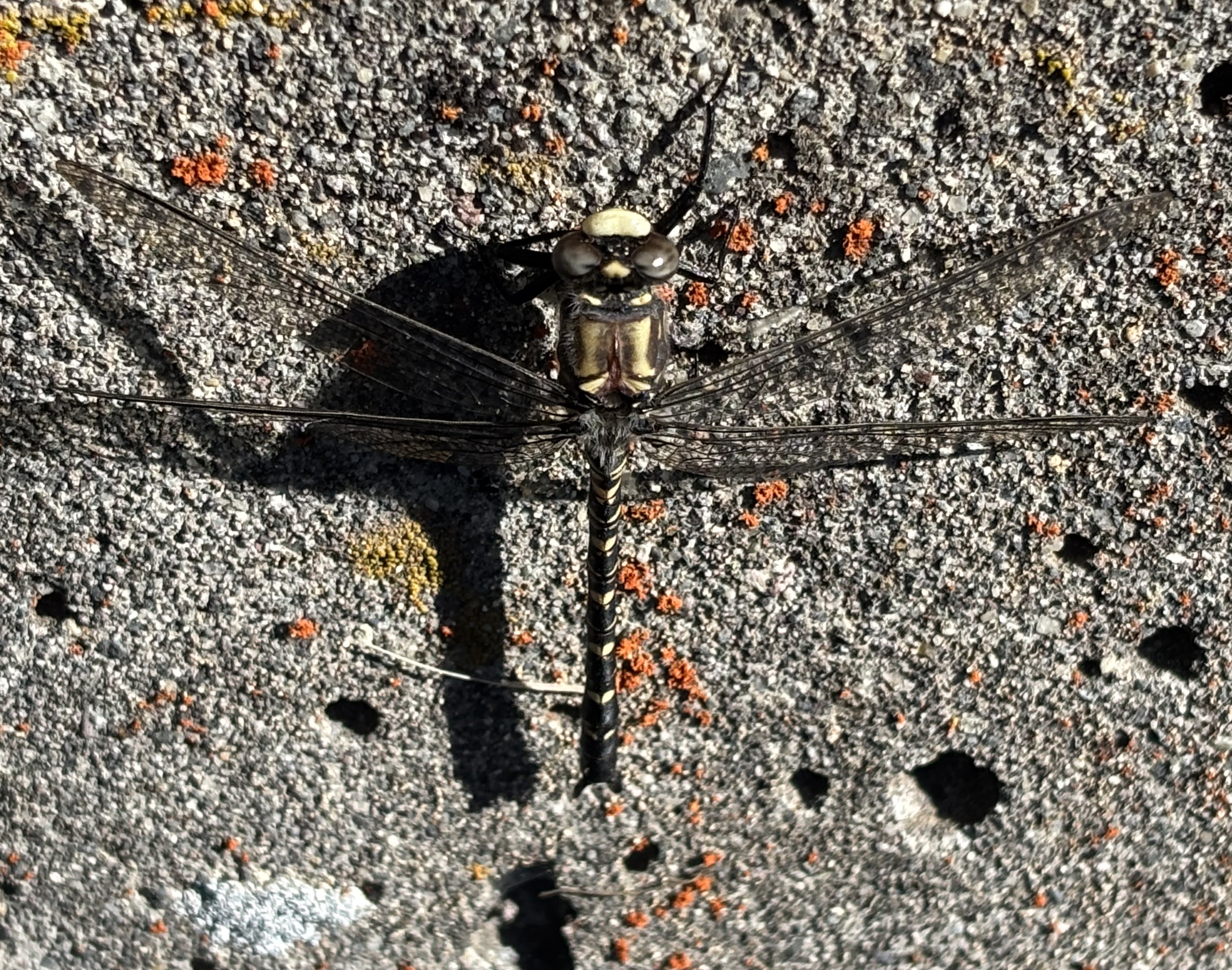
And here’s a female

This species has has super primitive morphology—it looks similar to how the first dragonflies looked way back in the Jurassic Period. It’s closest relative lives in Japan. The rest of the nine species in the family (Petaluridae) live in the southern hemisphere and include the largest extant species in the world. Unlike other dragonflies in the state, Petaltails have terrestrial (not aquatic) larvae! They live in burrows in the moss of bogs and fens, from where they ambush their insect prey. Here’s a female ovipositing (laying eggs) on the ground.

With a month to go and plenty of ponds and streams in our future, I’m excited to see what other species we’ll turn up!

 botanicalramblings