June 9, 2025: Finding Fireflies

Improved evening porch-sitting conditions are a huge perk of moving back east. As daytime temperatures shift to borderline intolerable, the days of being able to sit outside after dark with only shorts and a t-shirt begin in earnest. These lovely evenings contrast starkly with the west coast. In California and Oregon, it could be 100 degrees out in the afternoon, but as soon as the sun sets, sweatshirt are required.

Beyond the cool temperatures, Western evenings also suffer from a dearth of fireflies. That’s not to say there are no species at all. Around 20 of the 179 known species and subspecies of beetle in the family Lampyridae native to the United States can be found in the Pacific States. Here’s a picture of Photinus californicus (California glowworm) I took last year in the northern Sierra.

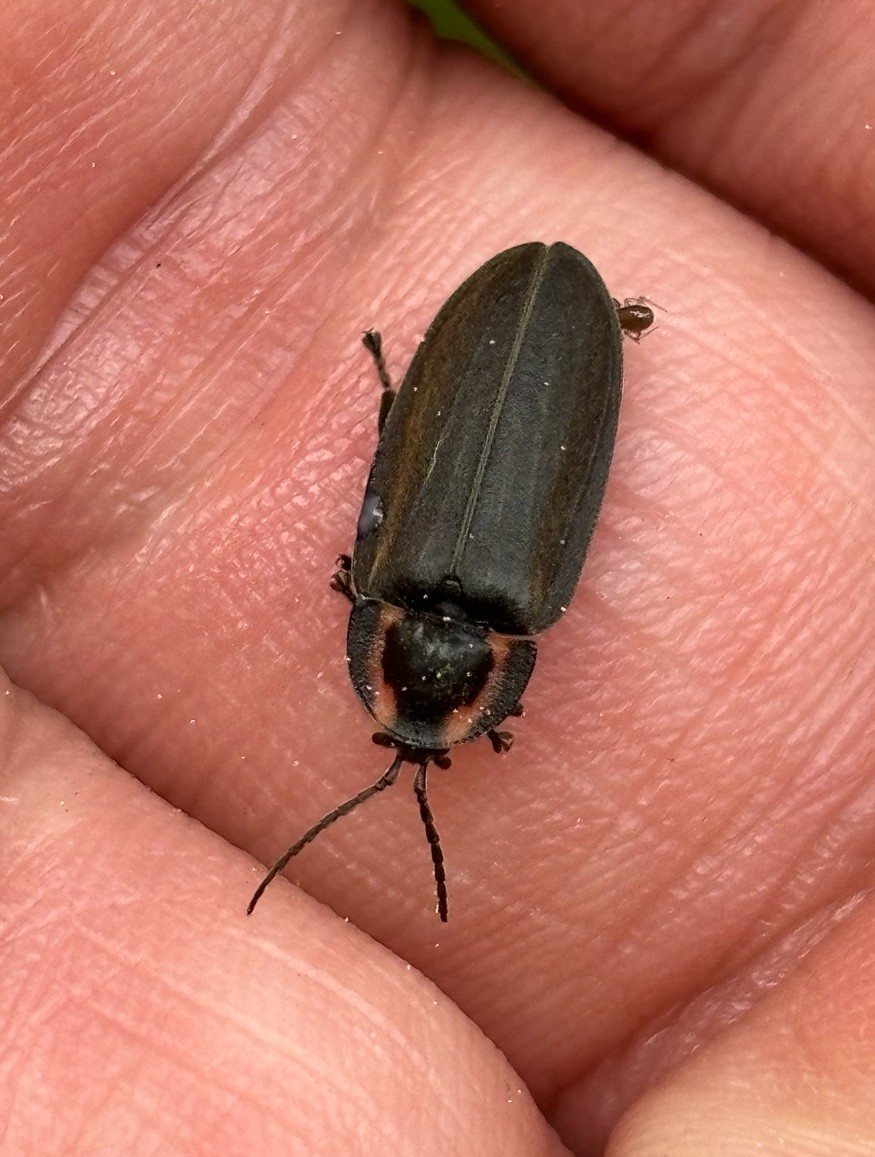
However, fireflies in the West are nowhere abundant, and they basically never put on a dramatic light show. All fireflies glow as larvae. However, within the Lampyridae, there are three styles of courtship that differ in their use of light. In “glowworms”, only the flightless females produce glow that non-glowing males fly towards. In a second group, the “dark fireflies”, both sexes lose their ability to glow as adults. These species fly during the day and use pheromones to find mates, like most other species of beetle do. Here’s a Lucidota atra (black firefly) that I found today in my house.

I also found Photinus corruscus (winter firefly) while we were in Acadia National Park last week.
While glowworms and dark fireflies occur in the west, the third strategy is unfortunately absent. These are the classic “lightning bugs”, where both males and females glow. Males will fly around blinking a specific pattern, to which the females will respond. Here’s the most common lightning bug across much of the East, Photinus pyralis.
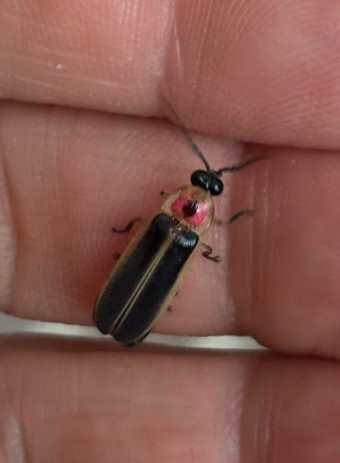
The males of this species light up for a second or so, while moving in an upward J from a couple feet above the ground. Other species will differ in the rate, length, location, flight pattern, and even color of the flash. For example, in the Appalachians of Carolina, the Phausis reticulata glows with a long, eerie bluish light. Perhaps most spectacularly, in Photinus carolinus, another Appalachian species, all the males in an area will blink in synchrony.

While the four pictured species are common, unfortunately, many species of fireflies are in trouble. Those evenings of porch sitting aren’t as wondrously lit as they used to be. The culprits are the same ones that are leading to the general global decline in insects—pesticides, habitat loss, changes in weather patterns, and the increase of artificial lights. One of the species in trouble is the state insect of Pennsylvania, Photuris pensylvanica. Like other members of its genus, this species is predatory. Female Pennsylvania fireflies blink the code of a Photinus female, luring in an unsuspecting male in to eat. Unfortunately, least according to the records in iNaturalist, the Pennsylvania firefly no longer occurs in Pennsylvania, and is making its last stand in a few scattered locations on the Delmarva Peninsula.

To at least track the decline, and hopefully aid in making some conservation decisions, there are some great citizen science projects centered around fireflies. The firefly atlas https://www.fireflyatlas.org/, is looking to collect distribution, phenology, and habitat data on all species of fireflies, but they are focused in particular on a few threatened and data deficient species. Locally, Photuris forresti (the loopy five firefly) is a target. Additionally a group of local entomologists are interested recruiting folks to help document a currently undescribed species of Phausis in the North Carolina around the Research Triangle that they are calling the Piedmont Ghost (https://carolinaghosthunt.wordpress.com/). I’m pretty excited to get involved in these efforts and find more species of these amazing beetles.

January 22: Stalking Insects in the Cold

January is a tough time to be an entomologist in North Carolina. Cold weather and lack of available food prevent arthropods (insects, spiders, slugs, etc) from making a living during the winter months. But with few notable exceptions—looking at you, monarchs—bugs are too small to migrate. That means most species need to find a protected place to hunker down and wait for warmer temperatures. They don’t truly hibernate; that’s a warm-blooded animal thing. But many do a similar thing called seasonal diapause, where they slow their metabolism and activity to almost nothing. Common overwintering locations include underground, in rotting wood, and at the bottom of streams and ponds.

Many bugs have annual life cycles, timing their life history stages with the seasons. Therefore, in addition to location, bugs vary in their overwintering life history stage. Some spend the winter as eggs (e.g. praying mantises) some as larvae (dragonflies), some as pupae (the majority of butterflies and moths) and some as adults (centipedes, lady bugs, and bumble bees). Overwintering strategies can vary dramatically even among closely related species. Because of challenges in finding them in the first place and then identifying them when you do (for example, identifying a larval or pupal stage insect requires first rearing it to an adult in a lab), we actually just don’t know where or how many species overwinter!

This week I went out to a local nature preserve to look for some bugs! I knew I could find some by flipping over logs and rocks, but I wanted to try a different strategy. Ecologically conscious gardeners know that leaving dead flower stalks standing though the winter is a great way to increase the abundance of beneficial insects such as bees. That’s because the hollow stalks are a great place to settle in for the winter. Supposedly. I’d never looked before! So armed with a pair of clippers and my fleece-lined pants (the high was 28 degrees), I set out to peer inside some plants.

The rules: stalks had to be 1) at least two feet off the ground 2) from about pencil to quarter thickness and 3) broken off or with holes or other potential entry points. Conditions of victory: find bugs in all four life history stages (egg, larva, pupa, adult).

Stunning success struck on second stem I split open! I found this adorable jumping spider in the genus Phidippus tucked into her silken hammock.

Jumping spiders don’t make webs to catch prey, but they do make little bivouacs when they settle in for the night or for a long winter’s rest. A couple centimeters further up the stem was a second web filled with little light-orange orbs.

This was her egg case, and the reason I know the spider is female—spiders generally do maternal care. After two stems, I already had found two of the four life history stages!

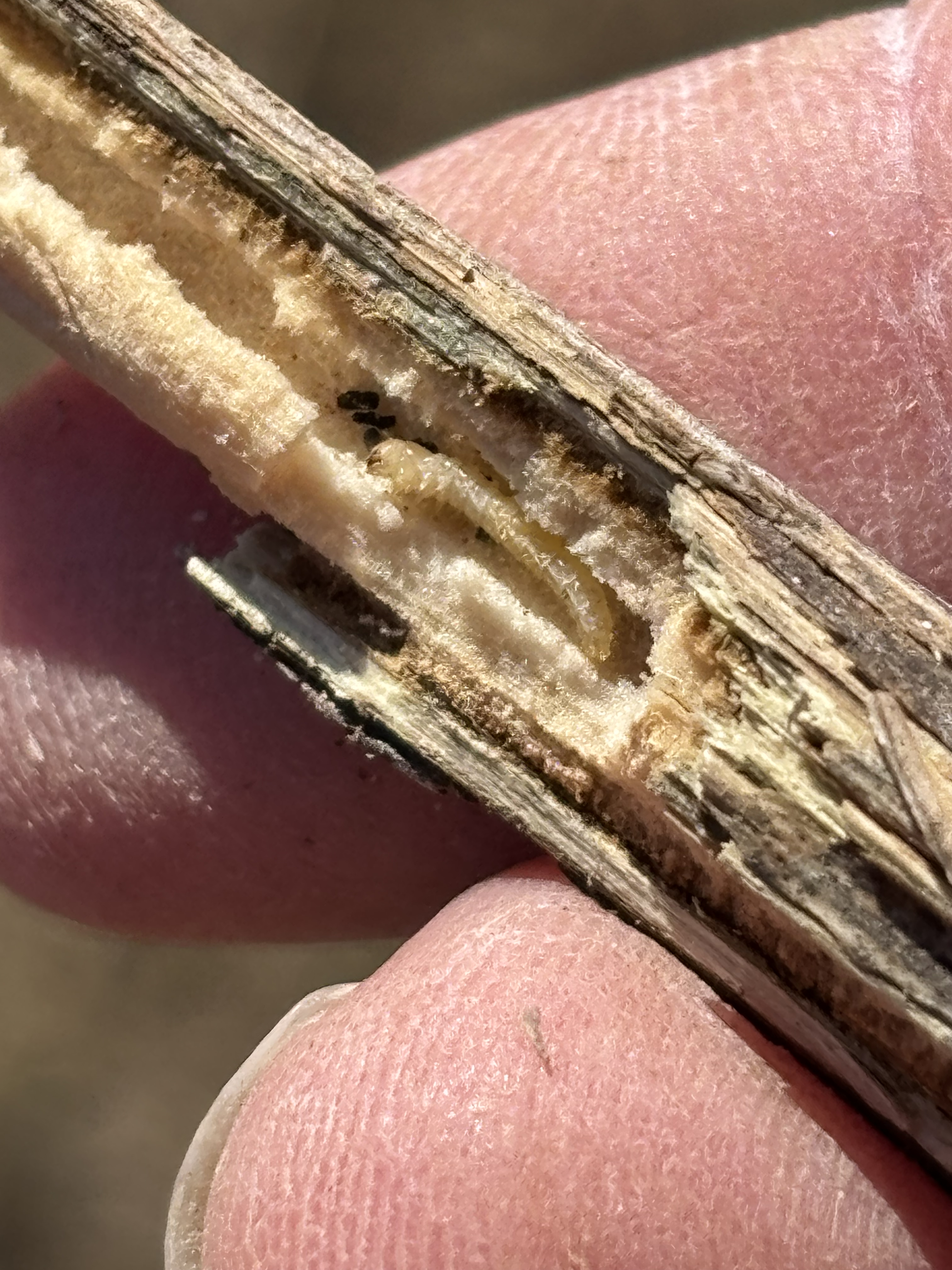
I continued down the trail, stopping to cut open a stem every 50 feet or so. Amazingly, the majority of stems I checked either had a bug currently, or showed evidence of former occupancy (insect poop (aka frass), boring holes, hollowed out cavities, etc.). I was expecting to find a lot of pupae, but instead, larvae were the most common life history stage. A few examples: 1) a beetle larva, showing some frass by its head. Beetle larvae have three pairs of legs near the head, but don’t have prolegs (additional sets of leg-like protrusions) like caterpillars do.

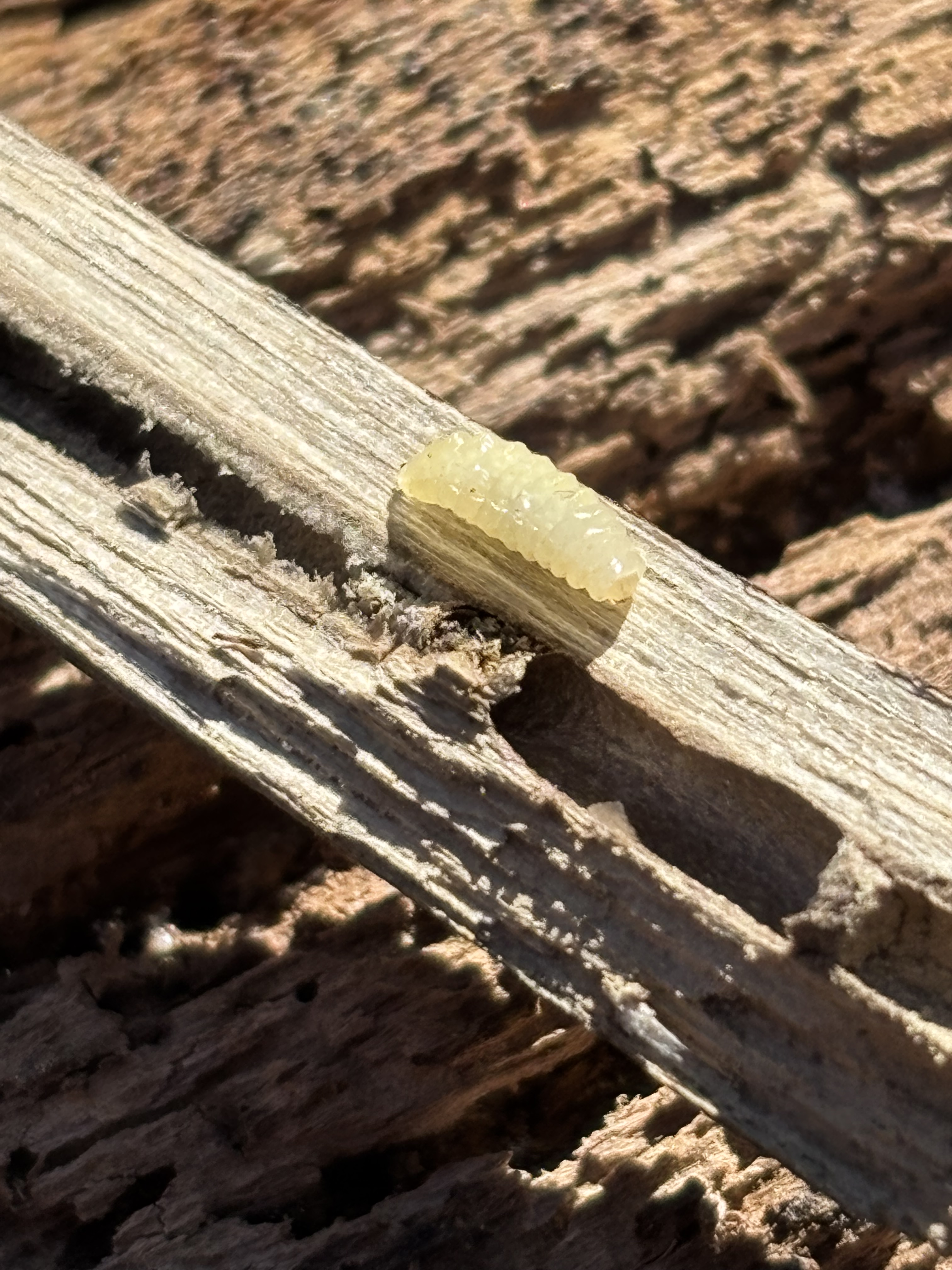
2) A bee larva, next to its chamber that was created by mom. Bee larvae don’t have any legs, just a fat, segmented body and a small, but distinct head.

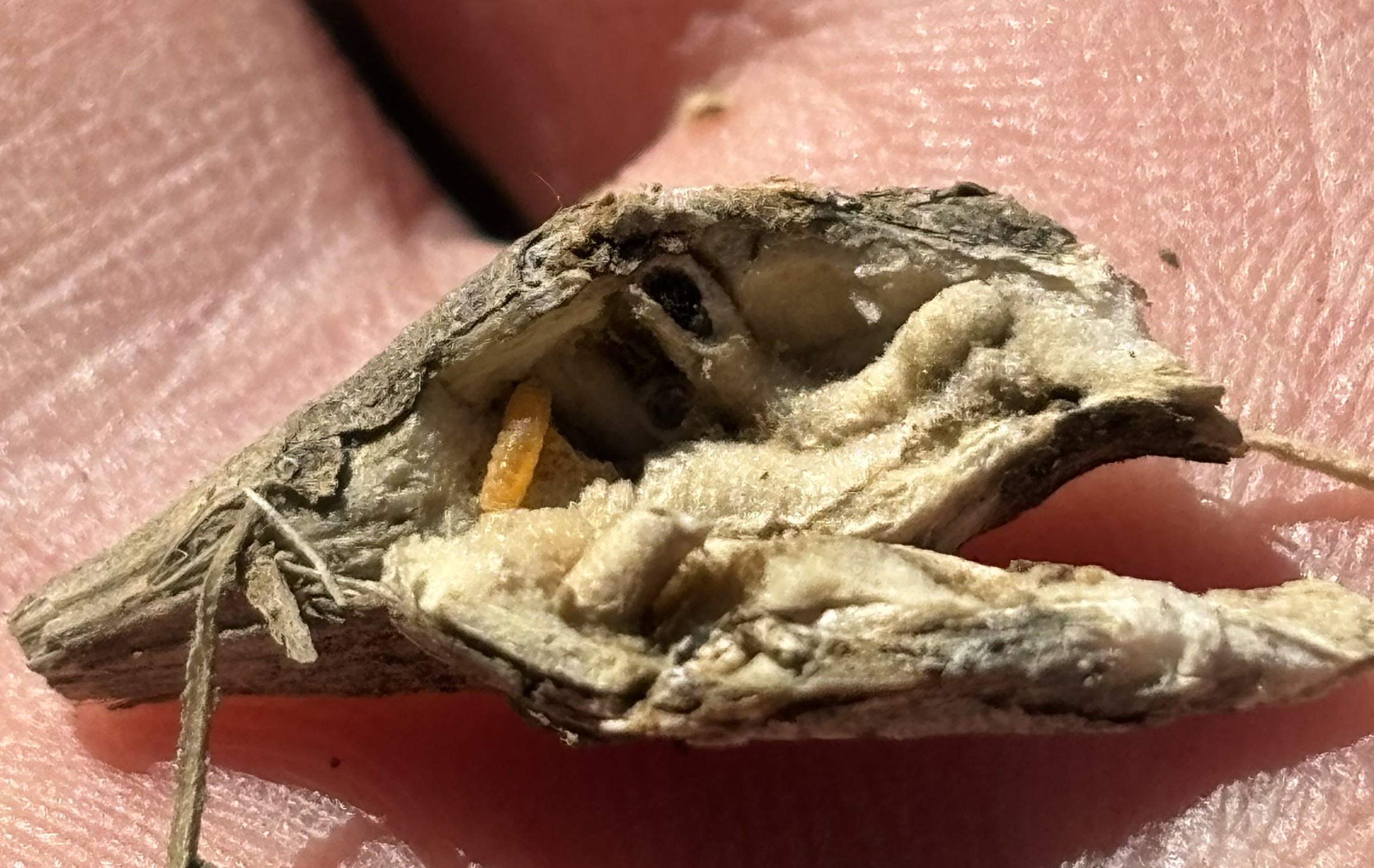
3) A fly larva that  had formed a really strange gall. I have no idea what species this is, but check out the crazy tubes the larva created in the wood! Terrestrial fly larvae are skinnier than bee larvae, and don’t have a distinct head—think maggot.

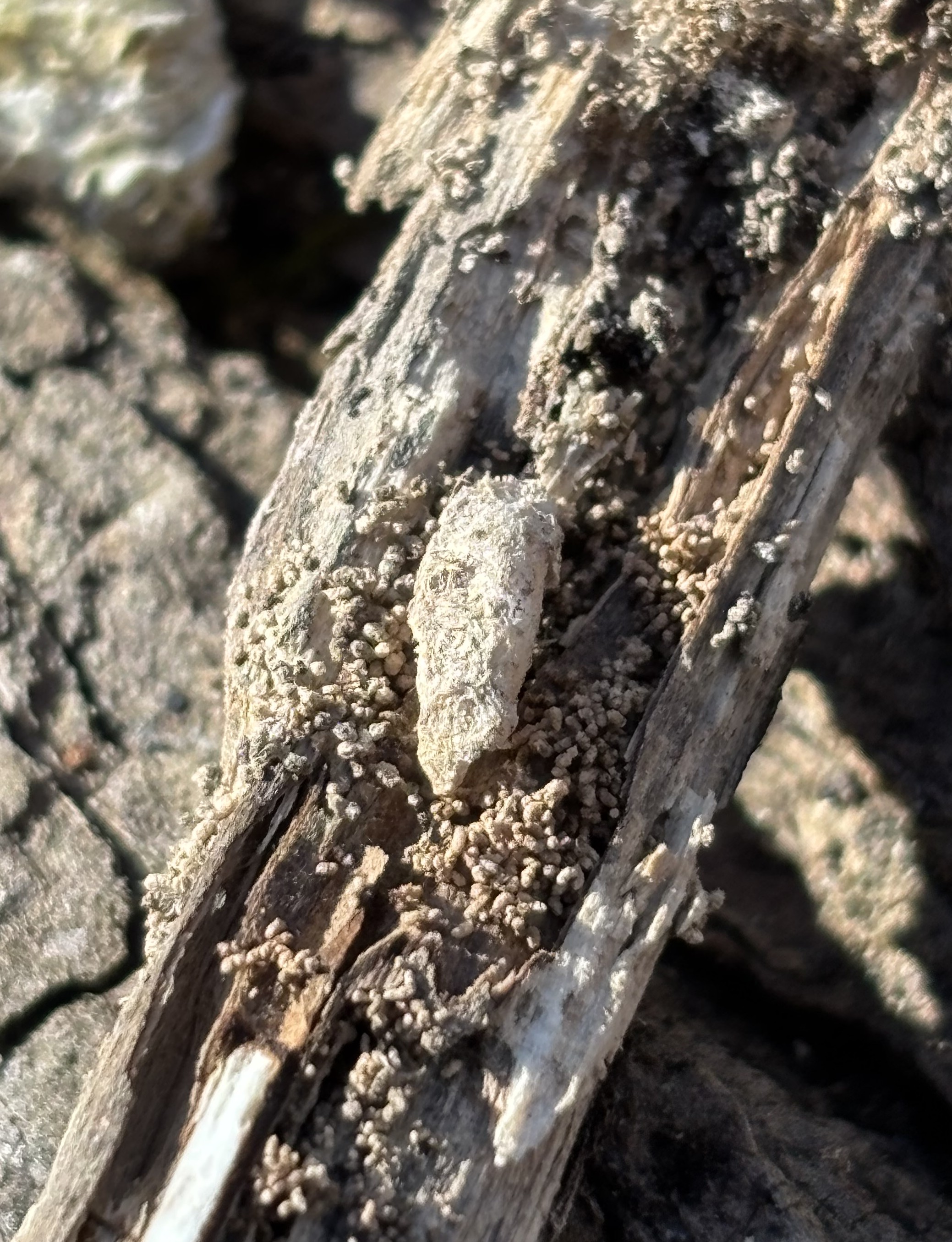
After about 25 stems, I was beginning to worry that despite the amazing bug diversity I was finding, I would end my hike pupa-less. Finally, in a rotting stick sticking out of some mud, I found a dusty gray moth cocoon. It’s not pretty, but it assured me victory!

My favorite find of the day was this entire colony of ants in the genus Temnothorax hanging out in a dead, hollow branch. Their common name is the acorn ant, presumably because in addition to using stalks, they can set up shop in hollow acorns. I had no idea these tiny stripey guys existed!

It’s always a great day when I meet a new species. All in all, I’d call the expedition a huge success and it gave me a newfound appreciation for the importance of dead stalks!