Despite being a relatively dry place, California is home to a surprising 49 species of salamanders. I’ve seen a respectable 27 of them, and all but seven of my misses are in the genus Batrachoseps. These slender salamanders are a classic case of relictual speciation, where a formerly widespread species range became fragmented as the climate dried out. The resulting populations, in the absence of gene flow adapted to their local sites and diverged genetically enough to become distinct species. In other words, Batrachoseps is really interesting from an evolutionary perspective, but they all kind of look the same. The other species that I have yet to see are the red-bellied newt, two species of the recently split black salamander, and much to my dismay, four of the five web-toed salamanders in the genus Hydromantes.
All web-toed salamanders are endemic to California. Crazily, their closest relatives are European cave salamanders in the genus Speleomantes. In addition to their distinctive webbed feet, they have a flattened bodies and a short, stiff tails that help them climb through rocky crevices. Also, they apparently have a long, sticky tongues that they can shoot out quickly to catch prey like a chameleon!
In March of 2022, Jenny and I took a trip to Shasta Lake to look for Hydromantes samweli (the samwel shasta salamander). We spent hours searching, managing to turn up this one juvenile individual to our great excitement.

That species along with three of the four others, are limestone specialists, making a living by hiding in the cracks and crevices of caves. The exception is the Mount Lyell Salamander, Hydromantes platycephalus. This is a species of the High Sierra, occurring in wet granite boulder fields and streams downslope from late-melting patches of snow. I’ve wanted to meet this species for a while, but never was quite sure where to look (there’s a lot of granite in the Sierra!). That changed this week at the Sierra Nevada Aquatic Research Laboratory, where I connected with a former course assistant who now works here. He had a tip about a population a half an hour south of the station. We set out with my teaching assistant and fellow nature nerd to the area, and quickly climbed up a canyon into what seemed like appropriate habitat.

It turned out to be a great tip—we found a large adult salamander under the very first rock we turned over!
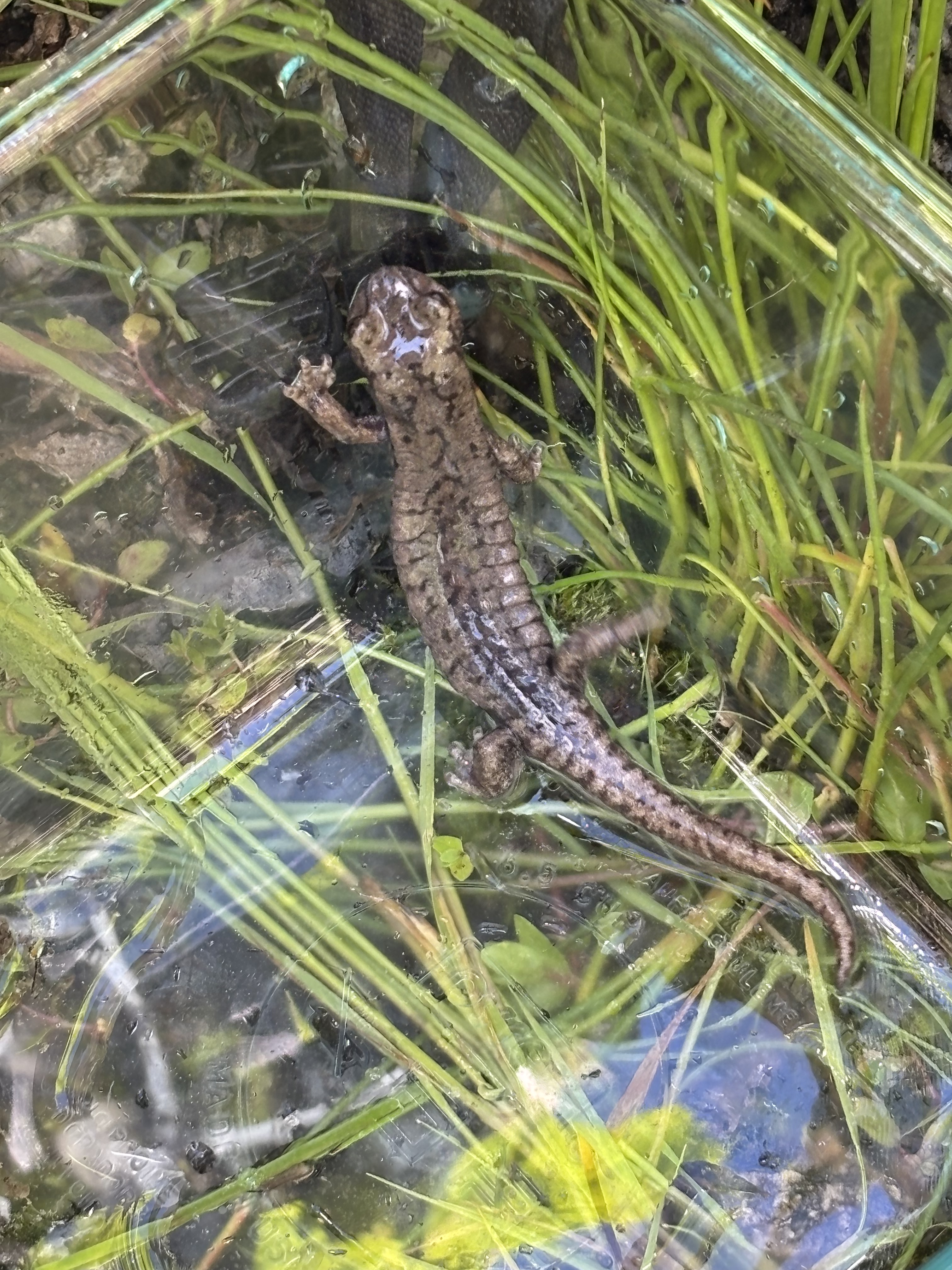
It was amazing to see it first tightly curl up (a defense mechanism that allows it to quickly roll down hill to safety), before watching it confidently scramble up the vertical surface of a boulder. Searching the area, we discovered a couple more, including this juvenile.
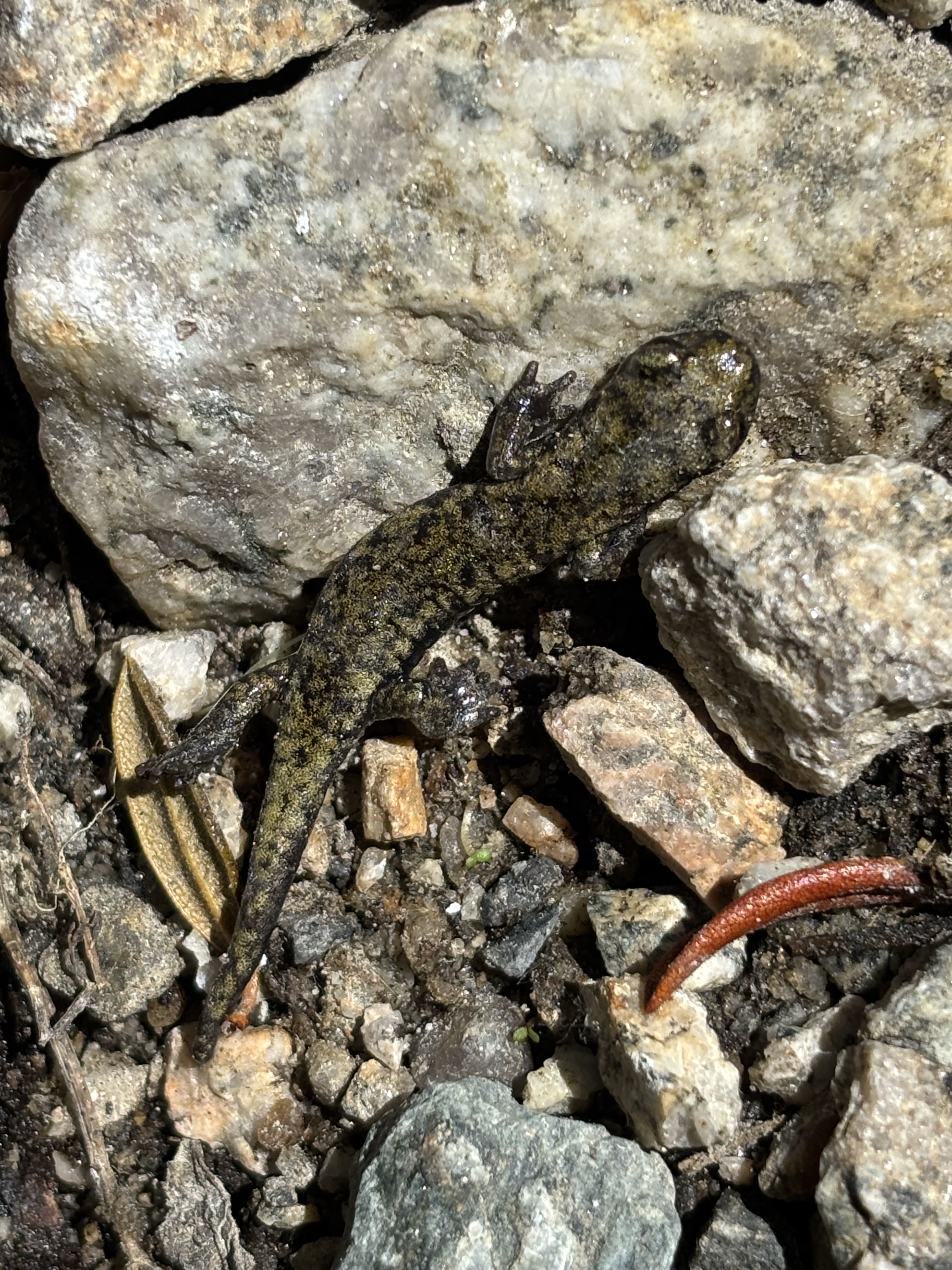
All and all, it was a beautiful morning in a scenic place spent with an amazingly weird salamander!
 botanicalramblings