This Friday I decided to take a hike in Boone’s Cave near Lexington, North Carolina. I was mainly searching for the spring woodland wildflowers that are currently blooming in profusion. We’re now in the narrow golden window after temperatures have warmed but before most trees have leafed out, cloaking the forest floor in shade. Here are some photos of my favorite botanical finds of the day:


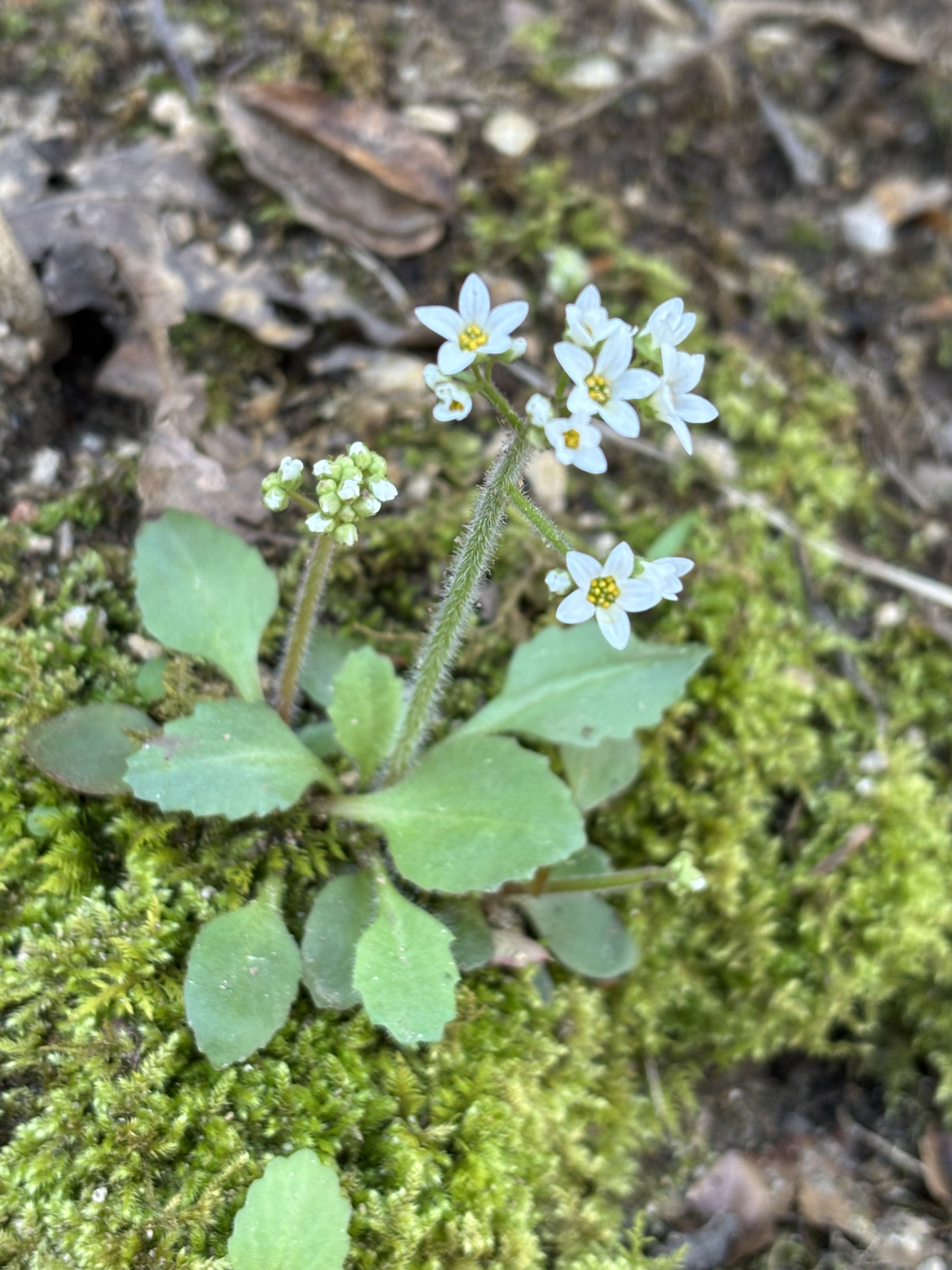
In order, that was bloodroot (Sanguinaria canadensis), yellow corydalis (Corydalis flavula), heartleaf foamflower (Tiarella cordifolia) and Virginia Saxifrage (Micranthes virginiensis)
While botanizing, I couldn’t help but flip rocks and logs among the small streams and seeps that cut through the hillsides, looking for salamanders. While I found a few southern two-lineds (Eurycea cirrigera) and one tiny slimy (Plethodon cylindraceus), most of my encounters were with duskies (Desmognathus). This diverse genus has about 40 species, with a center of diversity at mid-elevations in the southern Appalachians. Here as many as six species can co-occur partitioning up the habitat along a moisture gradient. The smallest species spend their lives away from flowing water. They have round tails and direct development, which means that instead of an aquatic, gilled larval stage, the young hatch from the eggs looking like miniature adults. Another group of species spends their lives in the middle of permanent streams. They are larger, with paddle-shaped tails, and have a larval stage that lasts for a couple years before they make the transformation to adult form. A third group lives the edges of streams and in muddy seeps and springs. These species have moderately keeled tails, moderate sizes, and a short larval phase (< 1 year).
Moving away from the southern Appalachians, Desmognathus diversity rapidly declines, and the species tend to have the intermediate, stream edge morphology. That pattern holds true in the Piedmont of North Carolina. Here, the only species used to be the northern dusky salamander (Desmognathus fuscus). However, two years ago, a paper came out that revealed, based on molecular and morphological evidence, D. fuscus was a complex of multiple species. In the northern and western parts of the NC piedmont, we now have the wolf dusky salamander (D. lycos), and the piedmont dusky (D. bairdi) lives further to the east and south. The new species are supposedly parapatric, meaning their ranges abut without overlapping. No one has found a location where the two species co-occur.
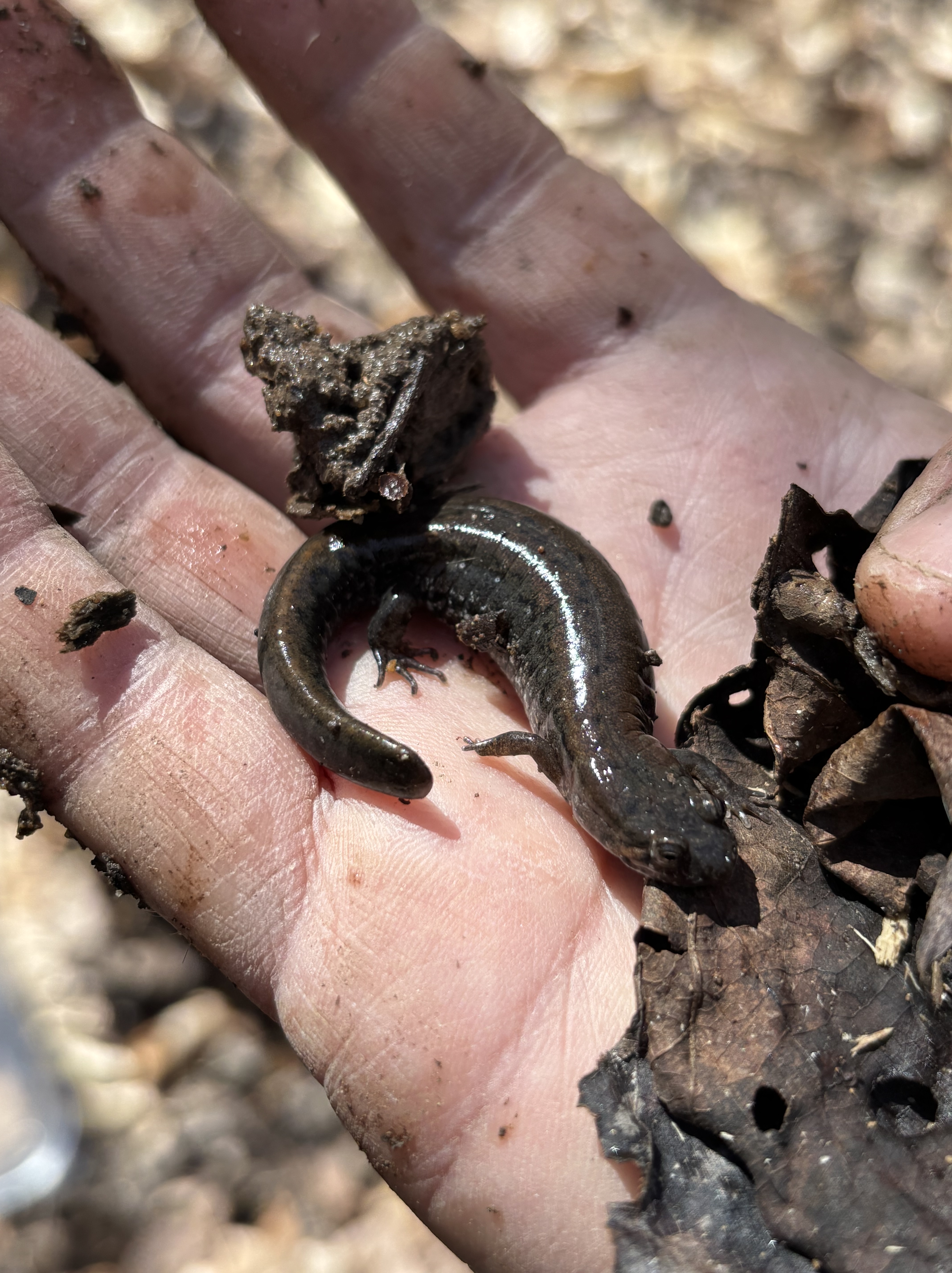
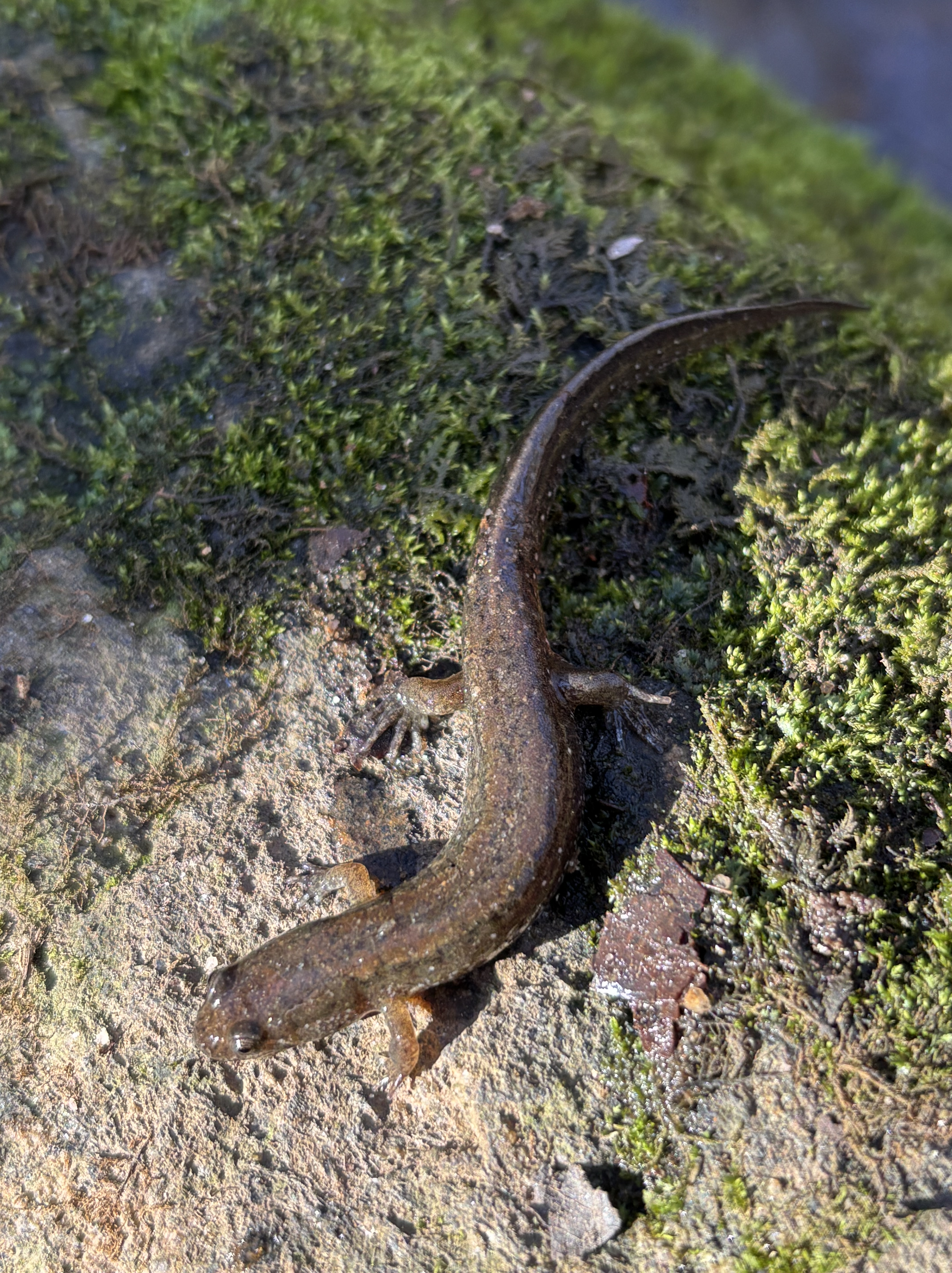
It turns out Boone’s Cave is right on the range boundary between the two species. And interestingly, the ten or so dusky salamanders I saw there seemed to have two relatively distinct forms.
Here are a few photos of the first form:
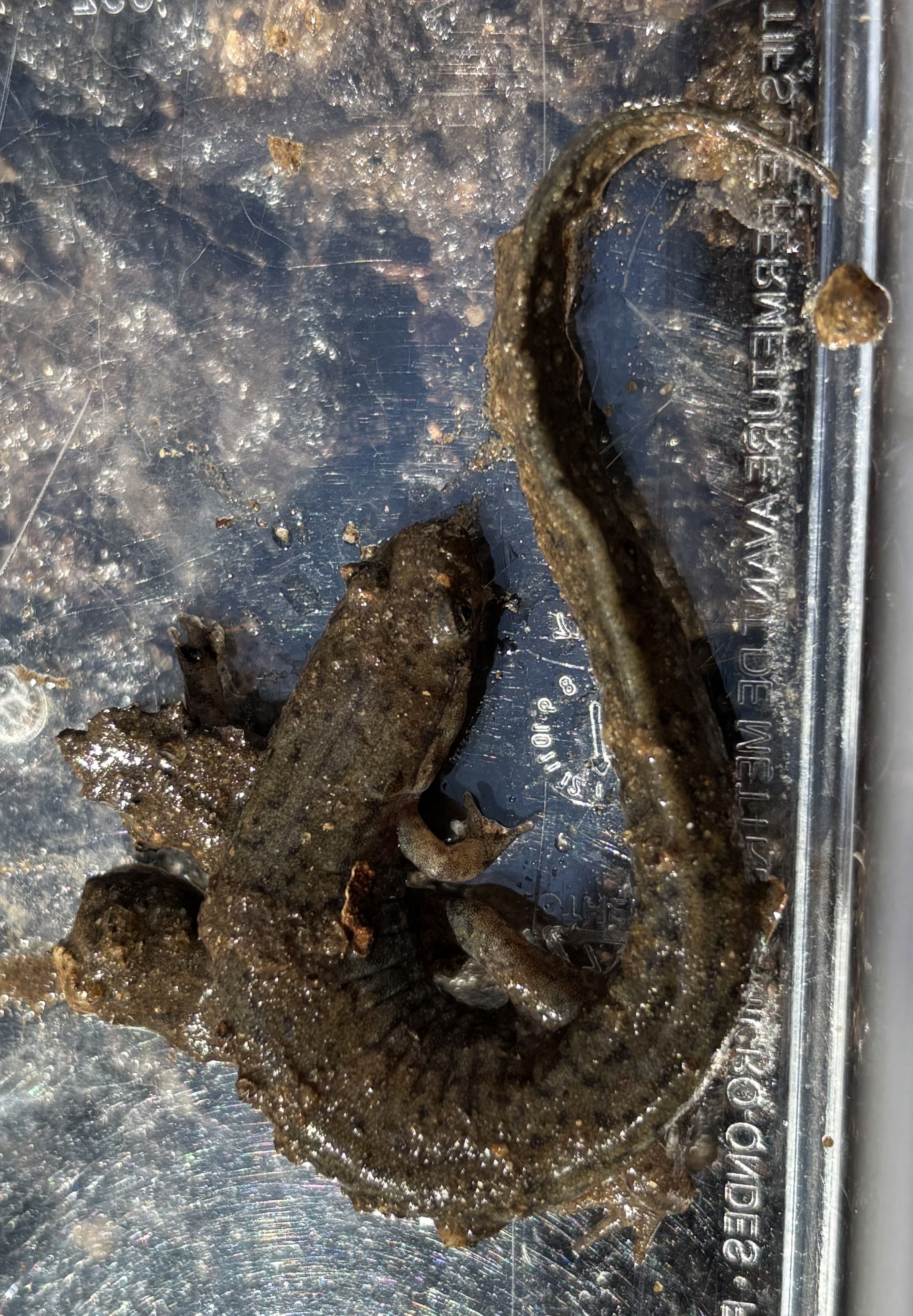
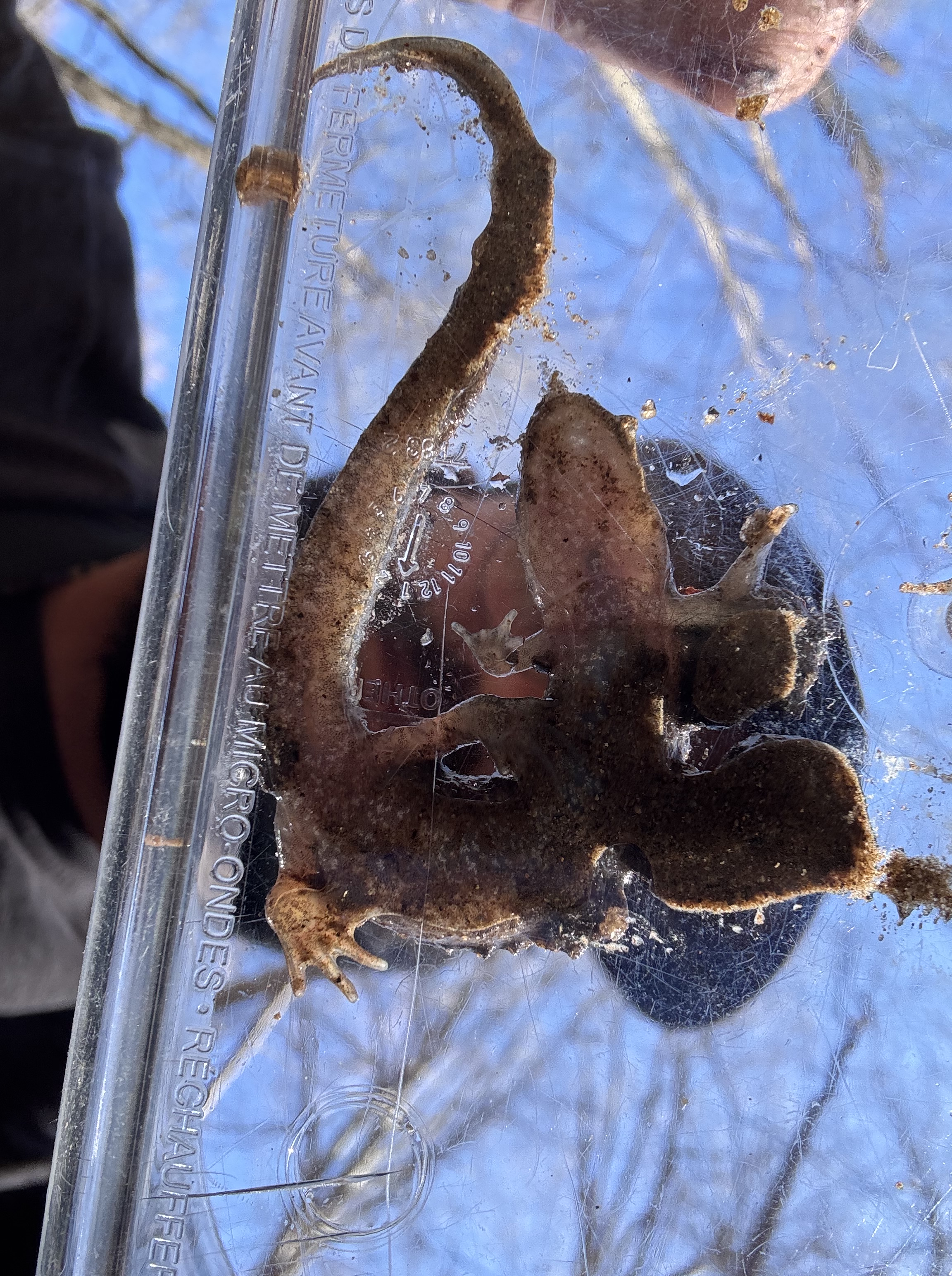
They tended to be chunkier and reached slightly larger sizes. Their backs were gray with some dark mottling. Their sides had some white specks, but those weren’t arranged neatly in a line. Their bellies were light gray whiter specks. And finally, they had a fairly keeled paddle-shaped tail.
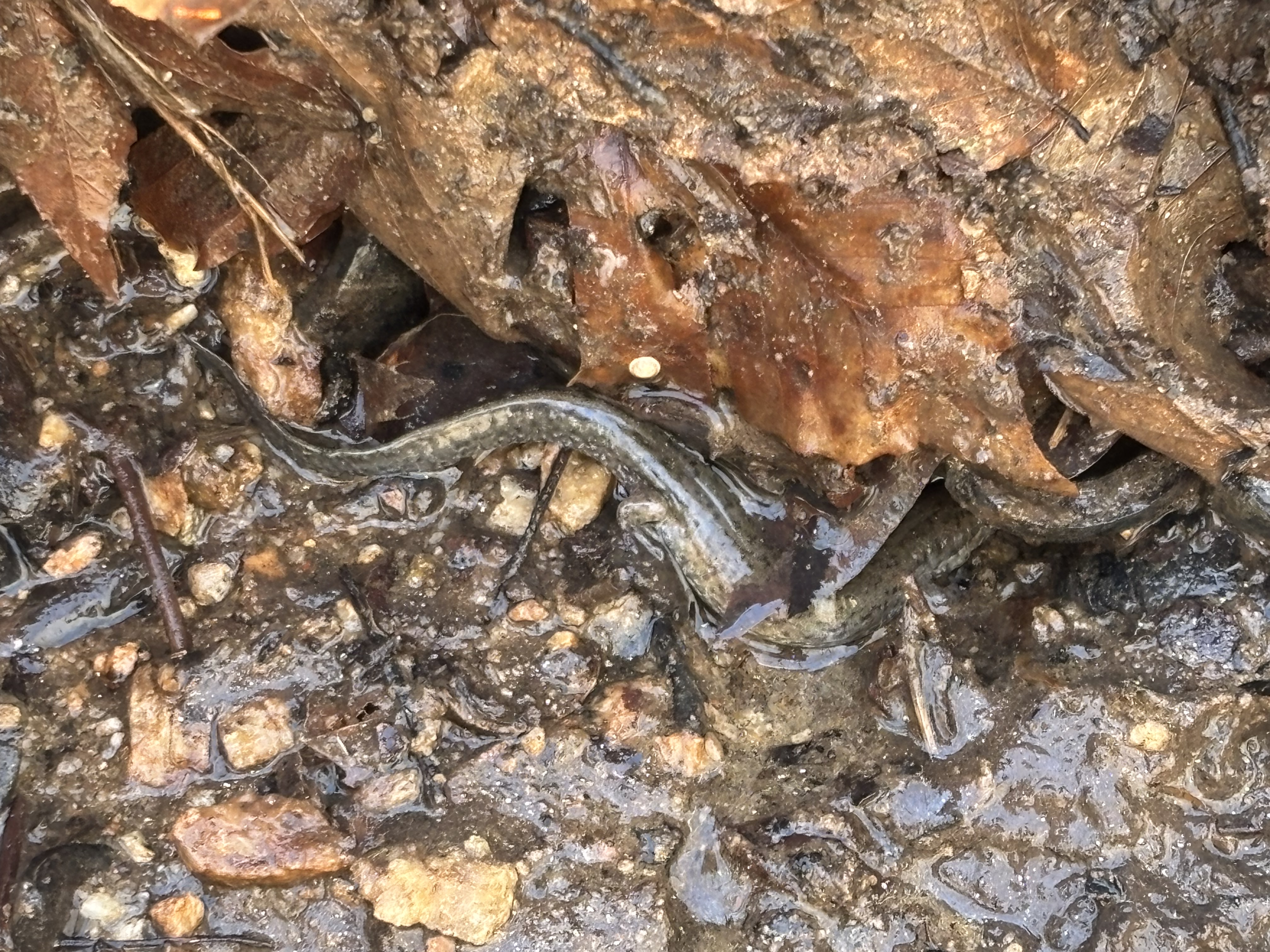
Here is the other type:
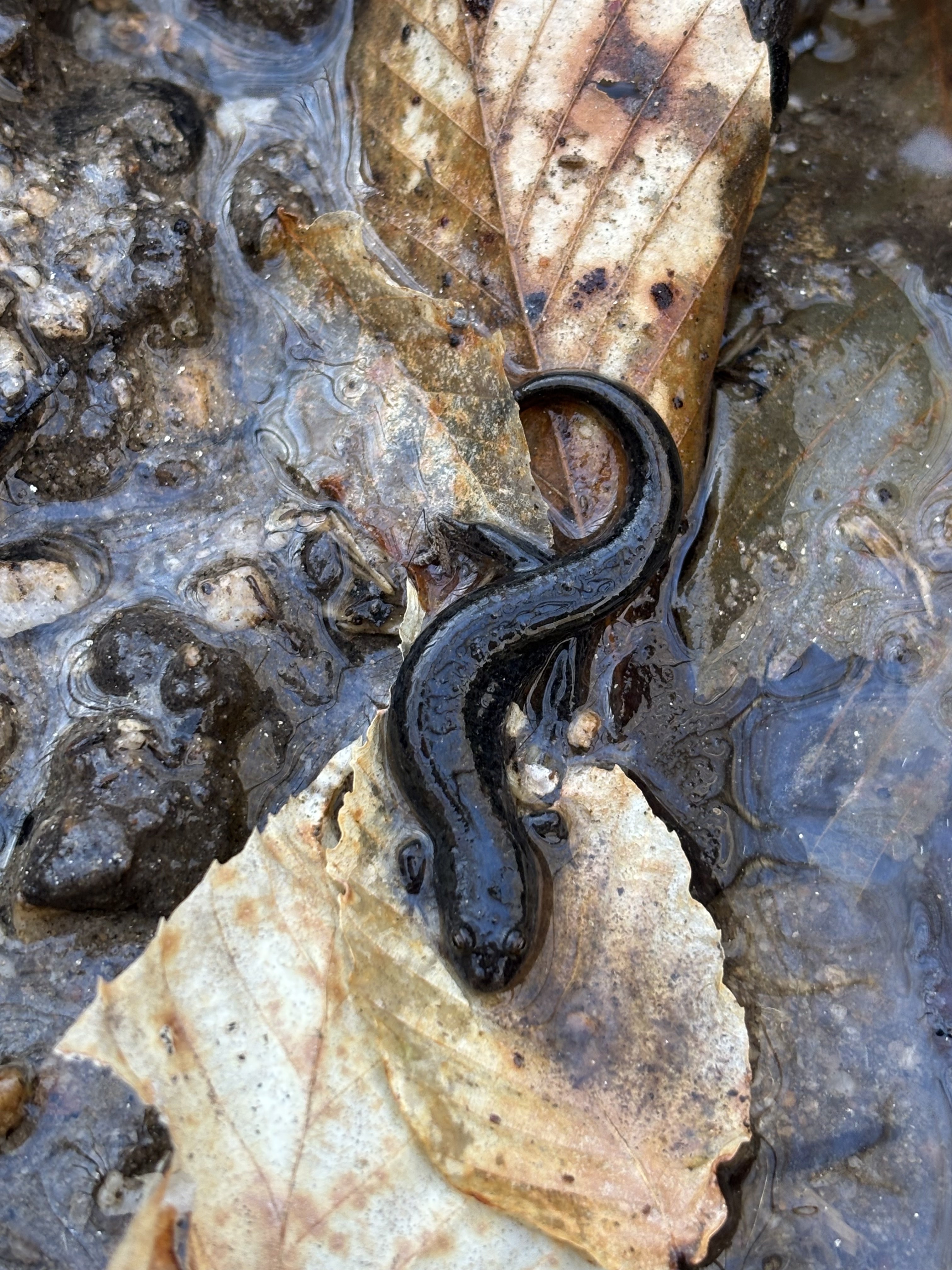

They were less robust (although that’s tough to tell from these photos). Their backs were darker, and they often had a fain reddish stripe running down them. Their sides had clear lines of white specks. Their bellies were a much darker gray base color, and their tail wasn’t nearly as keeled.
Based on the scant information that exists about morphological differences between the two species, I’d argue that the first form could be D. lycos and the second D. bairdi. Adding further to the intrigue, the two morphs seemed to show habitat partitioning! I only found first in seeps and muddy depressions and the second form in or at the edges of the little streams. Both species occur across all these habitats at other locations. Here, if I did actually see two species, they may be divvying up the landscape at Boones Cave like those duskies in the mountains do! This type of habitat partitioning, through evolution, canresult in both species having more extreme traits in places where ranges overlap than in locations where they are the only one. It’s a common enough phenomenon that ecologists have given it a name—character displacement.
Now for some caveats. Salamanders in general andspecies of Desmognathus in particular are super variable in color and form within individual species. Additionally, ten or so salamanders isn’t a very big sample from which to draw conclusions. Finally, I was by no means surveying systematically. But in any case, the dusky salamanders of Boone Cave deserve further investigation. It’s possible this is the first known co-occurrence of these two “new” species, which would be really exciting!

 botanicalramblings