Last fall, while at McLaughlin Reserve in Northern California, I started paying more attention to oak wasp galls (tribe Cynipini). A gall is formed when another organism (usually an insect, but it can be a mite, bacteria, fungi, and even another plant), chemically induces its host plant to form an abnormal structure. These interactions tend to be very specialized, with the gall-former only parasitizing one or more closely related plants. With over 150 described species in the state (and probably at least as many undescribed ones) oak wasp galls undisputed champions of gall-forming in California.
California oaks (Quercus) fall into three taxonomic groups–black oaks such as coast live (Q. agrifolia) and interior live oak (Q. wislizeni), white oaks such as blue oak (Q. douglasii) and valley oak (Q. lobata), and intermediate oaks such as canyon live oak (Q. chrysolepis). Most gall wasp species specialize on one of these three groups, and some are only found on a particular oak species. I’ve previously looked for galls on black and white oaks, but not intermediate oaks. James Reserve in the San Jacinto mountains has a large population of Q. chrysolepis, so I was excited to head out to find and photograph some galls. The diversity there did not disappoint.
The tiny adult gall wasps themselves aren’t much to look at. Here’s an individual that’s actually on the showier, side.

The galls themselves are the main event. Different species specialize on different parts of the plant—everything from the base of the trunk and stems to even the flowers and acorns. The biggest diversity, however occurs on the leaves and small twigs. Here are my favorite finds from the past week.
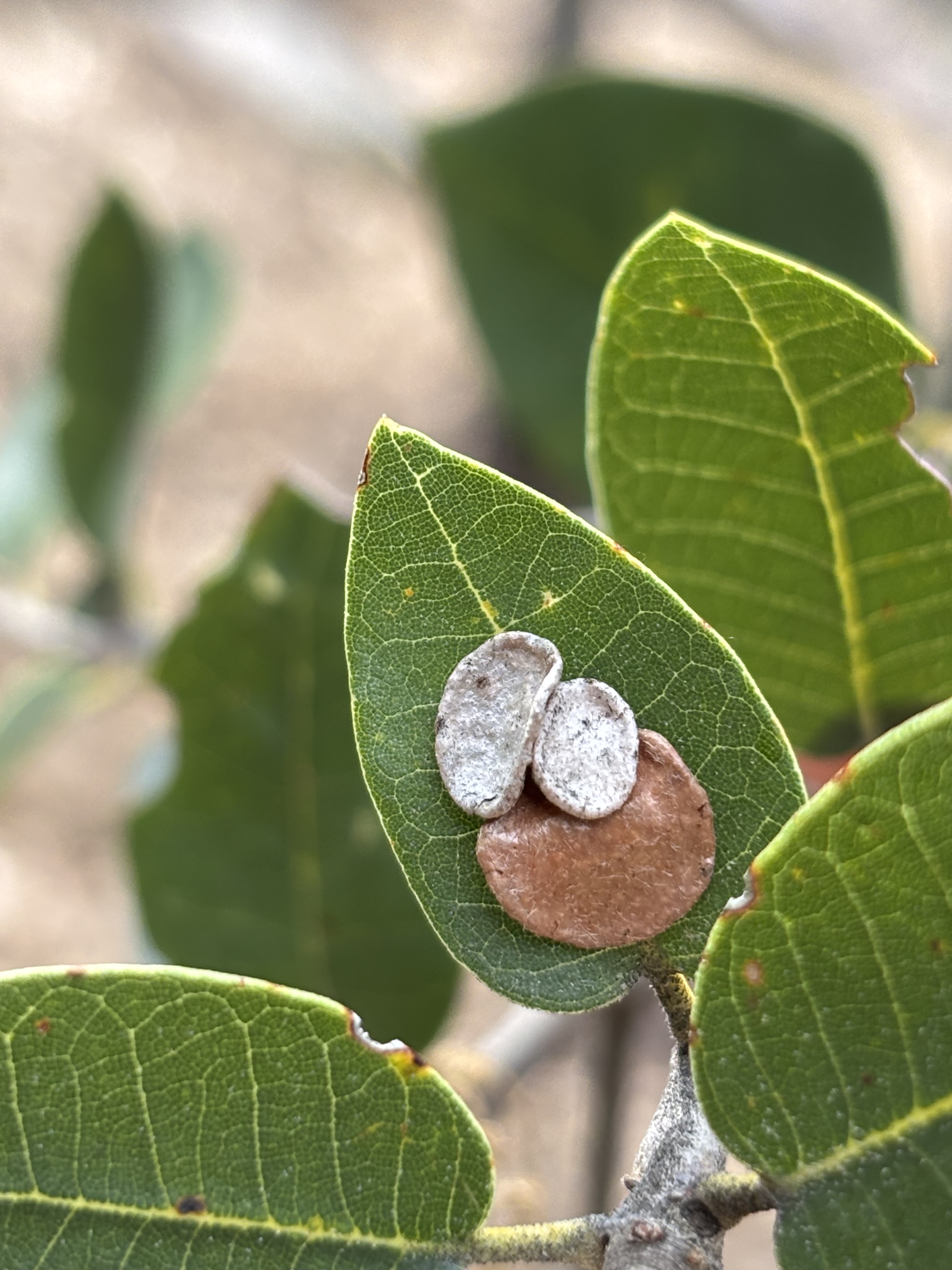

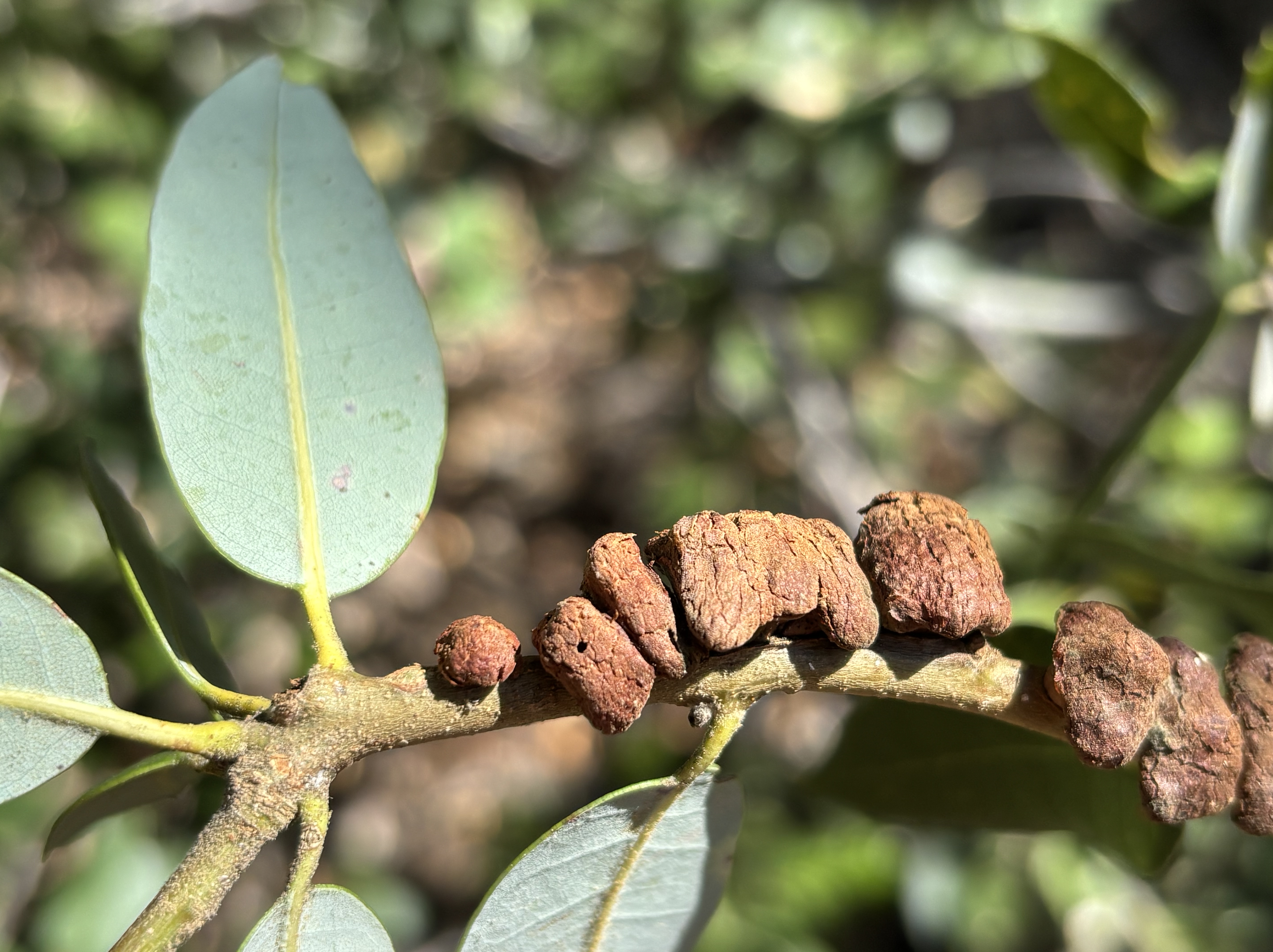
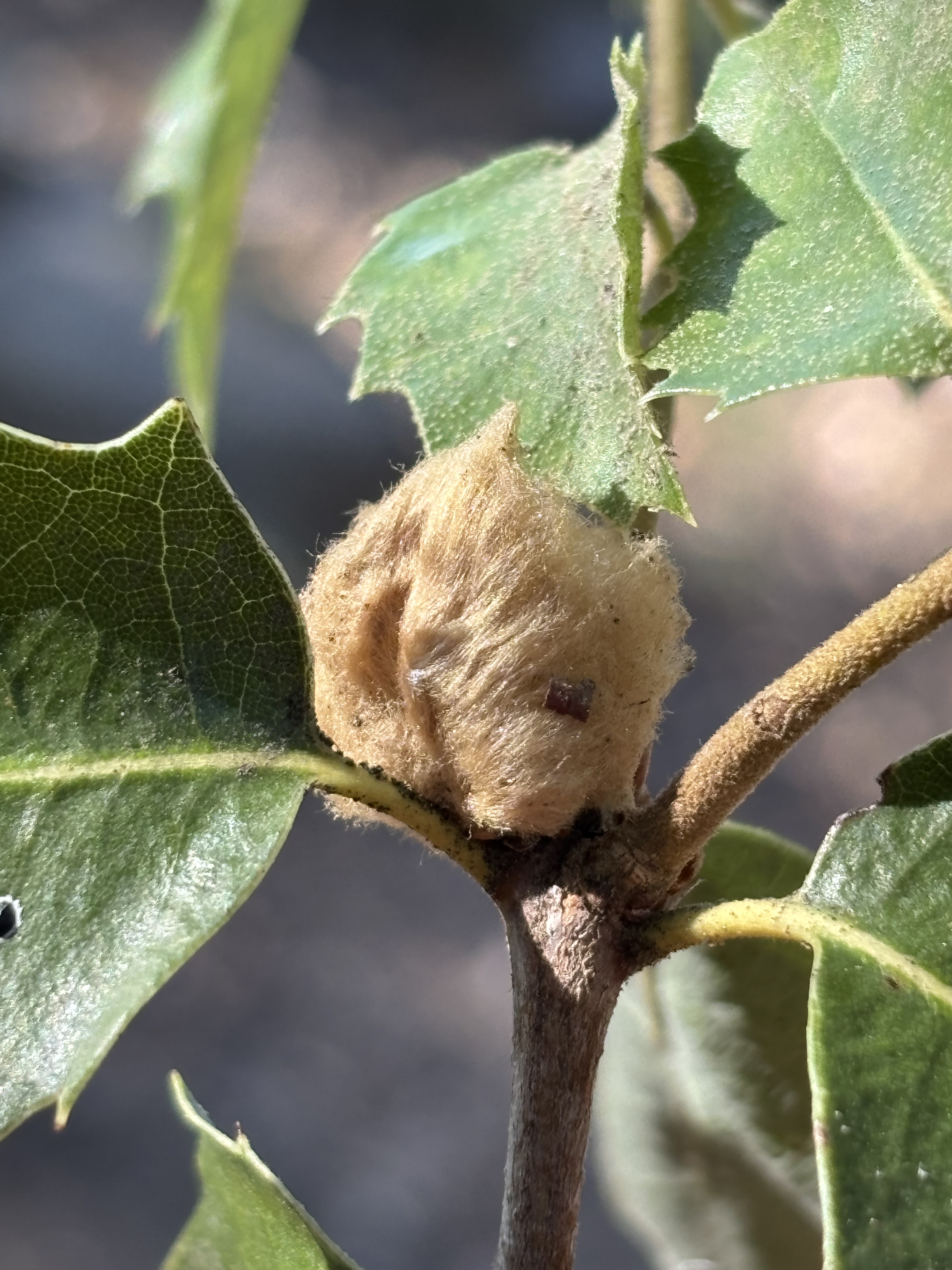


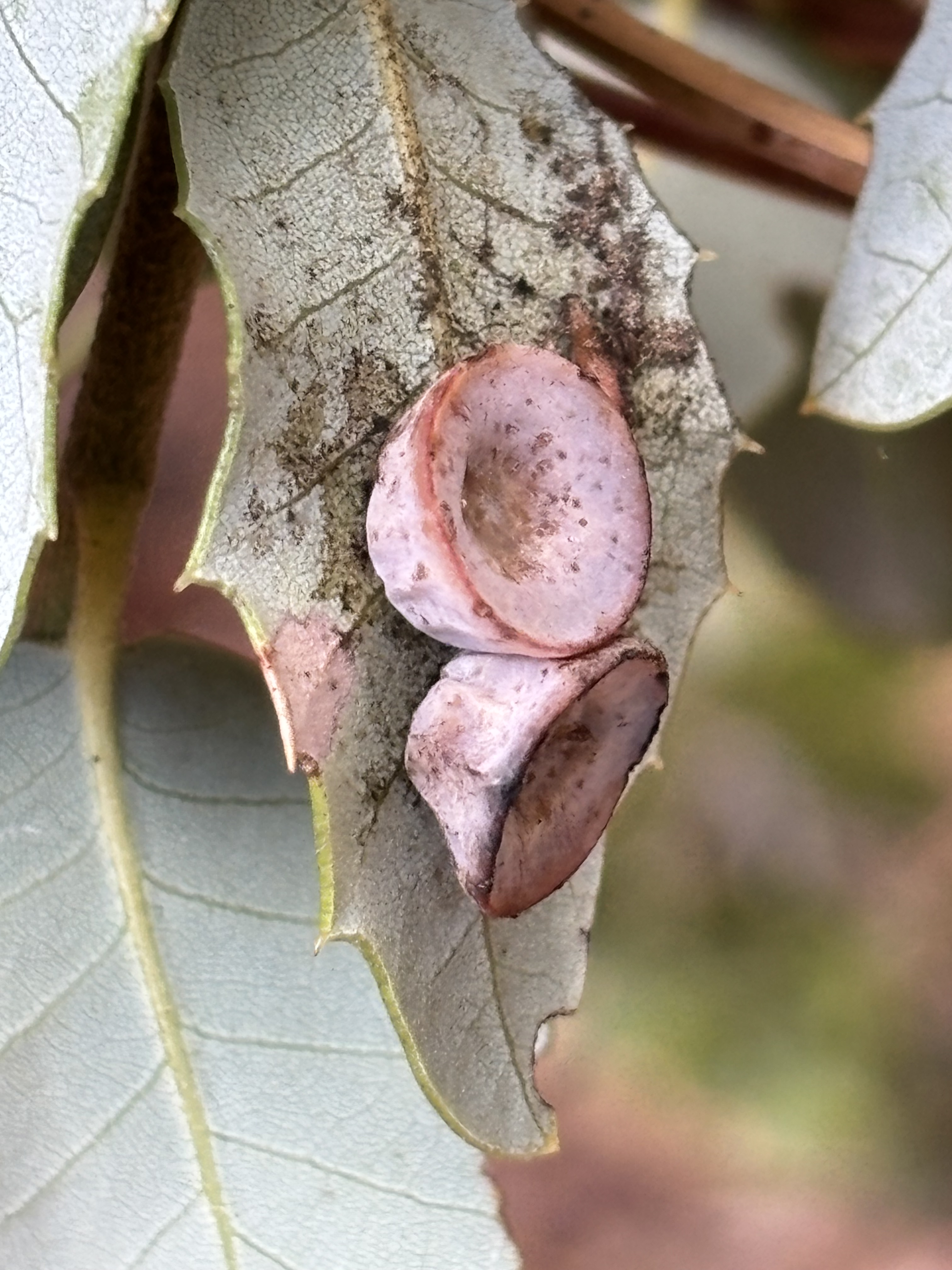

The most amazing thing about gall wasps is they have alternation of generations. Only females overwinter, laying eggs of males and females (sexual generation) that form a gall in the spring. This generation then mates, producing only females (asexual generation), which then overwinter, repeating the cycle. The galls produced by the two generations of the same species can look entirely different and form galls on different parts of the plant. Here’s first the sexual and second the sexual generation of Heteroecus pacificus:


Figuring out the identities of these galls is made possible by being able to take decent macro shots of the tiny structures, and comparing them to other folks who have done the same on iNaturalist. I posted enough galls to iNaturalist last year that I was invited to join the Gall Week 2025 Project. From May 3-11, 295 folks from around the globe made 4,800 observations of galls! Additionally, two amazing gall resources help immensely with identification. Plant Galls of the Western United States by Ronald Russo is an excellent field guide, and we recently got the second edition. Also, there’s a really great website, gallformers.org, that has a searchable database of galls and their host plants.
Even with all these resources, gall identification is still tricky. The club-shaped Heterocus species that I posted is actually a known unknown. It’s a species that’s included in the above references, but no-one has given it a name yet. In order to do that, someone would have to rear the gall through both its generations so it could be formally described.
My interest in galls rubbed off on the class, and one group was interested enough to study them for their final project. They compared gall abundance between Quercus wislizeni and Q. chrysolepis. They found at least 20 different species of gall wasps on the later, more gall-filled oak alone. Included in that total are a couple unknown unknowns—galls that don’t look anything like what we could find in our references!
 botanicalramblings