Part of being a botanist in California is coming to terms with all the non-native species. Over 1,000 species of plants are naturalized in the state—meaning they have established populations through reproduction outside of cultivation. Some 250 of these are serious invasives that can take over an area and negatively impact natives. In California’s grasslands in particular, almost all of the biomass originated elsewhere. Botanizing here often involves sifting through a lot of trash to find a few native treasures.
However, it’s not the plant’s fault that they’re not from here. I need to remind myself that every species on earth is the product of billions of years of evolution and is worthy of admiration and appreciation. In that spirit, I’ve decided to say ten nice things about black mustard (Brassica nigra), a particularly abundant invasive species here at my current location, Sedgwick Reserve in Santa Barabara county.
1. It’s amazingly adaptable. Black mustard is native to Europe, but has established populations on all six contents that aren’t permanently covered by ice. In North America, it’s found from Southern Canada through Central America, making a living across an amazing range of climatic zones
2. It carpets valleys and hillsides and in a beautiful bright yellow. A field of mustard is an objectively spectacular site that can be seen from miles away.
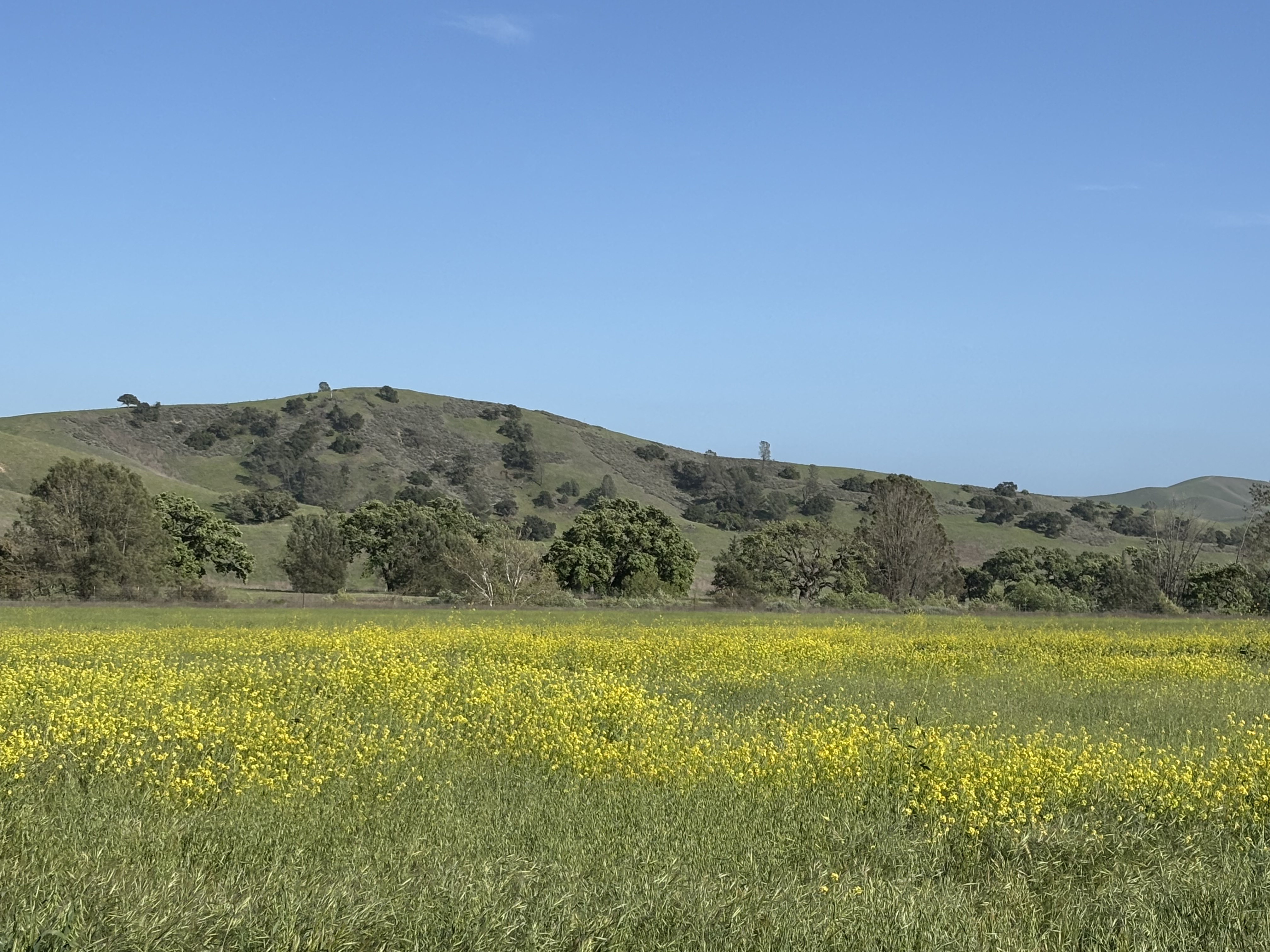
3. It can achieve great heights. Black mustard is a winter annual plant, germinating with the first rains, blooming in spring, and senescing by late summer. In their short life, they regularly grow to six feet tall, and I’ve seen exceptional plants here at Sedgwick that measure at least 10 feet.

4. It has interesting chemistry. Black mustard is in the Brassicaceae family, which is known for making some crazy secondary defense compounds. The production of these compounds, many of which have evolved as defense against herbivores, is carefully controlled by the individual plant. While effective against many species, they are metabolically expensive to make. Therefore, rather than just always making them, mustards upregulate their production as a response to exposure to herbivores like snails or caterpillars. Additionally, these compounds can backfire! Specialist herbivores that only eat mustards can detect small amounts of these compounds in the air, using them to find their target.
5. It wages chemical warfare on its competitors. Black mustard is known to be allelopathic. It produces chemicals in its roots and other tissues (different ones than the herbivory defense compounds) that enter the soil, suppressing the germination and growth of other species of plants. That makes it easier for mustard to completely take over an area, and harder to re-establish native plants even after mustard has been cleared away. It’s annoying as restoration ecologist, but amazing as an adaptation.
6. You can eat it! All parts of mustard are edible, and have been prepared in various ways for at least 2,000 years. The leaves can be pickled, the shoots cooked, the flowers used as a garnish, and the seeds are the spiciest of all mustard species.
7. Its flowers are intricately arranged. The clawed petals, 4-2 arrangement of anthers and linear yellow sepals are quite lovely. Here’s my stab and illustrating them.

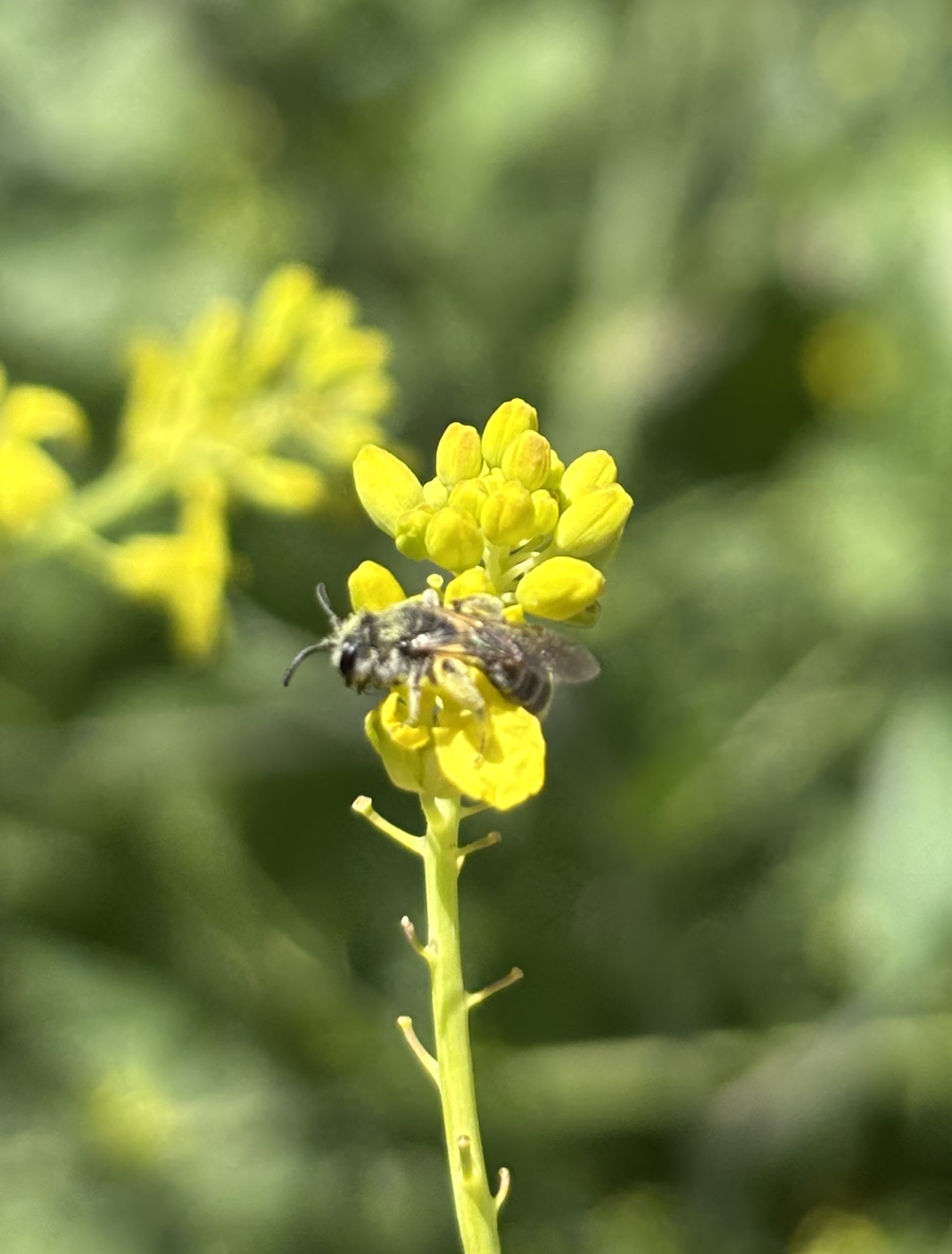
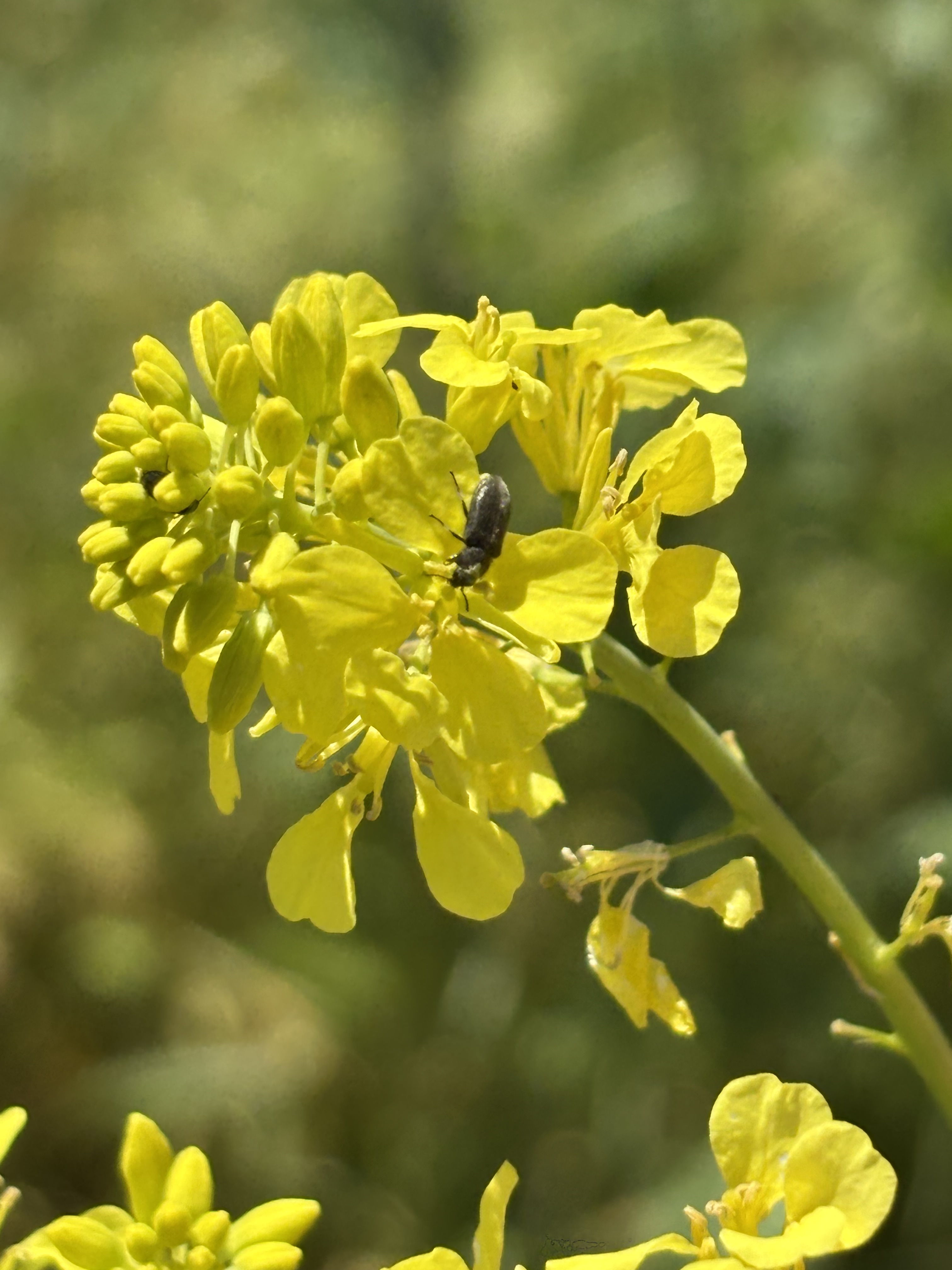
8. It’s great for pollinators. I wandered through a patch this afternoon, and found a number of beetles and solitary bees happily collecting pollen. There are plenty of other flowers blooming here right now, so visiting mustard was an active choice. Sweeping the plant with a net revealed a suite of other insects including flies, aphids, and more beetles.
9. Birds love it. Mustard seeds are eaten by a number of bird species, including the enigmatic Lawerence’s Goldfinch. All those bugs make tasty snacks for additional species, such as the federally threatened Tricolored Blackbird. And the tall stems make a great singing perch for birds like Savannah Sparrows and Lazuli Buntings. I saw all of these interactions this week.
10. It’s not star thistle! Black Mustard is a gnarly invasive plant, but it’s still less detrimental to the ecosystem than some species. For instance, star thistle (Centaurea spp.), takes over a landscape faster than mustard after disturbances, it harder to get rid of once it does, and its sharp spines can make very unpleasant to move though a landscape. I’ll take a field of black mustard over star thistle any day!
 botanicalramblings