September 22, 2025: Just passing through

September is one of the best months for birding in much of the United States. That’s definitely true in Forsyth County, North Carolina. Birders like me wake up at dawn most days this month to go stare into the trees. We’re hoping to catch a glimpse of migrating songbirds. Each year, billions of these guys travel from the Northern U.S. and Canada to the Caribbean, Mexico, Central, and even South America and back. Folks in the middle of the country get two shots a year to see them—spring as they hasten north toward breeding grounds, and fall, as they make their way back south. Some species take different routes on their northern and southern journeys, so it’s definitely worth it to bird during both!

All songbirds forage during the day, however they mostly migrate at night. When the winds are right, millions of birds can pass over favored corridors each night. Amazing, their movements are detectable on Doppler radar. The folks at Cornell, in collaboration with Colorado State and UMass Amherst, take that radar data and publish real time and predictive models for each night about where and in which direction migrants are. The predictive capabilities of BirdCast are an amazing conservation tool, as they allow the issuing of “lights out” warnings. Migrating birds can be easily disoriented by light pollution, and getting folks to turn off lights, especially in tall buildings on heavy migration days, can dramatically improve survivorship. The forecast is also helpful for knowing what days might be the best for finding birds the next morning.

In the weeks before I needed to head back to California, and in between trips to the coast, the mountains, and Pennsylvania, I submitted 23 eBird checklists from Forsyth County. Across these lists I found 16 different species of songbirds that don’t breed or winter anywhere in the county—definite migrants. This list included Warbling Vireo, Baltimore Oriole, Gray-cheeked Thrush, and an amazing 13 species of warbler:

Worm-Eating Warbler

Golden-winged Warbler

Blue-winged Warbler

Tennessee Warbler

Cape May Warbler

Magnolia Warbler

Bay-breasted Warbler

Blackburnian Warbler

Chestnut-Sided Warbler

Black-throated Blue Warbler

Palm Warbler

Black-throated Green Warbler

Canada Warbler

While that’s a pretty good list, there are 36 species of warbler that have been seen in the county, and I’ve only seen 24. Finding the rest is a great motivation to keep peering into trees for many Septembers to come.

August 8, 2025: Learning to Hunt

Early August can be a boring time of year for birders. Not only are birds keeping a low profile due to the heat and lack of need to defend a territory, many of them are in heavy molt and looking their scraggliest. Birders often choose to pursue other hobbies during this time of year, and dream of fall migration, which begins in earnest next month. However, if rather than looking for lots of species, you instead focus on watching bird behavior, August can actually be quite fun. It’s the time of year when fledgling birds are at their goofiest!

This week, we’ve returned to Blue Oak Ranch Reserve, and while holding office hours on the back porch of the barn, I’ve had plenty of time to watch some youngsters. While watching California Thrashers learn to flip leaves over and observing Western Bluebirds trying to fly catch has been fun, I’ve particularly enjoyed the antics of the young birds of prey. For some reason, this was an exceptional year for rodent abundance. Particularly voles and deer mice have been just everywhere. The bad news—that seems to have meant an abundance of ticks. The good news—there was plenty of food for baby hawks and owls.

Many birds of prey lay extra eggs beyond what the parents could feed in a normal year. In most years, the last one or two birds to hatch end up getting bullied by their siblings and tend not to make it out of the nest. This year however, the abundance of food led to a higher than average fledge rate. Now, many of the youngsters, still recognizable by their unique plumages, are trying to hunt on their own. And I hate to say, but it does not seem to be going well.

While there are juvenile Red-Tailed Hawks everywhere, one bird in particular has taken up residence in the big valley oak tree by the back of the barn. Every twenty minutes or so for large parts of the day, the youngster swoops down over the large ground squirrel colony, eliciting a chorus of chirps. I don’t know if it’s the approach, the angle, or the speed, but I’ve watched maybe twenty failed attempts. The poor juvenile ends up standing sullenly on the ground before retreating back to the oak tree to sulk before trying again.

We also have a resident juvenile Cooper’s Hawk that’s not faring any better. Cooper’s Hawks specialize on hunting medium sized birds in forested areas. However, this individual doesn’t seem to have gotten the memo. I’ve watched them dive for a ground foraging finches a couple of times, and even make an attempt at a vole without any success. Maybe an apprenticeship program would help them learn some better techniques.

The night shift at BORR is currently being dominated by American Barn Owls in numbers like I’ve never seen. I haven’t seen any hunting occurring—it’s a little harder to watch in the dark. But based on the number of frustrated shrieks and hisses I’ve been hearing, I don’t think it’s going any better.

The coolest failed predation attempt I watched, was from a young Golden Eagle. This largest of raptors dove after a ground squirrel thirty feet away from, missing pretty badly. Unfortunately, junior was subsequently driven away from the area by a team of Common Ravens and Red-Tailed Hawks.

Luckily with the ongoing rodent boom, everyone will have essentially unlimited attempts to perfect the craft of hunting. I hope the practice goes well, and I’ll actually see some successes by the time I return next month.

June 22, 2025: Summer Backyard Birding

Today is the last day before I head back to California, and a beautiful, warm morning for a feeder watch. The last northern-bound migrants finished passing through Forsyth county a few weeks ago. We currently only have breeding birds until shorebird migration and post breeding dispersal begin again in a month. Landbird migration will follow, not beginning in earnest until late-August. Overall, the backyard has been a bit quieter lately. While there still is a decent dawn chorus, the heat and the business of raising families has reduced a lot of the singing in the middle of the day. Birding is definitely now an early morning activity.

6:00 Start of observation hour. Already Song Sparrow, Carolina Wren, Tufted Titmouse and American Robin singing. Within the first minute, I also hear a Blue Jay and Common Grackle call.

6:02 A Gray Catbird flies into the yard. A House Finch and an Eastern Towhee call.

6:04 A European Starling flies over. A Tufted Titmousegrabs a seed from the feeder—my first customer of the morning.

6:05 Dawn officially breaks. A Northern Cardinal joins the morning chorus.

6:06 I hear a distant Mourning Dove and Downy Woodpecker.

6:08 Two male robins aggressively chase each other through the year.

6:12 A catbird visits the platform feeder. This feeder is new addition to our backyard array, and while setting out oranges on it to attract orioles has been a bust so far, it’s a big hit with the catbirds and towhees.

6:13 A Great Crested Flycatcher flies into the top of our acacia tree and begins calling loudly. We didn’t see this species last summer, but one bird has been hanging around the front yard since late May.

6:17 A Chimney Swift flies low overhead

6:22 The finches and cardinals are singing vociferously

6:25 A White-Breasted Nuthatch flies into our walnut tree and descends to the feeder

6:26 I spot a newly fledged robin in our oak, its spotted breast blending in well in the dappled light.

6:29 Brown-Headed Nuthatches are calling from the neighbor’s yard. They’ve been mostly absent all summer until showing back up a couple days ago.

6:32 A few American Crows fly by calling

6:33 A cicada begins calling briefly. A sure sign of summer, they started their clamorous chorus in earnest about a week ago.

6:35 Grackles and Blue Jays descend into the yard.

6:35 A Carolina Chickadee begins calling.

6:37 I spot a Great Blue Heron flying high overhead.

6:45 An Eastern Bluebird family (male, female, and fledgling) are in an oak tree across the street

6:50 The Downy Woodpecker comes to the feeder, and pigs out on seeds for the remainder of the watch

6:58 I walk to the back of the yard, and in quick succession hear a Fish Crow, Red-Bellied Woodpecker and spot a Brown Thrasher, the last birds of the watch.

Total: 24 Species.

Most notable: Great Blue Heron. While common in the area, we don’t really have any nearby wetlands or open fields nearby, which are the typical haunts of this species. This is the first time I’ve seen a heron (of any kind) from our place—and it’s my 57th species for the yard.

Strangest misses: The Red-bellied Woodpecker and Brown Thrasher I identified in the closing seconds would have both been big misses, as they are quite common summer residents. The local birds of both species have already fledged chicks, and are therefore keeping a lower profile than in the spring, when they were calling and singing almost constantly. Probably the next most likely bird that I didn’t see is a Northern Flicker. I see them most days, but it’s not strange at all to go an hour without one. A Brown-headed Cowbird visited the platform feeder 20 minutes after my watch ended.

Comparisons: As expected, I totaled fewer birds than spring, but more than winter. Nineteen birds overlapped with the spring watch, and five birds were new.

June 18, 2025: Botany or a Chase

It’s already my last week before heading back to California for the summer run of the California Ecology and Conservation course. June is a great month to naturalize in the Carolinas, and with time running out, I’m attempting to squeeze in as many outdoor adventures as possible. Therefore, I decided on a super ambitious itinerary for my last solo trip of spring. I left the house at 3:45 AM to make it to the Carolina Sandhills National Wildlife Refuge in northern South Carolina at dawn. I wanted to hike around and botanize in three different parts of the large refuge. Then, the plan was to drive 90 minutes west to Rock Hill, where there is a Scissor-Tailed Flycatcher pair that currently have fledglings. Finally, I would make the long drive back north, arriving before 5:00 pm.

Scissor-Tailed Flycatchers are a beautiful and graceful bird that mostly breeds Texas, Oklahoma, and Kansas. They are also the most common bird in the entire United States that’s not on my birding life list (currently at 617 species), making them a high priority for me to see. Because they perch in the open and would be staying close to the nest—a nest for which I had the exact coordinates—tracking down this out-of-range family would be quite easy.

When planning a trip, I have the tendency to overschedule or pick the more ambitious option. Then, my completionist tendencies make me want to see the plan through, even if I have to rush or it stops being fun. I’ve dubbed the worst cases over the years Timventures. I’ve also maybe become a bit too enamored with adding species to my life or year lists. While it’s really fun to document what I’ve seen, it’d probably be a good idea for me to pump the breaks a bit on obsessively listing. Was it worth it to drive the extra distance to see an amazing new bird, or was I planning a Timventure?

I arrived at the entrance to the sandhills early enough that the nighthawks were still calling. I’ve sung the praises of sandhills in my March 12th post, when I visited Carver’s Creek State Park. The Carolina Sanhills NWR is another amazing example of the habitat. It’s managed as a gameland for things like ducks, turkey, and bobwhite quail. Therefore, in addition to frequently burning the longleaf pine forest, the Fish and Wildlife staff also maintains a series of ponds and wetlands at appropriate water levels and keeps open fields at varying levels of ecological succession. The result is an amazing diversity of plants.

Immediately upon arriving at my first stop, I found large patches of a plant that was new to me—Stylisma patens (sandhill dawn flower).

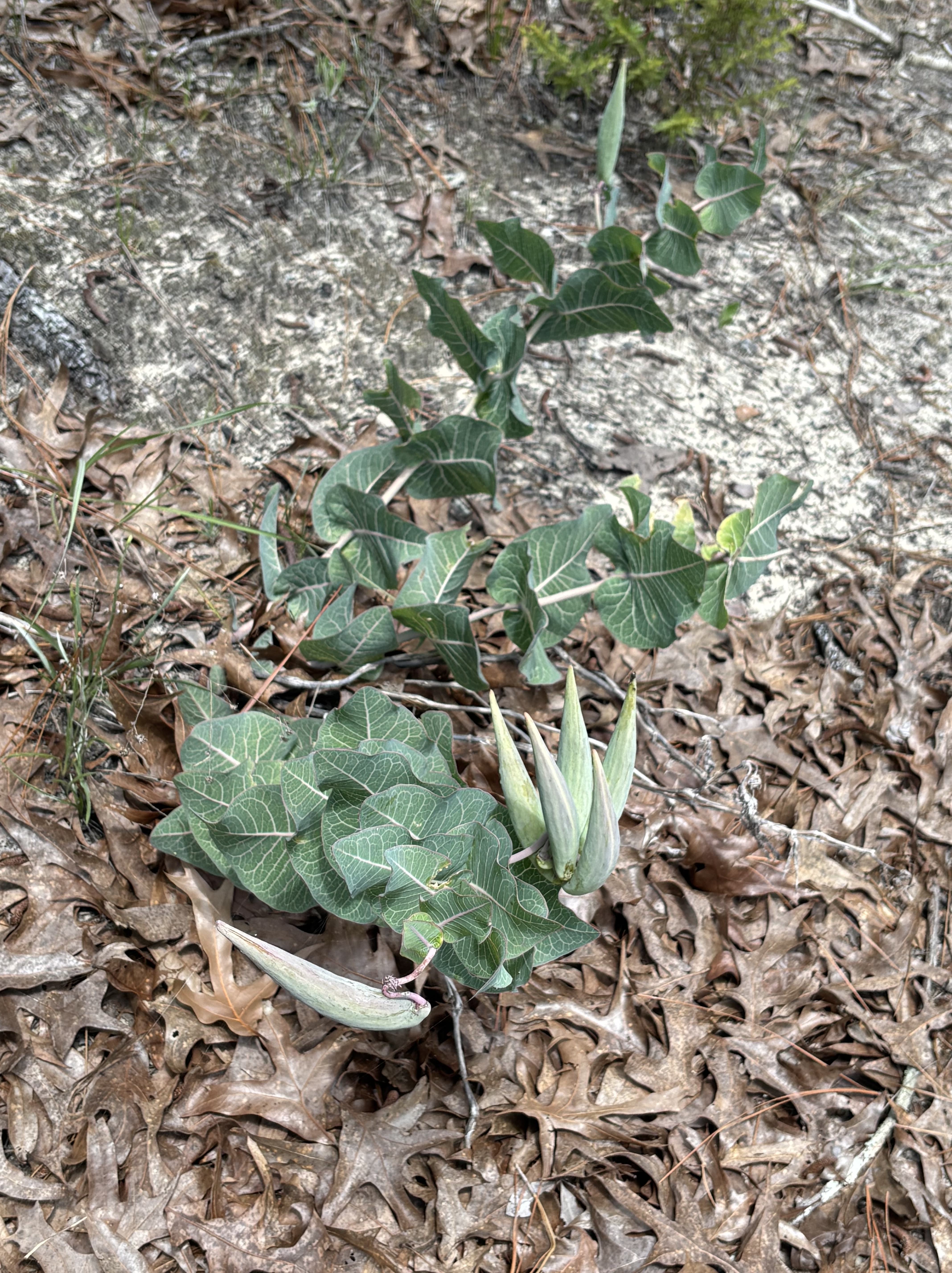
This uncommon little morning glory fits the pattern of many of my favorite finds of the day. It occurs in the sandhills, which run in a narrow strip from south central North Carolina through central Georgia, and also in longleaf pine forests on the coast from Wilmington down through the Florida panhandle. Within that range, it only does well in pristine, fire-managed landscapes. Here are a couple more plants that fit that same profile—Asclepias humistrata (sandhills milkweed) and Penstemon australis (southern beardtongue).

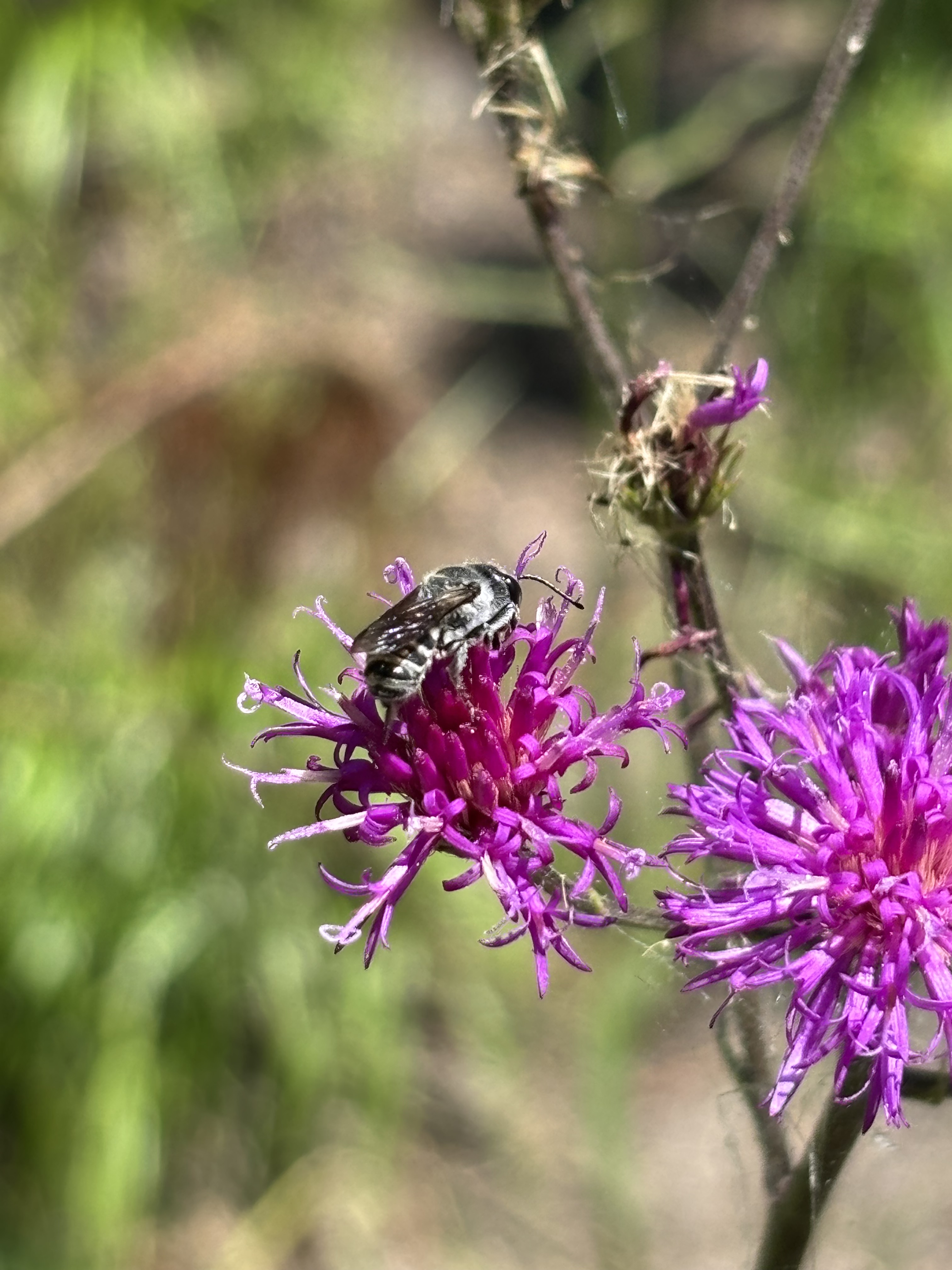
In addition to the cool plants, I was also amazed by the abundance of bees in the area, benefitting from the open ground for nesting and abundance of floral resources. As far as I could tell, they were all native—not a honey bee in sight. Here are three examples of native bees visiting uncommon flowers: Megachile on Vernonia acaulis (stemless ironweed), Lasioglossum on Xyris caroliniana (Carolina yellow-eyed grass), and possibly Halictus on Mononeuria carolinianum (pine barren sandwort).

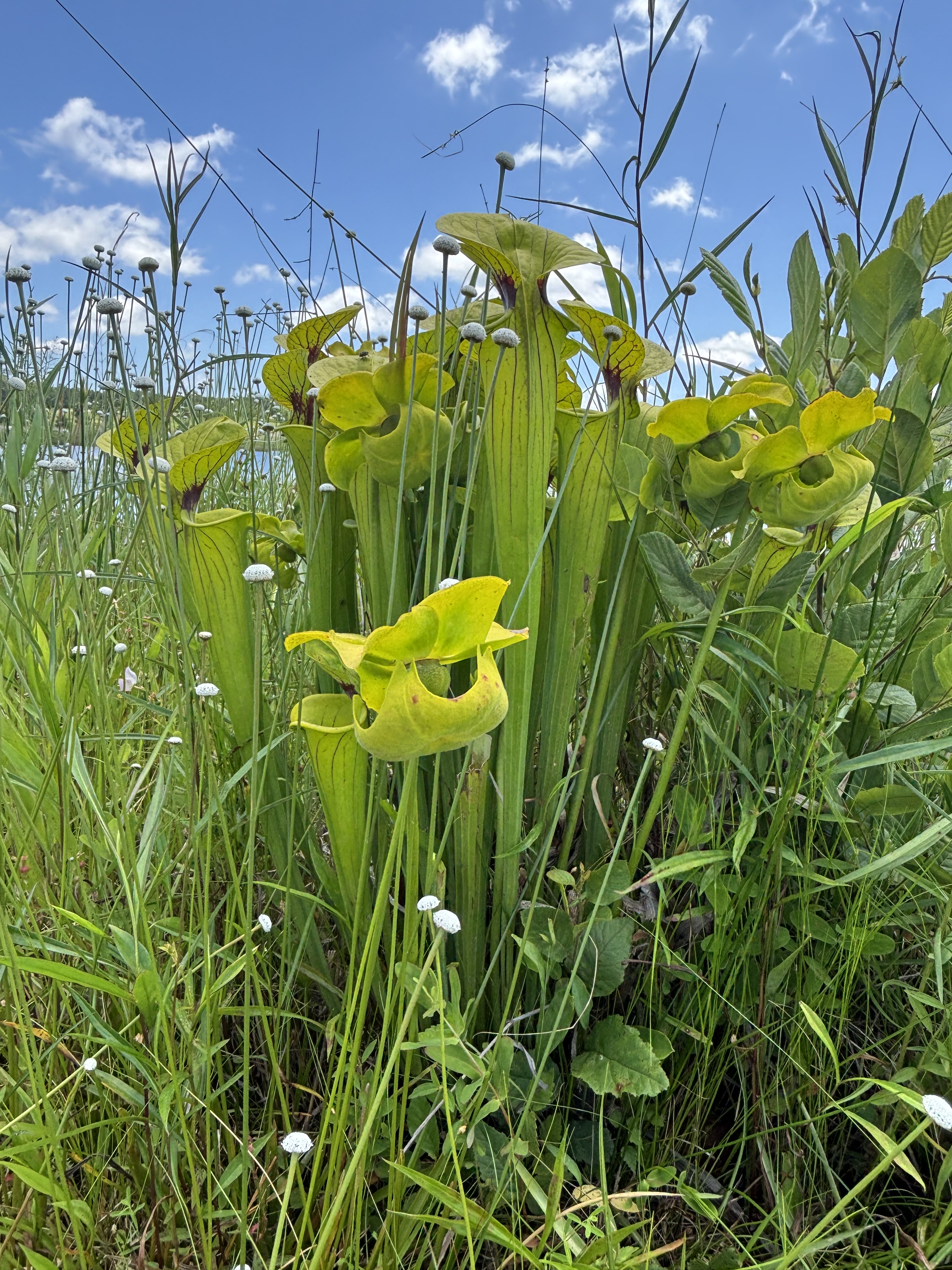
It was already noon when I made it to my third sandhills stop. I stepped out of the car to se a lush green hillside splotched with bright yellow. These were big patches of Sarracenia flava (yellow pitcher plant)!

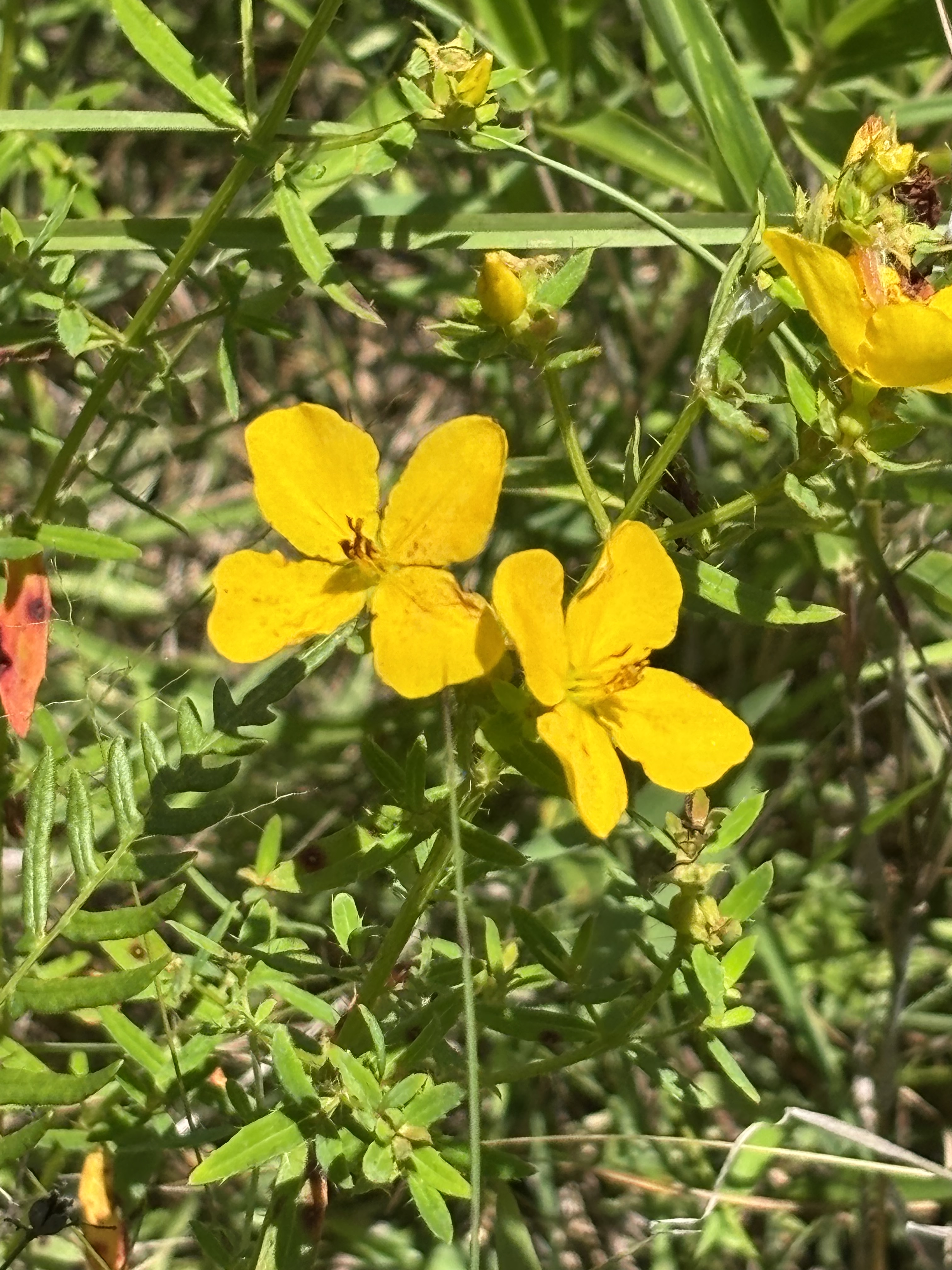
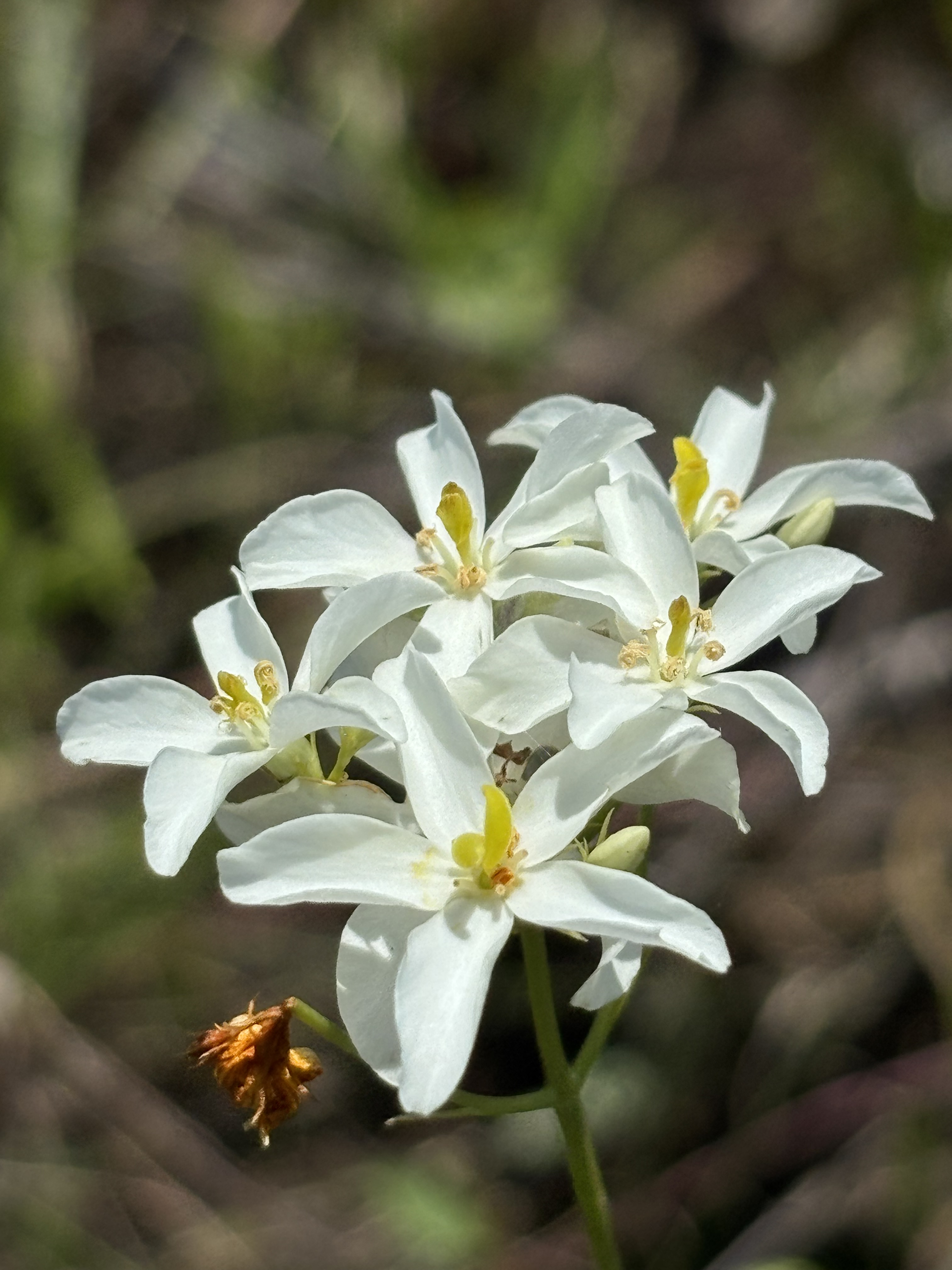
The area was a recently burned seepage slope—a habitat I hadn’t encountered before. I had a choice—take a quick look and hurry over to the flycatchers, or spend some quality time exploring the slope. Uncharacteristically, I chose the latter—I’ll add to my birding life list another day. And I am really happy with my decision. The area had the best botany of the day. Here are my six favorite finds from the seepage slope:

In the future, I’ll have to remember that not rushing to complete a Timventure can be an excellent decision. And it’s not like I missed out on birding entirely—I ended the day with 57 species including the rare Red-Cockaded Woodpecker and Bachman’s Sparrow, the declining Northern Bobwhite and Eastern Meadowlark, and some great observations of Orchard Orioles and Prairie Warblers. It was, all and all, another fantastic day in the sandhills.

April 25th, 2025: Measuring Migration

California spring is very much in full swing, and most of the migratory breeding birds have returned to the state. However, every year it takes me some time to track down all the new arrivals. I thought it would be fun to talk a bit about the migratory species that I found for the first time this year during my stay at Sedgwick Reserve, in Santa Barbara County, California. I’ll order them by how far they’ve come to get here.

Tricolored Blackbirds are a threated species is almost exclusively found in California throughout the year. They are nomadic, moving around the Central Valley in the winter. Many stay there to breed in marshes and croplands, sometimes in colonies of tens of thousands. A few hundred birds breed at Sedgwick, making the short trip every March to a small cattail-filled pond they share with Red-winged Blackbirds. Strangely, the two blackbird species seem to have divided the pond down the middle with very little intraspecies conflict–Trikes to the north, Red-wings to the south

Costa’s Hummingbirds also migrate to Santa Barbara from just a couple counties over. The closest locations that regularly have this species in the winter are the sage scrub covered hills above Los Angeles. In springs when the desert super blooms, most Costa’s will take advantage of all the delicious nectar and spend the spring and early summer there. In these years of bounty they can double or even triple clutch. This year saw extremely low precipitation across the desert. Therefore, more Costa’s may end up wandering west rather than staying east.

Lawrence’s Goldfinchs are another nomadic species. They tend to winter in the deserts of California and Arizona, returning to the oak woodlands that ring the Central Valley in March. However, their numbers at any one place fluctuate wildly from year to year as they follow large blooms of their favorite food–fiddleneck (Amsinckia)seeds. Despite far below average rainfall here, it strangely seems to be a good year for both fiddleneck and finches. As the fiddleneck finishes setting seed, some of them may follow the bloom into Northern California before heading back east for the winter.

Lazuli Buntings have just recently joined us here from the weedy fields and thorn scrub of nearby western Mexico. In southern California, they like brushy hillsides, and seem to do quite well in recently burned areas. Each beautiful turquoise and ochre male sings an individualized three-part song in hopes of attracting an extremely drab-colored female. Once breeding is over, Lazuli Buntings will fly to Southeast Arizona or neighboring Sonora for fall, where they’ll molt while chowing down on the seeds and bugs produced by the summer monsoons there. At the end of fall, they’ll head southwest, completing their unique triangle migration.

A few Bullock’s Orioles winter in coastal southern California, but most likely the ones I’m seeing here arrived a few weeks ago from woodlands in central Mexico. They are already hard at work building their hanging, woven nests. California Lace Lichen seems to be a key component, but one I found by the barn has also integrated some nylon rope and shreds of tarp. Bullock’s Orioles primarily breed in cottonwood trees throughout much of their range, but in California, they also nest in Valley Oaks and Sycamores. The important requirements are big, widely-spaced trees full of lots of tasty caterpillars.

Black-headed Grosbeaks also like foraging in and singing from the tree tops, but a closed canopy forest or suburban garden suits them better than the open savannah here at Sedgwick. The male I saw stopping for a bath at one of the station water-features was probably planning to continue on. The final destination could be as close as the forests just up the road or as far as Southern British Columbia. He was coming from somewhere in central Mexico, where some of his kin are resident, never bothering to take the trip north.

Black-throated Gray Warblers and MacGillivray’s Warblers have similar ranges to the Grosbeak, both in winter as well as summer. Both warblers, like the Grosbeak, are just passing through the area to points north. However, their preferred habitats are quite different. Rather than tall broadleaf trees, Black-throated Grays prefer open pine forests with a brushy understory, and MacGillivray’s like streamside thickets of willows. They also eat different things. A gross (fat) beak is great for crushing fruits and berries, while a tweezer-shaped warbler beak is perfect for finding little spiders and other bugs amongst the leaves.

Western Kingbirds flew in from somewhere from Southern Mexico or Central America a few weeks ago. Here, they joined the closely related Cassin’s Kingbirds who had previously made the much shorter journey from Baja. Despite their aggressive attacks on other members of their species, and even birds of prey, the two species seem to leave each other alone. I’ve never seen a Western go after a Cassin’s or vice versa.

Western Wood-Pewees make among the longest journeys of the songbirds that breed in Southern California. They all winter in forests in northwestern South America, where they possibly spend time with their close relative, the Eastern Wood-Pewee. We actually don’t fully know how much the winter ranges of the two species overlap, because they look extremely similar and tend not to use their distinctive voices while overwintering. It’s also unclear what’s wrong with all the seemingly suitable habitat found throughout central America. The long commute makes them one of the later species to make it to their breeding grounds. The one individual spotted at Sedgwick during my week there was a vanguard of the main force that will arrive in early May.

March 26, 2025: Spring Feeder Watch

I leave for California at the end of the week and won’t be back until the end of May. Therefore, this week was the last chance for a spring backyard bird watch. It’s still very early in migration in North Carolina, with the peak not happening until the end of April and early May. So far, I’ve only seen a handful migrant species in the area, and all our wintering birds are still present. However, many resident birds have begun establishing their breeding territories, practicing their songs, and I’ve seen some mating and nest building. Therefore, I was expecting a noisier feeder watch than my winter vigil, and was hoping for a migrant or two, as well.

6:45 Begin observation. It’s not even first light yet, but a couple Northern Cardinals and several American Robins are already singing, joined shortly by a Carolina Chickadee.

6:46 A Carolina Wren callsand a Brown Thrasher begins singing. In the past week our backyard thrasher has begun putting on virtuoso performances where he mimics many of the local birds. My favorite today was an excellent impression of the “potato-chip” flight call of an American Goldfinch.

6:48 An American Crow calls while flying by. A Song sparrow begins singing.

6:50 A Tufted Titmouse calls, then sings. Chickadees begin foraging in the oak trees overhead.

6:52 An Eastern Towhee calls

6:55 An Eastern Bluebird calls and gives a couple songs

6:56 A Yellow-bellied Sapsucker calls. This is our only migratory woodpecker—the pair that’s been wintering in our yard will be heading north in a couple weeks. The American Robins that have been singing and calling continuously begin chasing each other through the yard.

6:58 Two Blue Jays fly into our magnolia—the first bird this morning I saw before hearing.

6:59 Northern Cardinals visit both the bark butter and the bird feeder. A European Starling flies by. A White-Throated Sparrow calls.

7:02 A Downy Woodpecker calls

7:04 White-Throated Sparrows and a Carolina Wren visit the bark butter

7:09 Several European Starlings fly into our large oak tree, and one does a Killdeer impression that fools my Merlin bird sound identification app.

7:10 A Yellow-rumped Warbler calls from the trees. A few Dark-eyed Juncos attack the bark butter. A Ruby-crowned Kinglet begins to sing. It’s loud out here!

7:12 The Brown Thrasher takes a break from singing to visit the feeder. It’s awkward to watch—he’s too big to sit comfortably on the lip, but he makes it work. The feeder has much less action than when I did this watch in winter, likely because emerging insects are now an alternative food source.

7:16 Sunrise.

7:17 A House Finch comes to the feeder.

7:24 A female Brown-headed Cowbird visits our neighbor’s feeder before two males spot her and begin a chase.

7:26 A Mourning Dove flies by, followed by a Common Grackle. A large flock of grackles descended on our street about a month ago and seemingly hasn’t left since.

7:29A White-breasted Nuthatch begins foraging on the branches of our large oak

7:33 A Northern Flicker calls loudly

7:34 I spot a Blue-headed Vireo foraging slowly through the newly emerging leaves of our neighbor’s oak.

7:35 An Eastern Phoebe calls.

7:39 A Fish Crow calls, the final new species of the day.

7:45 End observation.

Total: 27 species.

Most notable: Definitely the Blue-headed Vireo. This was a new yard bird (# 53)! In North Carolina, Blue-headed vireos winter on the coastal plain and breed in the Appalachians, but they are only seen as spring and fall migrants on the Piedmont. There’s only one other record in eBird for Forsyth County so far this year, so I’m pretty excited about this one.

Strangest misses: Northern Mockingbird and Red-bellied Woodpecker. After fiercely defending the feeder all winter, Marty the Mockingbird has been very subdued recently. I’m wondering if the aggressive starlings and grackles that have shown up in numbers in recent weeks have caused Marty to tactfully retreat. I did see our resident male Red-bellied Woodpecker at the feeder 10 minutes after I ended the count. He has also been affected by the starlings. A month ago, Jenny and I noticed him beginning to excavate a nest cavity in a dead branch of our front yard maple tree. After several days of pretty much continuous labor, his work was complete. The craftsmanship must have been high quality, because after an inspection, a female decided to move in. Unfortunately, several starlings were also impressed with the work and wanted to take over. A weeks-long war ensued for control of the nest, with battles won and lost by both sides. Now it seems the startlings have emerged victorious, and the original builder is left without a home. I don’t like starlings.

Comparisons: 15 species overlapped with my January 11th watch, and 12 were new. I only didn’t see three species that were on the winter watch—Golden-crowned kinglet, American Goldfinch, and Northern Mockingbird.

March 12, 2025: Old-School Naturalizing in the Sandhills

Today I headed to Carvers Creek State Park for some early spring naturalizing. The park, north of Fayetteville, preserves some pristine longleaf pine (Pinus palustris) woodlands. This beautiful and diverse habitat, threatened by habitat development and fire suppression, is fast becoming one of my favorites in the state.

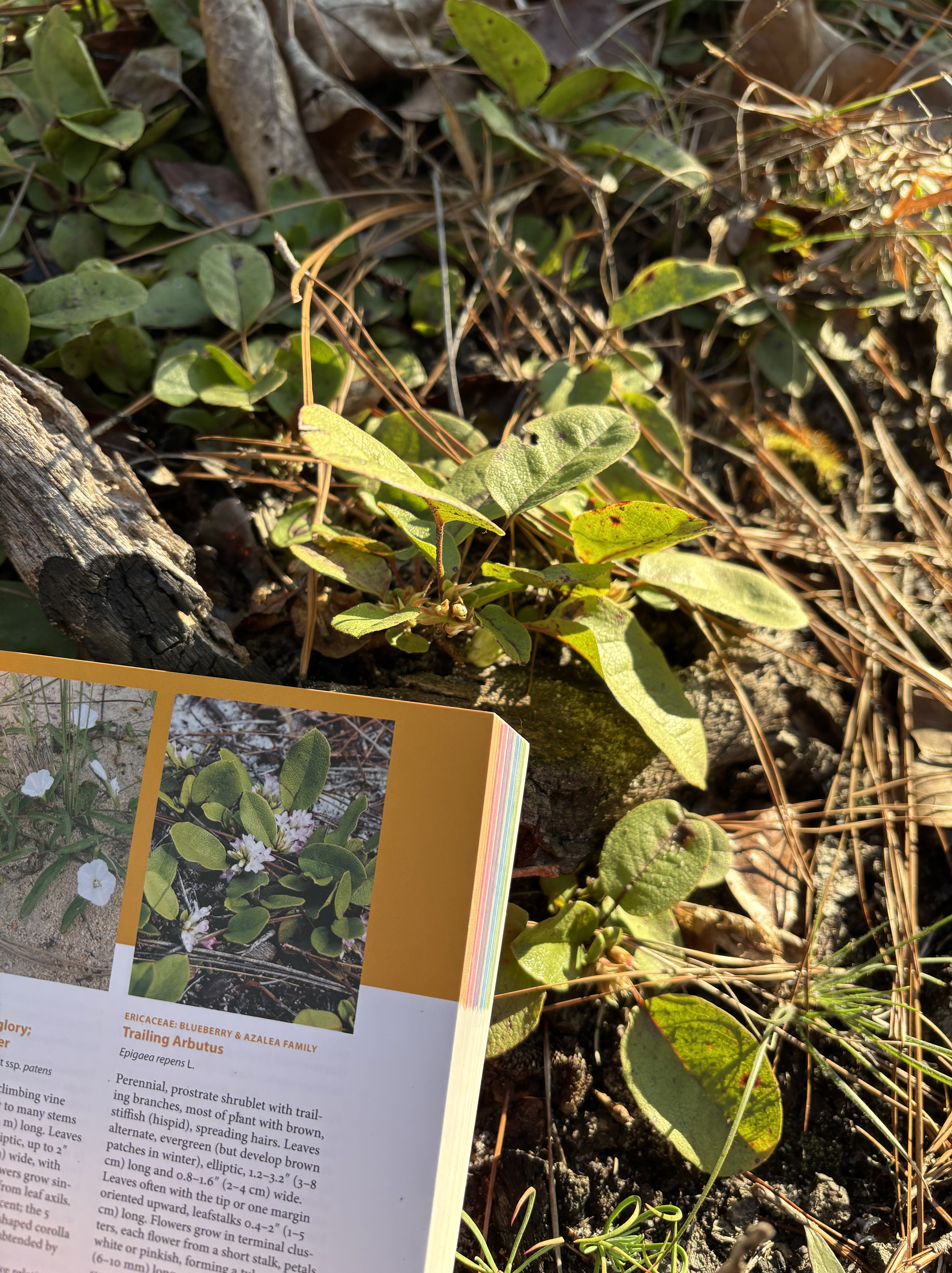
Normally when I’m in nature, I’m on my phone a lot. I keep a running eBird list, and have a trail map downloaded, which I check frequently. Additionally, if I have service (most places these days) I’ll take pictures of unknown lifeforms and upload them to iNaturalist, using the algorithm to generate a tentative identification. This time I wanted to try naturalizing completely offline. I printed out the map, packed a couple field guides, and hit the trail.

Amazingly, the very first bird I saw upon exiting the car, was a rare Red-Cockaded Woodpecker (Dryobates borealis). An obligate dweller of frequently burned pine-forests, this was only the third time I had ever seen one! I instinctively reached for my phone to start an eBird checklist before I remembered my brief. Instead, I opened my notebook, wrote down the four-letter of birding code RCWO and put a small dot next to it. Before everyone had an electronic recording device in their pocket, ornithologists developed a shorthand for recording their lists. Each bird has a unique 4-letter code that’s some combination of the first letters of words in the English species name. Additionally, rather than tick marks, birders often use the dot and line tally method, where you build boxes that eventually total ten individuals. This method is easier to read and harder to miscount. By the end of the day, I had a hand-written list of 28 birds and their counts. I must say, I think my totals were more accurate than my normal eBird accounting.

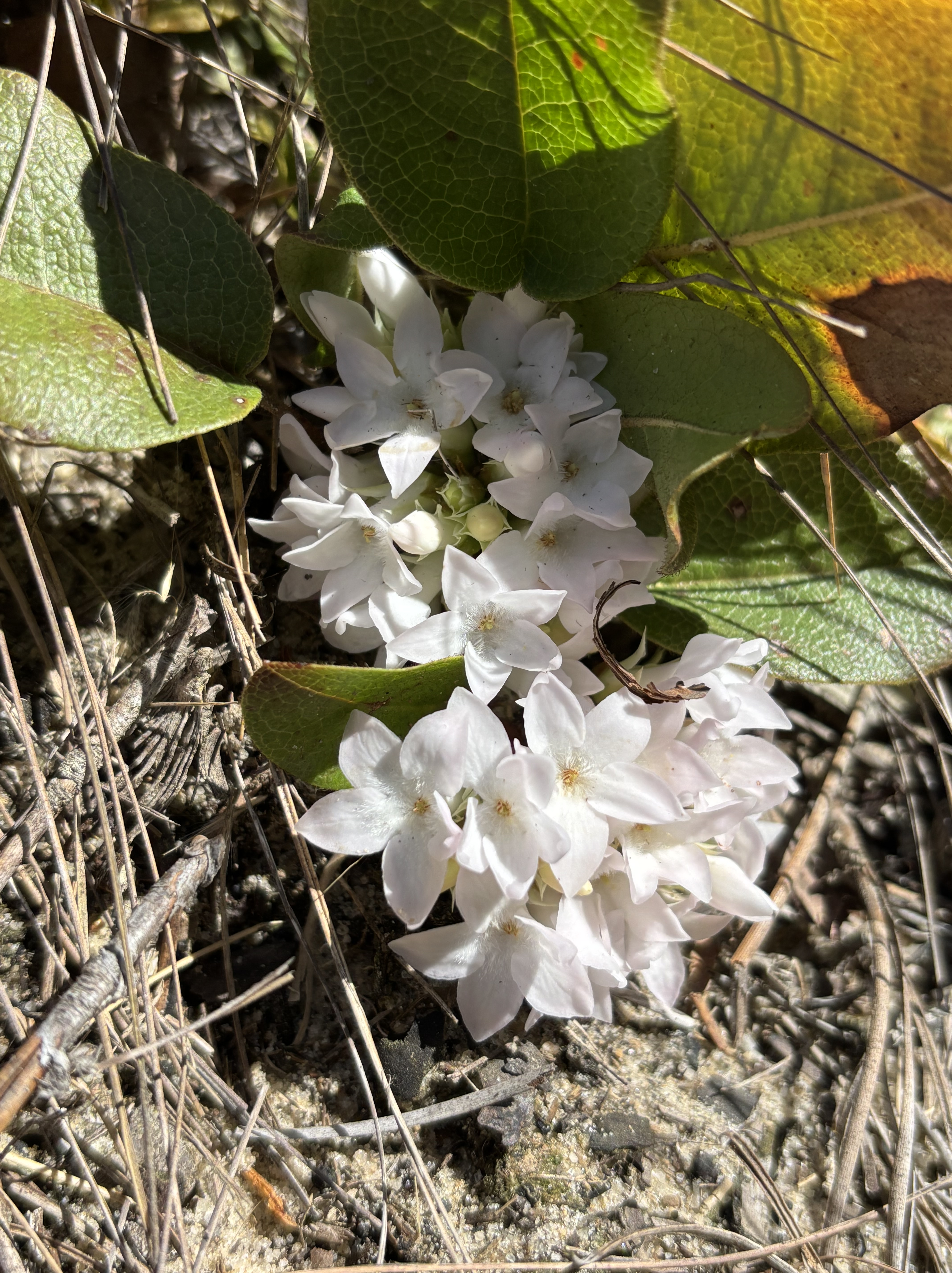
A few minutes down the trail from the woodpecker, I found a low-growing plant with lovely, fuzzy-centered white flowers.

I brought my copy of Wildflowers of the Sandhills Region by Bruce A. Sorrie for just this moment. Flipping to the appropriate section, I quickly identified it as Trailing Arbutus (Epigaea repens).

The description in the book mentioned a nice fragrance, so I lowered my nose to ground level to get a whiff. What a treat! They had a lovely smell of a less-cloying jasmine. Here was definitely a win for field-guide usage—I never would have thought to sniff if I had just used iNaturalist.

The only other plant blooming this early was my main target of the whole trip, the sandhills pixiemoss (Pyxidanthera brevifolia). Only found in six Carolina counties, this is one of the rarest plants in the region. It’s an absolutely adorable cushion-plant, densely covered with delicate flowers.

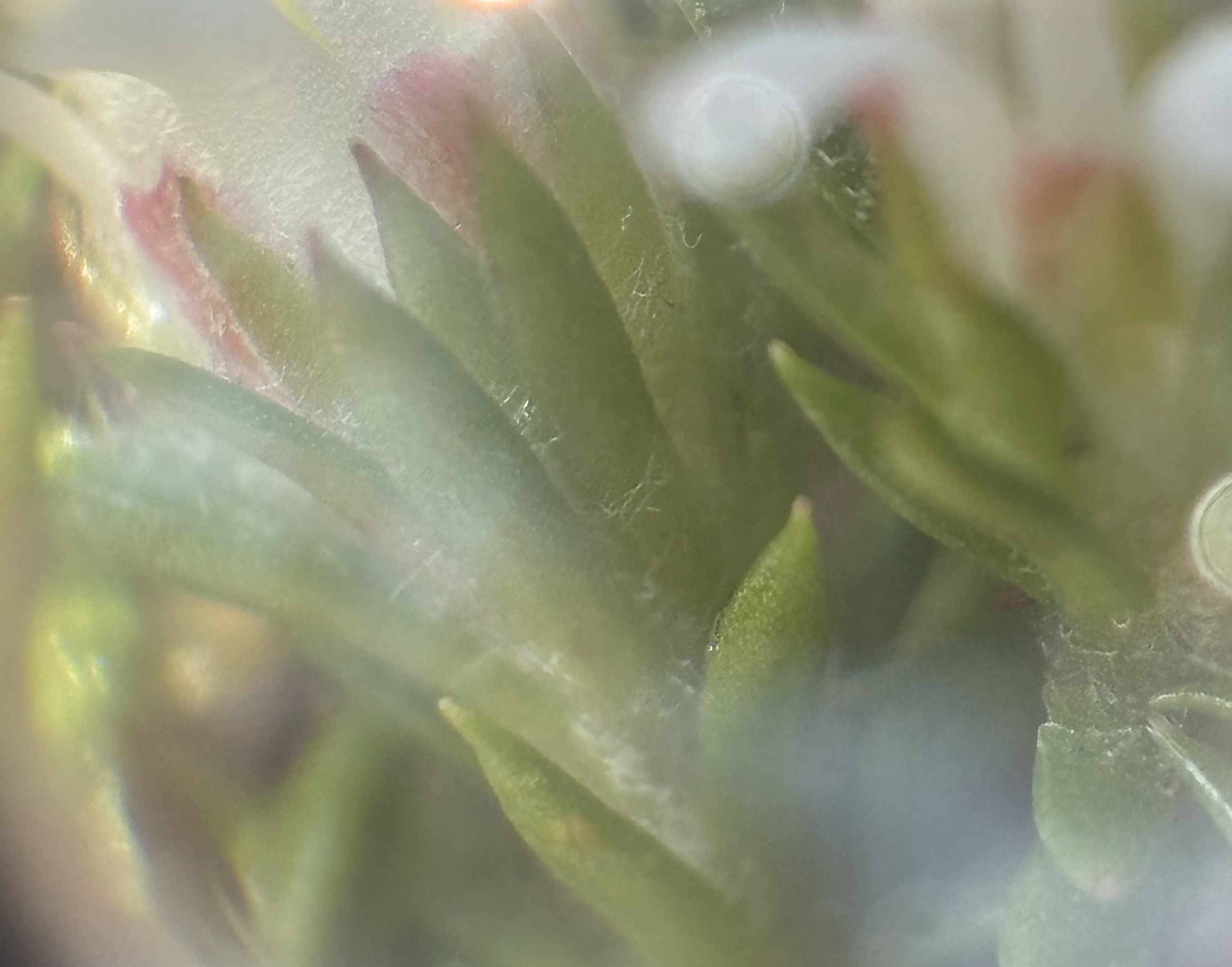
Even here, in excellent habitat, it is uncommon—I only saw one plant across eight miles of trail! I used the description in field guide to make sure I wasn’t confusing it the only other species in the genus. Using a hand lens, I saw hairs covering the leaves, which among other traits, clinched the ID.

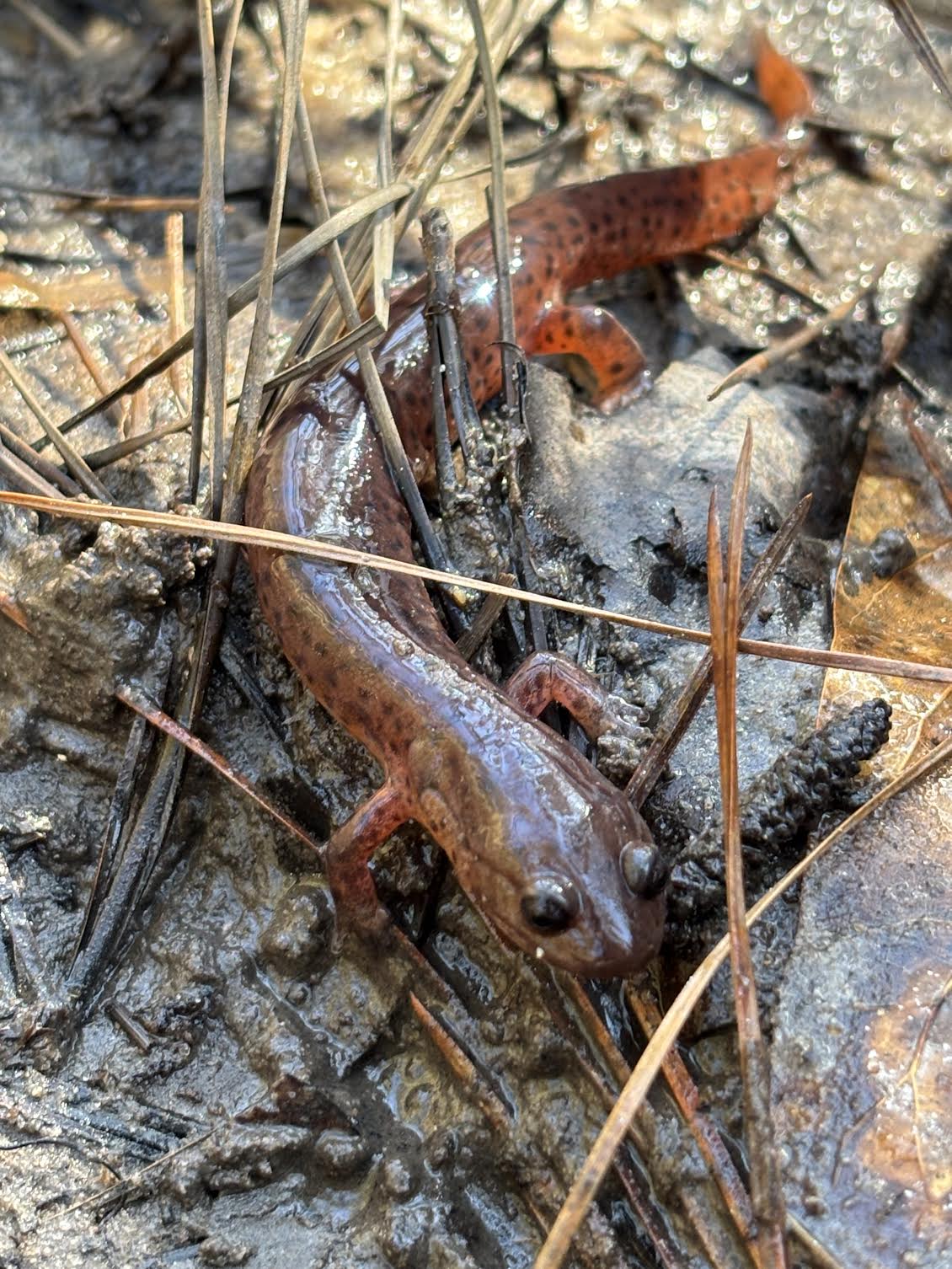
In addition to the birds and flowers, I had an excellent day for herps, totaling nine species (no snakes though). While flipping some small logs around the edge of a pond, I found this tiny salamander!

Based on shape, I knew it was in the genus Eurycea (amazingly it’s a congener of the cave salamander I had just seen in Texas!). But I had no idea which one. Time to turn to my other old school resource—the Peterson Field Guide to Reptiles and Amphibians of Eastern and Central North America. Comparing the species that could be found in the area, I locked in on a couple important characteristics. Four (not five) toes on the back legs.

A yellow belly with an even paler throat and chin (compared to a darker gray).

I had just found the uncommon and recently described Chamerlain’s Dwarf Salamander (Eurycea chamberlaini)!

Other herp highlights included this chonky mud salamander (Pseudotriton montanus),

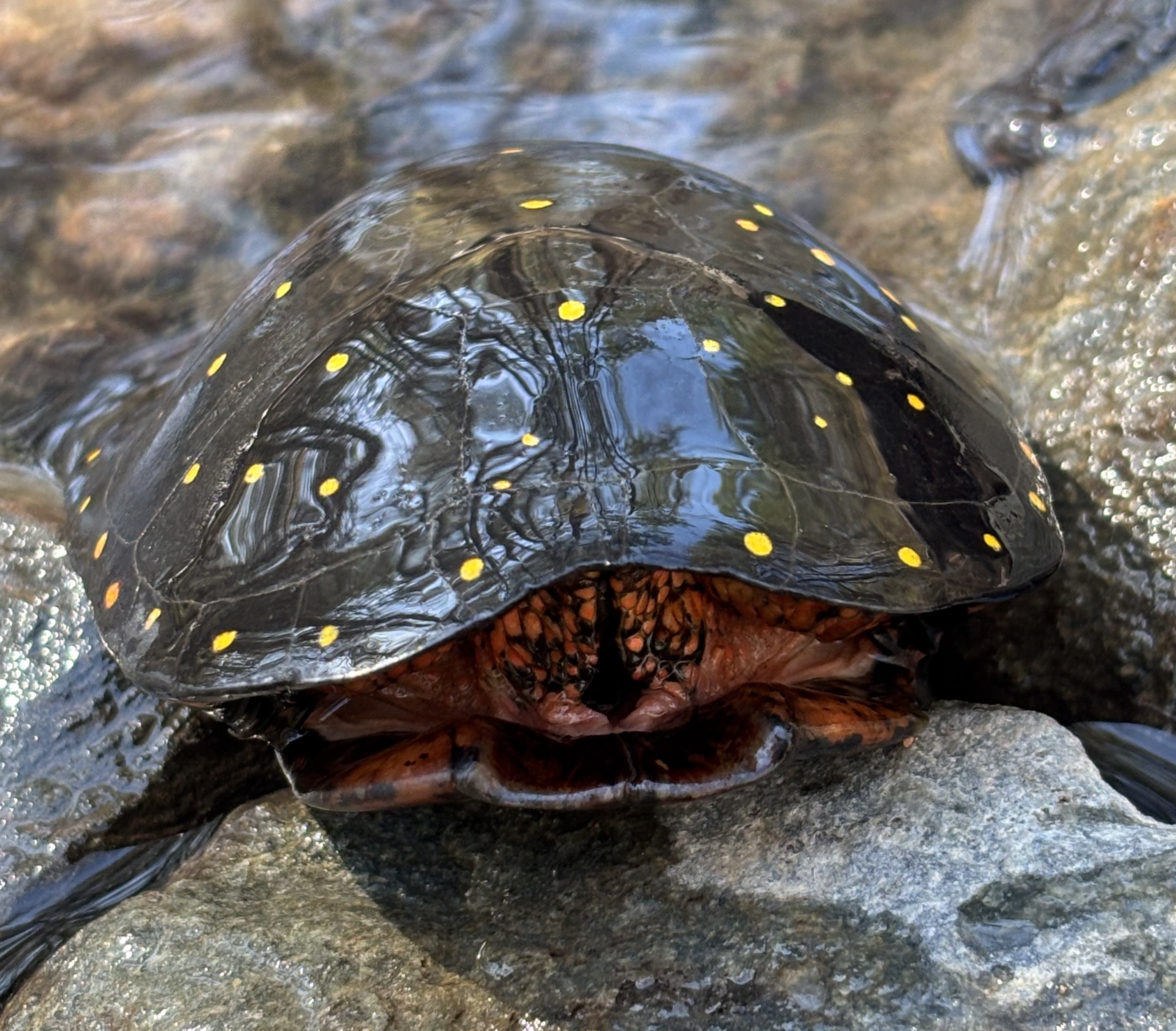
and this stunning spotted turtle (Clemmys guttata).

No field guides were needed for either of these two (In case you’re curious, I swear this is the front end of the turtle—their head is tucked is tucked behind those weird orange and black neck folds!).

Overall, I did enjoy eschewing my phone. Hiking with a notebook in my pocket encouraged me to jot down observations as I walked. For instance, based on my notes, I could figure out that a butterfly I saw flutter by was a sleepy orange (Abaeis nicippe). However, I found it somewhat annoying to transcribe my bird list when I returned. Additionally, it seems unnecessarily handicapping to not use the identification algorithms of iNaturalist when I have a perfectly good photograph and the internet. On my next hike, I’ll definitely keep that notebook in my pocket and take the time to use a field guide, if I brought the right one. But I will go back to my phone-y ways.

February 25: Listing Toward Spring

Across most of the United States, February is a boring month for birders. We’ve been stuck with the same species all winter, with no hope of reinforcements in the form of migrants until the end of March. As I wait for spring, and it’s associated turnover of species I decided to do a bit of housekeeping of my birding life list.

I’ve mentioned this before, but eBird is an absolutely amazing website for birders. It’s great for finding places to look for birds, checking recent submissions for any nearby rare or unusual birds, and linking to pictures and descriptions to help with identification. But most of all, eBird amazing at keeping lists. Listing birds is like other collecting hobby, in that more is better, complete sets or rarities are particularly fun, and conversations about which ones you have is extremely tedious to anyone who doesn’t collect. I think the difference between baseball cards or coins and birds, though, is that each item on my life list has at least one amazing memory attached to it. I’ll occasionally peruse my list and reflect on the time I saw a Great Grey Owl hunting voles in the evening light or watched a Great Curassow stride through Mayan Ruins.

Since I began using eBird in 2013, I’ve encountered (seen or heard) and logged 976 species of birds globally, 601 in the United States, and 412 in California. The problem is that I’ve seen some birds before 2013 and not since. I know for sure I’ve actually met 612 kinds in the US and 419 in California. A few of these “extra” birds are quite rare in the region, and I’ll be unlikely to ever see them there again. Therefore, in order to preserve my memories, I keep an excel spreadsheet with my USA and CA life lists. It’s easy to do in theory, but in practice, my “count” keeps changing!

Other than seeing new birds, the numbers on my list can change for two reasons. One is taxonomic change—lumping and splitting species. Based on the most recent literature, sometimes two or more species are grouped into just one. A recent example is that Common and Hoary Redpolls were found to freely interbreed, and therefore lumped into “Redpoll”. More frequently, what was formerly considered geographic variation within a species is deemed enough to elevate populations into to two or more separate species. For instance, last year Cory’s and Scopoli’s Shearwaters were split, and, as I had seen both, I got to add one to my count—an armchair tick! Numbers can also change based on which non-native species are considered “countable”. The American Birding Association (ABA, aka the birding police) keeps track of wild, but introduced populations of birds in the US and Canada, determining when they are “naturalized”—that is self-sustaining through reproduction in the wild—and thus countable. The chicken you watched crossing the road after escaping its coop doesn’t count, but the European Starling at your backyard feeder definitely does. The flock of Egyptian Geese that Jenny and I saw along the Colorado River in Austin last week? The ABA needs to make a ruling (it’s on my list, but it’s technically still a provisional species!). Finally, adding to the confusion are name changes and taxonomic revisions that alter the order birds appear of the list.

All this to say, a couple days ago I redownloaded the most recent ABA checklist, and spend a couple hours updating my excel sheet. I made adjustments to the taxonomy and additionally added the ABA rarity codes to my list. Here’s how those work:

There are 1109 species of extant (not-extinct or locally extirpated) bird species that can be counted the US, of which I’ve only seen 55%. However, 362 of those are rarities—codes 3, 4, or 5. Of those, I’ve only seen 19 (5%, including my one code 5 lifer, a White-chinned Petrel that hung out with me on a boat trip in Monterey Bay). I’ve seen about 45% of the 257 code 2 birds. Many of my code two misses would either require trips to Alaska, Hawaii, or South Texas (places I’ve never been), or are naturalized species locally found in cities (places I don’t particularly enjoy birding). That leaves the 489 code 1 birds. Of those, I’m only missing 15 (3%)! Those elusive few make a great list to search for on future adventures! Hopefully I can find a few more lifers once winter turns to spring.

January 31: Trip Prep

January 31, 2025 Trip Prep

Jenny and I are about to embark on a two-week road trip to Austin, Texas. While a big motivation for the trip is to explore the food and culture, we have some nature-oriented goals, as well. For this post, I wanted to briefly describe what goes into preparing for a successful naturalizing expedition.

  1. Identifying targets. A few months ago, when we settled on a drive to Austin, I began looking up interesting critters along the route. I plan my trips by using some amazing advanced search functions on specific websites. My three favorites are Calflora, eBird, and iNaturalist. With all of these sites, you can choose a geographic area and search for records that match specific parameters. For example, on iNaturalist I searched for February records of amphibians listed as threated within 100 miles of Montgomery. On eBird, I searched for birds found in Texas in winter that I had never seen before (based on my submitted checklists). After fiddling around like this for a couple hours (and consulting Jenny), I settled on three targets: the red hills salamander in Alabama, Whooping Crane on the Gulf Coast of Texas, and cave salamanders near Austin. I love having targets, because even if I don’t find them (for instance, the red hills salamander is a long shot) I end up visiting amazing places. That’s because unique species tend to hang out in unique habitats!
  2. Researching. For each target species, I use the same websites as to determine accessible locations where folks have seen them. Then I plan my specific route. I like to have a main spot and a couple back-ups. I look up as much as I can about the organisms in field guides (both online and print). Specifically knowing the microhabitat requirements and behaviors of a species really helps me focus my search. Finally, I scout out what other critters might be in the area. Sometimes this “bycatch” ends up being the trip highlight!
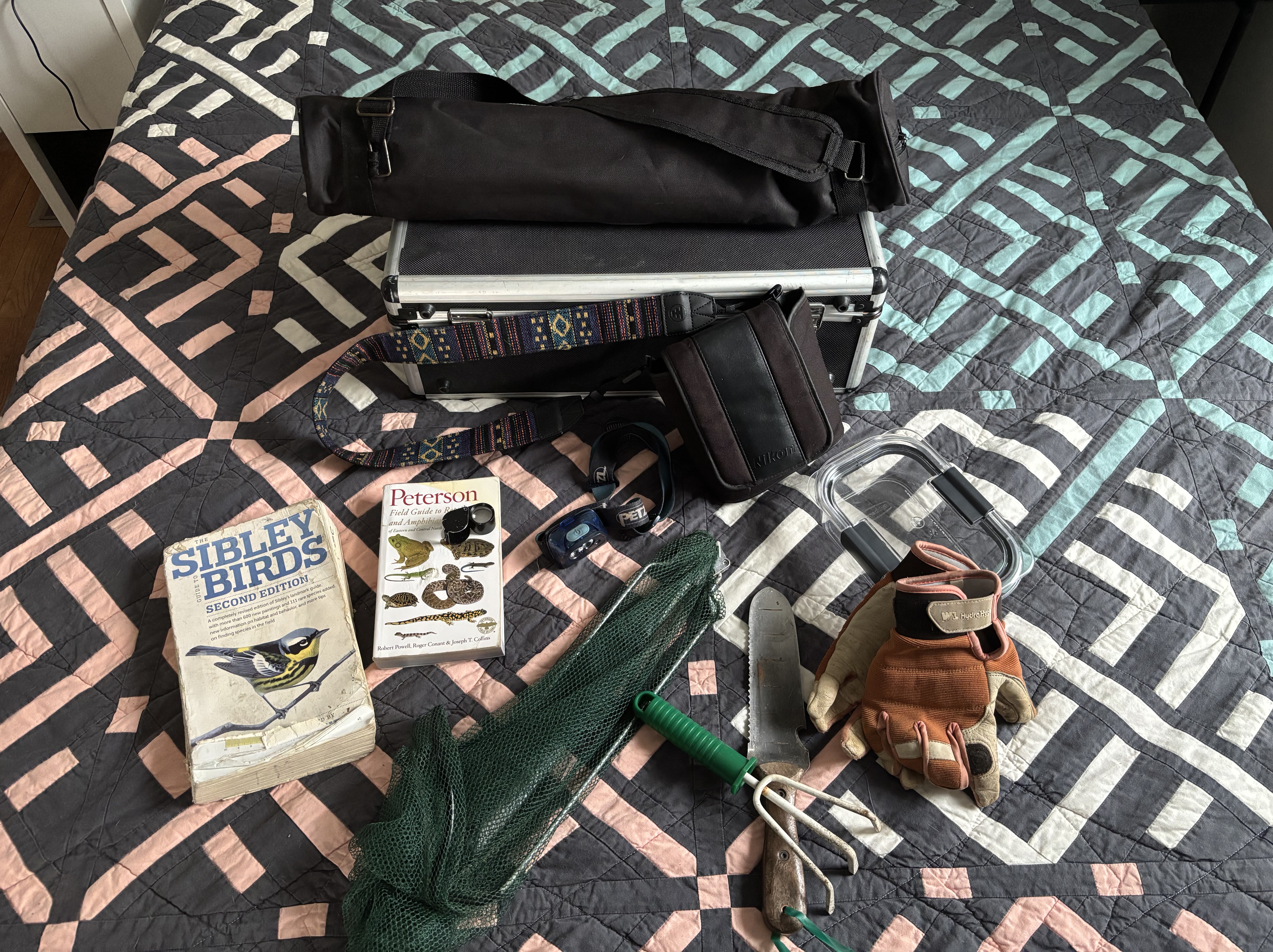
  3. Packing. Bringing the right equipment is also super important to a successful trip to Here’s a list of naturalist-related gear that I’m bringing to Austin:

binoculars, spotting scope, work gloves (for flipping rocks and logs), spade and hand rake (for sifting though dirt and leaf litter), hand lens, headlamp, aquatic net, clear container (for close-up photography), field guides

Despite all the planning, success often involves being flexible enough to adapt the plan due to weather, road closures, or unforeseen opportunities. I’m definitely looking forward to this adventure!

January 11: Snowy Morning Feeder Watch

A big winter storm hit Winston-Salem on the night of January 10, dumping a few inches of snow onto our yard. The next morning was forecast to be sunny and calm—perfect snow day conditions! I decided to wake up early and do an hour-long bird feeder watch, beginning just before first light. Here is my log from that watch:

7:00 am: Begin observation

7:07 First bird—Marty the Northern Mockingbird perches on the lip of our raised flower bed

7:14 Northern Cardinal calls

7:16 Marty snacks on some bark butter I had smeared on a tree trunk

7:17 Yellow-Bellied Sapsucker calls

7:19 White-Throated Sparrow and Dark Eyed Junco flock arrives, a junco snags some bark butter

7:23 American Crow calls

7:24 Ruby-Crowned Kinglet arrives, snags some bark butter

7:25 Carolina Chickadee begins chattering, and then visits the main feeder—the first bird to do so.

7:26 Tufted Titmouse and White-Breasted Nuthatch calling in the trees overhead

7:28 Carolina Wren begins singing vigorously, then eats some bark butter and fights with another wren

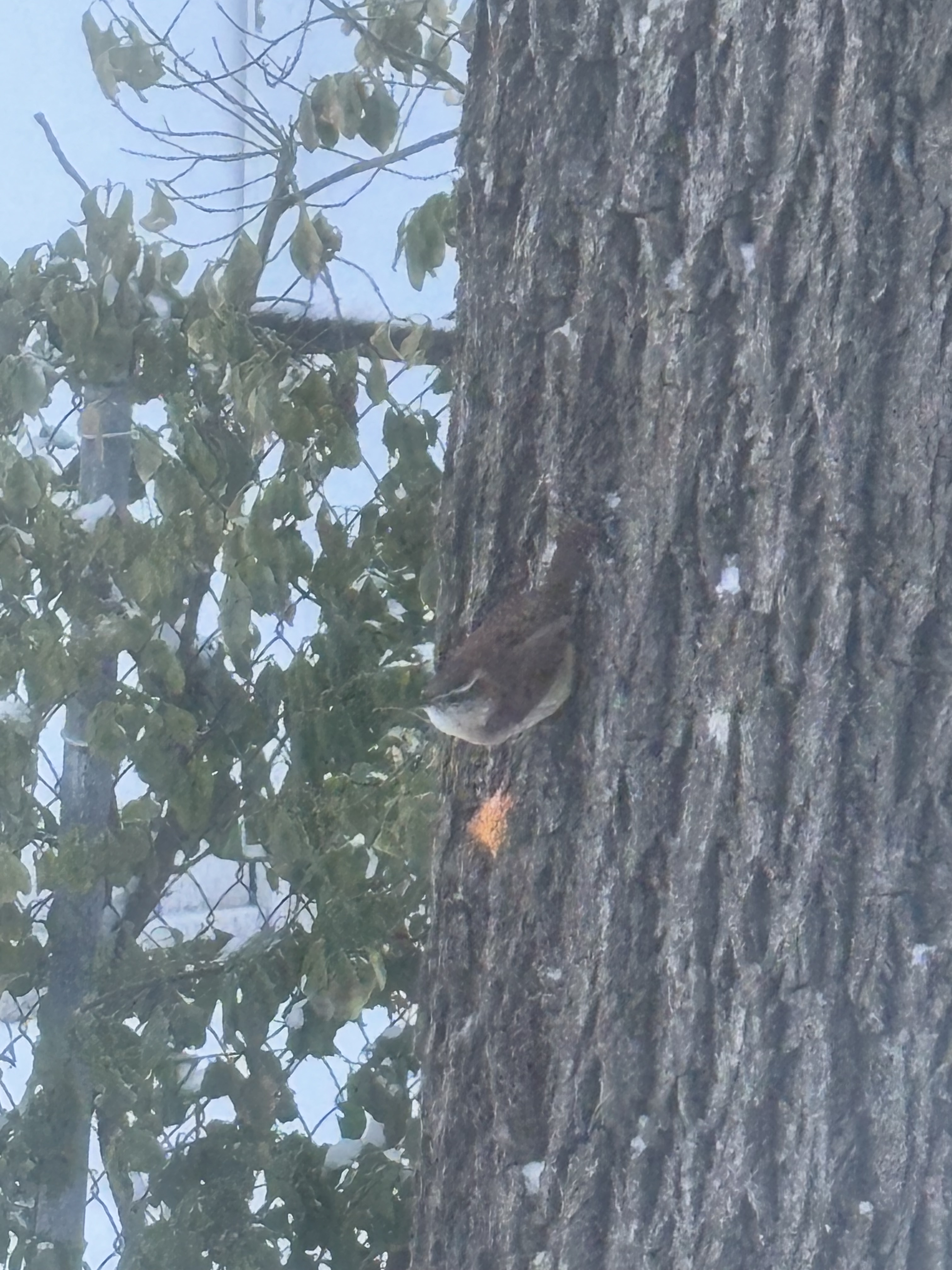
A Carolina Wren visits a smear of bark butter in the snow

7:31 Sunrise

7:38 A flock of House Finches and American Goldfinches flies overhead, calling. A Blue Jay flies into the magnolia tree and begins yelling at everyone

7:43 Golden-Crowned Kinglet and Yellow-Rumped Warbler briefly stop by the yard, joining the flock of activity

7:50 Marty the Mockingbird perches on top of the feeder and begins chasing away other birds

7:57 Song Sparrow sings from the bushes at the back of the yard

7:59 Carolina Wren visits our small window feeder, so far, the only species I’ve seen do so since we put it up last week.

8:00 Mourning Dove flies by, the final species to make the count. End observation.

Total: 18 species

Most notable: Yellow-Rumped Warbler. A bunch of them winter in our area, but they don’t come to our back yard that often

Strangest miss: Downy and Red-Bellied Woodpeckers are usually around, and both showed up later in the day. Eastern Bluebirds are also common in our backyard, but they tend to visit us in the afternoons.

While I very much enjoyed my time, one hour-long watch by itself isn’t particularly laden with importance. The power of careful observation comes with time and repetition. Since moving here in March, I’ve now submitted 21 eBird checklists from our backyard and seen or heard 48 species. I’m starting to get a sense of what’s “normal”. As the seasons go by, it’s exciting to see migratory birds arriving and leaving, behaviors changing, birds molting, and fledglings appearing on the scene. My plan is to repeat my dawn feeder watch three more times this year. I’m excited to compare and contrast these seasonal benchmarks.

Zooming out, my hour-long observation becomes one data point out of the 103 million checklists submitted to eBird. These checklists come from over 1 million birders from across the world. At this scale, scientists can see patterns of migration, habitat use, and population increases and declines. The data helps inform important conservation decisions and even legislation. Not bad for a snowy morning spent in front of a window.