January 31, 2025 Trip Prep
Jenny and I are about to embark on a two-week road trip to Austin, Texas. While a big motivation for the trip is to explore the food and culture, we have some nature-oriented goals, as well. For this post, I wanted to briefly describe what goes into preparing for a successful naturalizing expedition.
- Identifying targets. A few months ago, when we settled on a drive to Austin, I began looking up interesting critters along the route. I plan my trips by using some amazing advanced search functions on specific websites. My three favorites are Calflora, eBird, and iNaturalist. With all of these sites, you can choose a geographic area and search for records that match specific parameters. For example, on iNaturalist I searched for February records of amphibians listed as threated within 100 miles of Montgomery. On eBird, I searched for birds found in Texas in winter that I had never seen before (based on my submitted checklists). After fiddling around like this for a couple hours (and consulting Jenny), I settled on three targets: the red hills salamander in Alabama, Whooping Crane on the Gulf Coast of Texas, and cave salamanders near Austin. I love having targets, because even if I don’t find them (for instance, the red hills salamander is a long shot) I end up visiting amazing places. That’s because unique species tend to hang out in unique habitats!
- Researching. For each target species, I use the same websites as to determine accessible locations where folks have seen them. Then I plan my specific route. I like to have a main spot and a couple back-ups. I look up as much as I can about the organisms in field guides (both online and print). Specifically knowing the microhabitat requirements and behaviors of a species really helps me focus my search. Finally, I scout out what other critters might be in the area. Sometimes this “bycatch” ends up being the trip highlight!
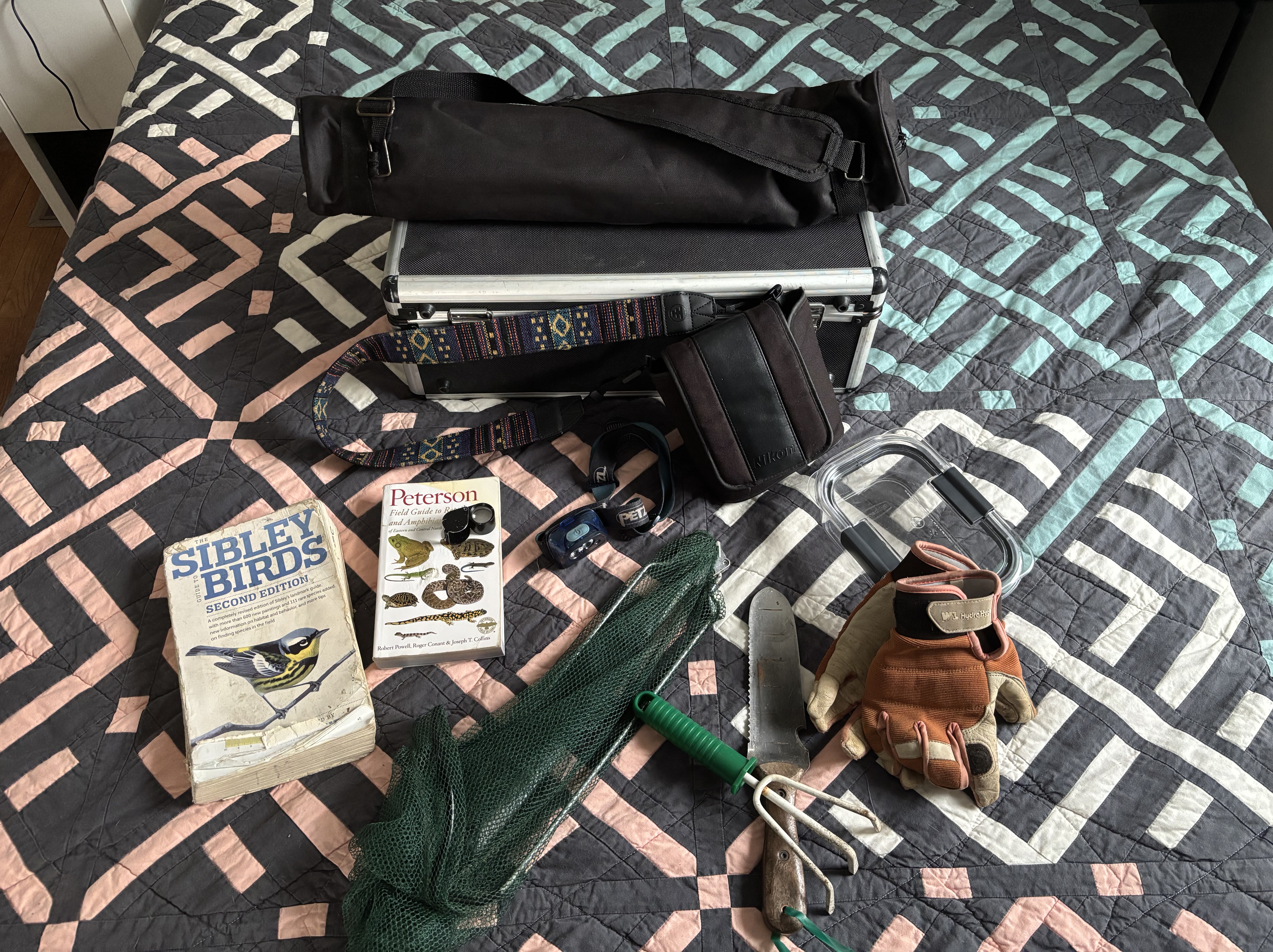
- Packing. Bringing the right equipment is also super important to a successful trip to Here’s a list of naturalist-related gear that I’m bringing to Austin:
binoculars, spotting scope, work gloves (for flipping rocks and logs), spade and hand rake (for sifting though dirt and leaf litter), hand lens, headlamp, aquatic net, clear container (for close-up photography), field guides
Despite all the planning, success often involves being flexible enough to adapt the plan due to weather, road closures, or unforeseen opportunities. I’m definitely looking forward to this adventure!
 botanicalramblings