July 23, 2025: A Spectacular Salamander

Despite being a relatively dry place, California is home to a surprising 49 species of salamanders. I’ve seen a respectable 27 of them, and all but seven of my misses are in the genus Batrachoseps. These slender salamanders are a classic case of relictual speciation, where a formerly widespread species range became fragmented as the climate dried out. The resulting populations, in the absence of gene flow adapted to their local sites and diverged genetically enough to become distinct species. In other words, Batrachoseps is really interesting from an evolutionary perspective, but they all kind of look the same. The other species that I have yet to see are the red-bellied newt, two species of the recently split black salamander, and much to my dismay, four of the five web-toed salamanders in the genus Hydromantes.

All web-toed salamanders are endemic to California. Crazily, their closest relatives are European cave salamanders in the genus Speleomantes. In addition to their distinctive webbed feet, they have a flattened bodies and a short, stiff tails that help them climb through rocky crevices. Also, they apparently have a long, sticky tongues that they can shoot out quickly to catch prey like a chameleon!

In March of 2022, Jenny and I took a trip to Shasta Lake to look for Hydromantes samweli (the samwel shasta salamander). We spent hours searching, managing to turn up this one juvenile individual to our great excitement.

That species along with three of the four others, are limestone specialists, making a living by hiding in the cracks and crevices of caves. The exception is the Mount Lyell Salamander, Hydromantes platycephalus. This is a species of the High Sierra, occurring in wet granite boulder fields and streams downslope from late-melting patches of snow. I’ve wanted to meet this species for a while, but never was quite sure where to look (there’s a lot of granite in the Sierra!). That changed this week at the Sierra Nevada Aquatic Research Laboratory, where I connected with a former course assistant who now works here. He had a tip about a population a half an hour south of the station. We set out with my teaching assistant and fellow nature nerd to the area, and quickly climbed up a canyon into what seemed like appropriate habitat.

It turned out to be a great tip—we found a large adult salamander under the very first rock we turned over!
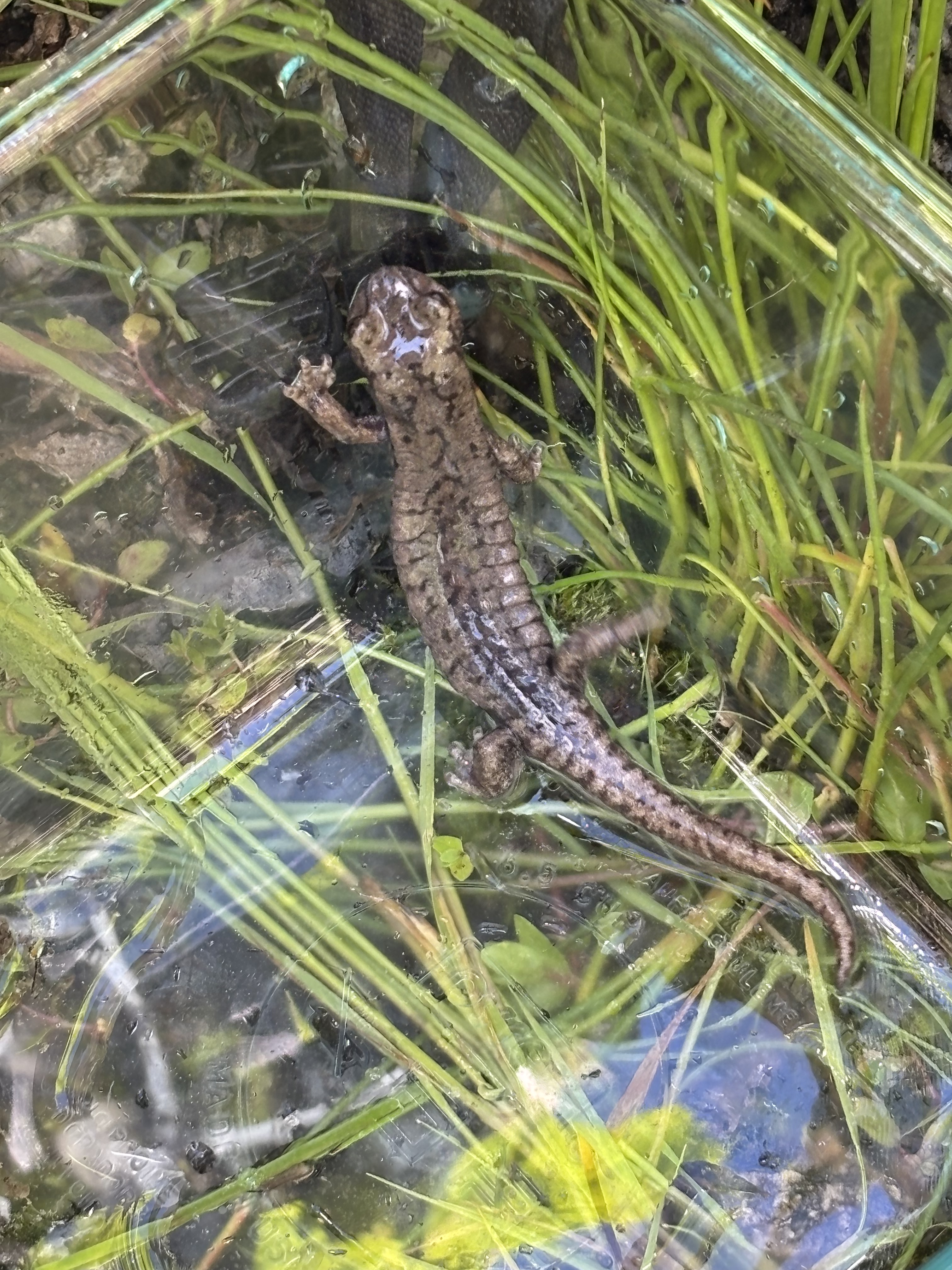
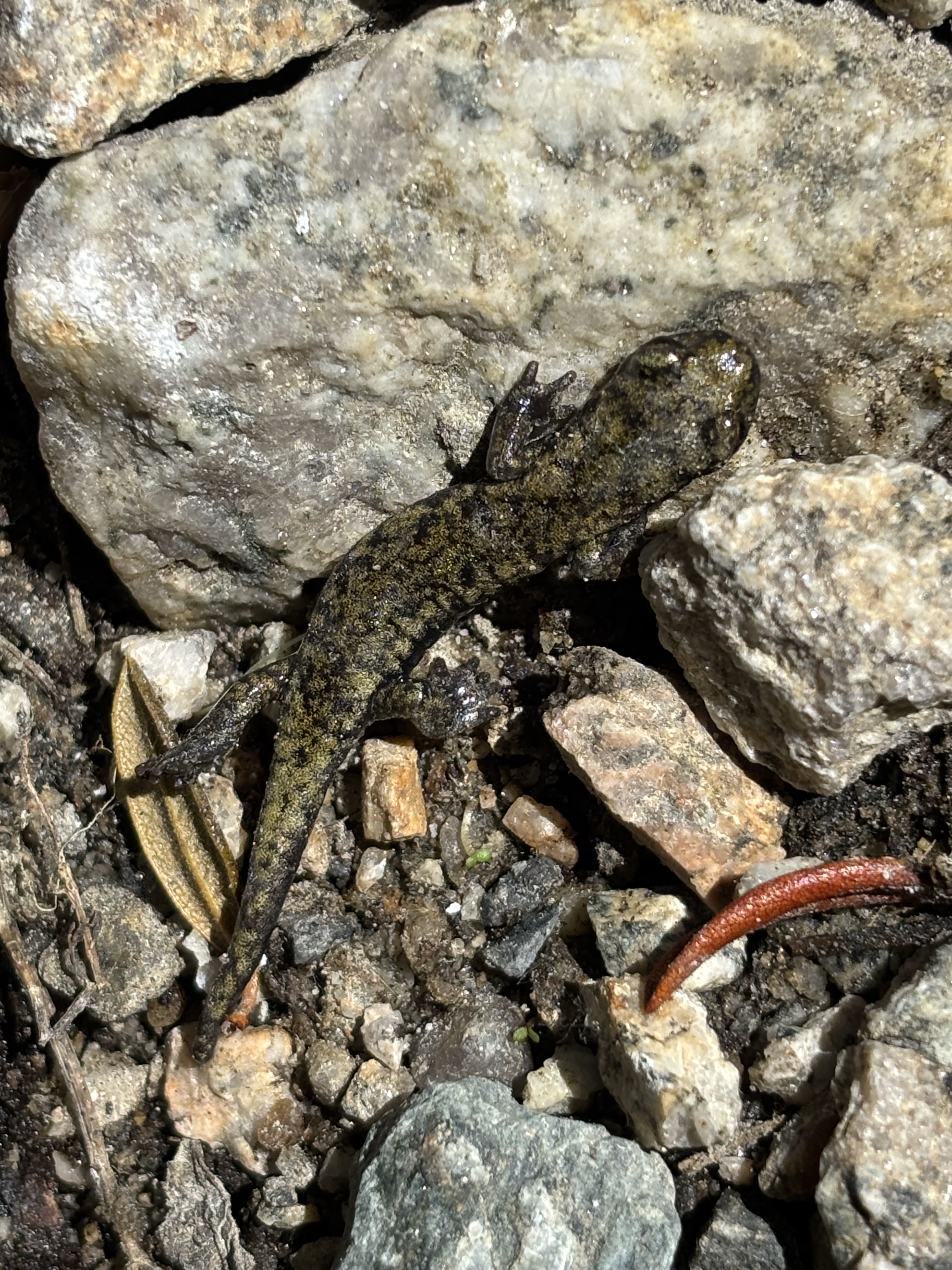
It was amazing to see it first tightly curl up (a defense mechanism that allows it to quickly roll down hill to safety), before watching it confidently scramble up the vertical surface of a boulder. Searching the area, we discovered a couple more, including this juvenile.
All and all, it was a beautiful morning in a scenic place spent with an amazingly weird salamander!
July 13, 2025: The Great Odonate Race

4. July 13, 2025: The Great Odonate Race

I’ve always been intrigued by dragonflies and damselflies (insect order Odonata). They are amazing arial acrobats, ruthless hunters, and come in a beautiful assortment of colors. However, while I can recognize some species, I haven’t put a lot of time into identifying them. For most insect orders, the prospect of getting an ID to species is a daunting one. But with dragonflies, there are a learnable number. For example, according to the excellent field guide by Tim Manolis, Dragonflies and Damselflies of California, there are only 108 species in the state. This book is an amazing reference for telling apart closely related species.

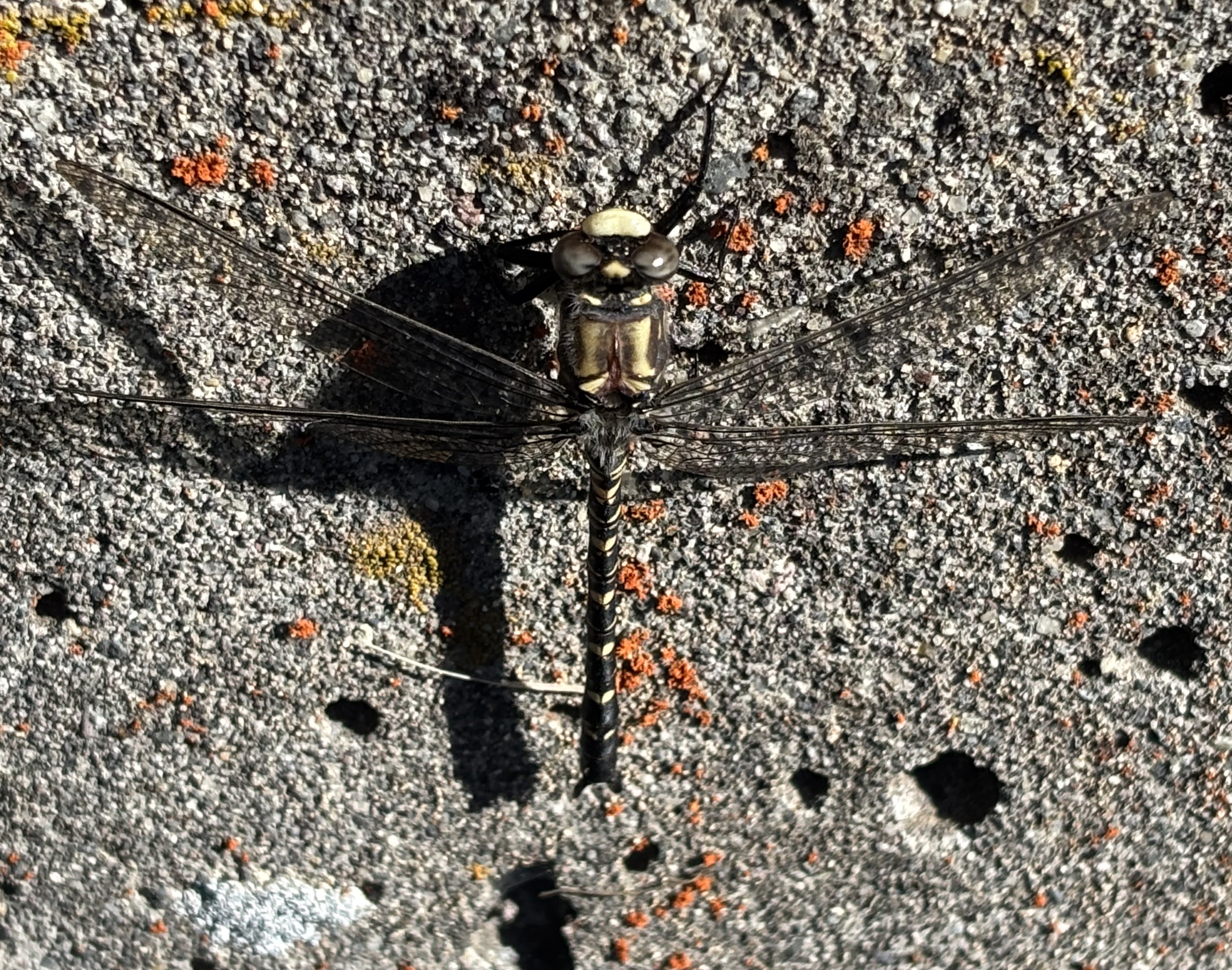
Odonate activity peaks in mid-summer, and diversity is greatest North and the mountains of the state. On this run of CEC, we’re heading to the right locations at the right times of year. Therefore, I’ve decided to see as many species as I can over the 50 days of the class. I arbitrarily set my goal at 40 species. I’ve enlisted my teaching assistant Eric on my quest. He’s a keen naturalist and a great nature photographer, which will come in handy when attempting to identify hard-to-catch species. I’ll wait to reveal most of what I’ve seen until the conclusion of the course in a month. But I’ll quickly show off my favorite find so far—Tanypteryx hageni, the Black Petaltail. Here’s a male perching on a vertical surface, as they are wont to do. The male is the sex with the titular petal-shaped end of the abdomen.

And here’s a female

This species has has super primitive morphology—it looks similar to how the first dragonflies looked way back in the Jurassic Period. It’s closest relative lives in Japan. The rest of the nine species in the family (Petaluridae) live in the southern hemisphere and include the largest extant species in the world. Unlike other dragonflies in the state, Petaltails have terrestrial (not aquatic) larvae! They live in burrows in the moss of bogs and fens, from where they ambush their insect prey. Here’s a female ovipositing (laying eggs) on the ground.

With a month to go and plenty of ponds and streams in our future, I’m excited to see what other species we’ll turn up!

July 7, 2025 Lost in the wasp

May I present to you the species of insect that I suspect is responsible for the most stings in California, Vespula pensylvanica, the western yellowjacket.

This species nests in the ground, often in suburban areas or along trails. It will aggressively defend the nest, flying out and stinging any passers-by that come too close. It also is a generalist forager, and is attracted to human food and garbage. Finally, populations outbreak every 3-5 years, causing many encounters. Last year was an outbreak year, and many of us on the summer 2024 run of CEC, including myself, ended up getting got. Luckily, this year numbers seem much more manageable. Unluckily, we found a very active nest right in the center of our camp at Angelo Coast Range Reserve. By keeping our distance, we were able to co-exist relatively peacefully.

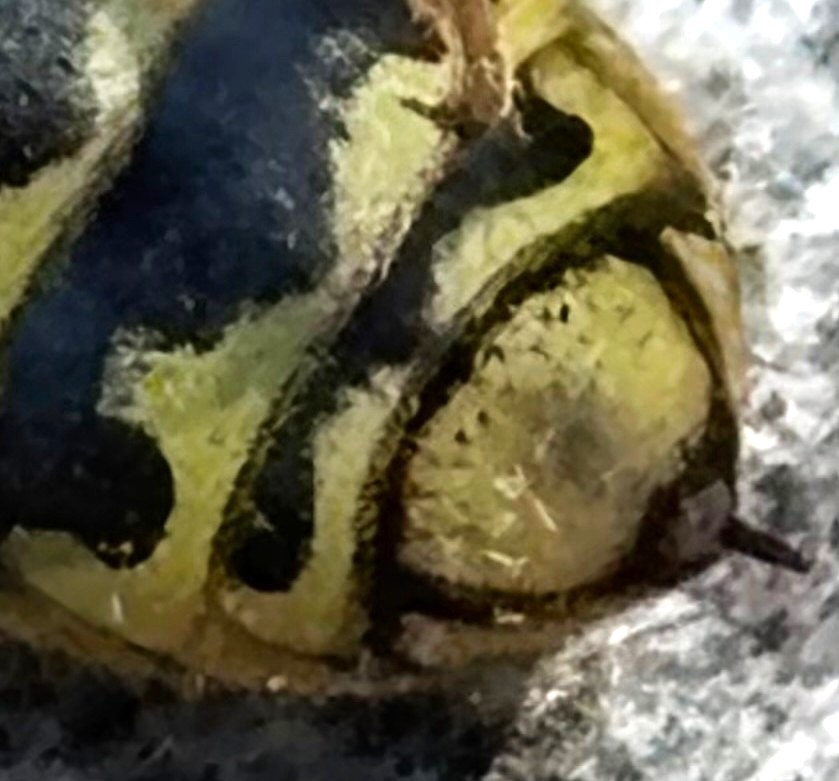
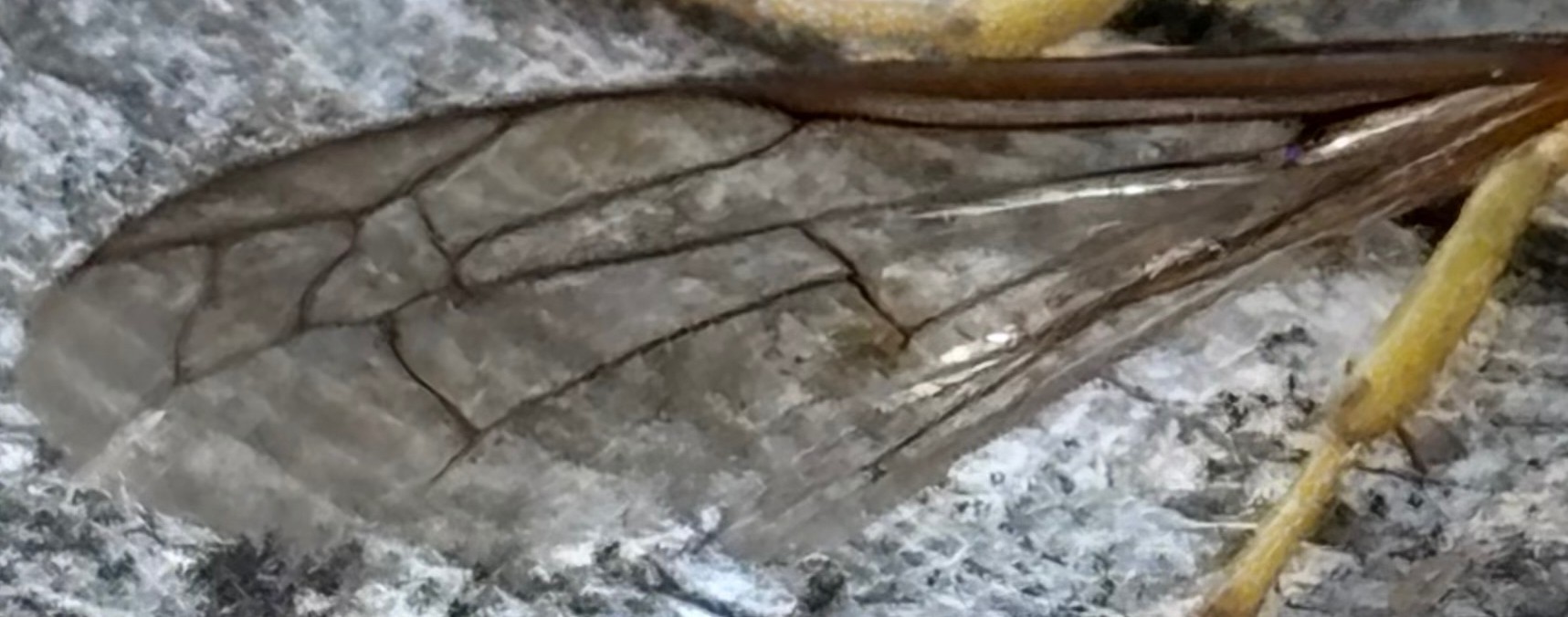
The western yellowjacket is one of the few native species I have a kneejerk negative reaction to. Therefore, I decided to take a closer look at one to appreciate it a bit more. I caught and euthanized one, before preceding to spend about 20 minutes checking it out under magnification. As happens basically every time I look at a bug up close, I was mesmerized by the beautiful patterns, hairs, and other details.

We’re still not friends, but after my self-assigned exercise in observation, I have a new admiration for this fearsome little predator.

July 6, 2025: Fire Weather

As a naturalist, I probably pay more attention to the weather than most. A few degrees of temperature or tenths of an inch of rain can make the difference between seeing your target species and getting “skunked”. For instance, night driving for salamanders after an afternoon rain is a great way to see some species, but it only works if the roads remain wet. That same drive can have great snakes if the night temperatures remain warm enough. Even things like wind speed and humidity can matter for the critters observation. A slight breeze may be enough to reduce the number of butterflies out visiting flowers, but a really still humid day may cause birds to stop singing earlier in the morning.

My frequent checking of the forecast goes up another level when I’m teaching the California Ecology and Conservation class. Temperatures in the high eighties and nineties means we may need to shift our schedule to earlier in the morning and later in the evening. An overnight low below dewpoint makes it imperative that we bring our books and gear inside, so they aren’t damaged. The types of projects the students can conduct depend on the tides and the cloud cover and the phase of the moon.

When going into the Californian backcountry in the summer and fall (and increasingly, the spring) means checking the fire forecast, as well. While CEC has never had to evacuate we have had to change our route a few times due to wildfires and the smoke they cause. Every day during the course I check three things. First, I go to my Wunderground app and check out the humidity and wind speed forecast. The combination of low humidity and high wind may cause the National Weather Service to issue red flag alerts, which pop up on the weather app. Next, I check Cal Fire incident map and the Watch Duty fire app for active fires. Even without a red flag warning, there are pretty much always active fires in the state. At last check, there are currently 16 active fire incidents in California. Finally, I check the AirNow.gov map for the air quality forecast. Even if there aren’t nearby fires, smoke can travel long distances and make it unsafe to work outside. All of this info, along with knowing the evacuation routes and shelter in place protocols at each reserve we visit is essential to staying safe in fire country.

June 22, 2025: Summer Backyard Birding

Today is the last day before I head back to California, and a beautiful, warm morning for a feeder watch. The last northern-bound migrants finished passing through Forsyth county a few weeks ago. We currently only have breeding birds until shorebird migration and post breeding dispersal begin again in a month. Landbird migration will follow, not beginning in earnest until late-August. Overall, the backyard has been a bit quieter lately. While there still is a decent dawn chorus, the heat and the business of raising families has reduced a lot of the singing in the middle of the day. Birding is definitely now an early morning activity.

6:00 Start of observation hour. Already Song Sparrow, Carolina Wren, Tufted Titmouse and American Robin singing. Within the first minute, I also hear a Blue Jay and Common Grackle call.

6:02 A Gray Catbird flies into the yard. A House Finch and an Eastern Towhee call.

6:04 A European Starling flies over. A Tufted Titmousegrabs a seed from the feeder—my first customer of the morning.

6:05 Dawn officially breaks. A Northern Cardinal joins the morning chorus.

6:06 I hear a distant Mourning Dove and Downy Woodpecker.

6:08 Two male robins aggressively chase each other through the year.

6:12 A catbird visits the platform feeder. This feeder is new addition to our backyard array, and while setting out oranges on it to attract orioles has been a bust so far, it’s a big hit with the catbirds and towhees.

6:13 A Great Crested Flycatcher flies into the top of our acacia tree and begins calling loudly. We didn’t see this species last summer, but one bird has been hanging around the front yard since late May.

6:17 A Chimney Swift flies low overhead

6:22 The finches and cardinals are singing vociferously

6:25 A White-Breasted Nuthatch flies into our walnut tree and descends to the feeder

6:26 I spot a newly fledged robin in our oak, its spotted breast blending in well in the dappled light.

6:29 Brown-Headed Nuthatches are calling from the neighbor’s yard. They’ve been mostly absent all summer until showing back up a couple days ago.

6:32 A few American Crows fly by calling

6:33 A cicada begins calling briefly. A sure sign of summer, they started their clamorous chorus in earnest about a week ago.

6:35 Grackles and Blue Jays descend into the yard.

6:35 A Carolina Chickadee begins calling.

6:37 I spot a Great Blue Heron flying high overhead.

6:45 An Eastern Bluebird family (male, female, and fledgling) are in an oak tree across the street

6:50 The Downy Woodpecker comes to the feeder, and pigs out on seeds for the remainder of the watch

6:58 I walk to the back of the yard, and in quick succession hear a Fish Crow, Red-Bellied Woodpecker and spot a Brown Thrasher, the last birds of the watch.

Total: 24 Species.

Most notable: Great Blue Heron. While common in the area, we don’t really have any nearby wetlands or open fields nearby, which are the typical haunts of this species. This is the first time I’ve seen a heron (of any kind) from our place—and it’s my 57th species for the yard.

Strangest misses: The Red-bellied Woodpecker and Brown Thrasher I identified in the closing seconds would have both been big misses, as they are quite common summer residents. The local birds of both species have already fledged chicks, and are therefore keeping a lower profile than in the spring, when they were calling and singing almost constantly. Probably the next most likely bird that I didn’t see is a Northern Flicker. I see them most days, but it’s not strange at all to go an hour without one. A Brown-headed Cowbird visited the platform feeder 20 minutes after my watch ended.

Comparisons: As expected, I totaled fewer birds than spring, but more than winter. Nineteen birds overlapped with the spring watch, and five birds were new.

June 20, 2025: Space for Tigers

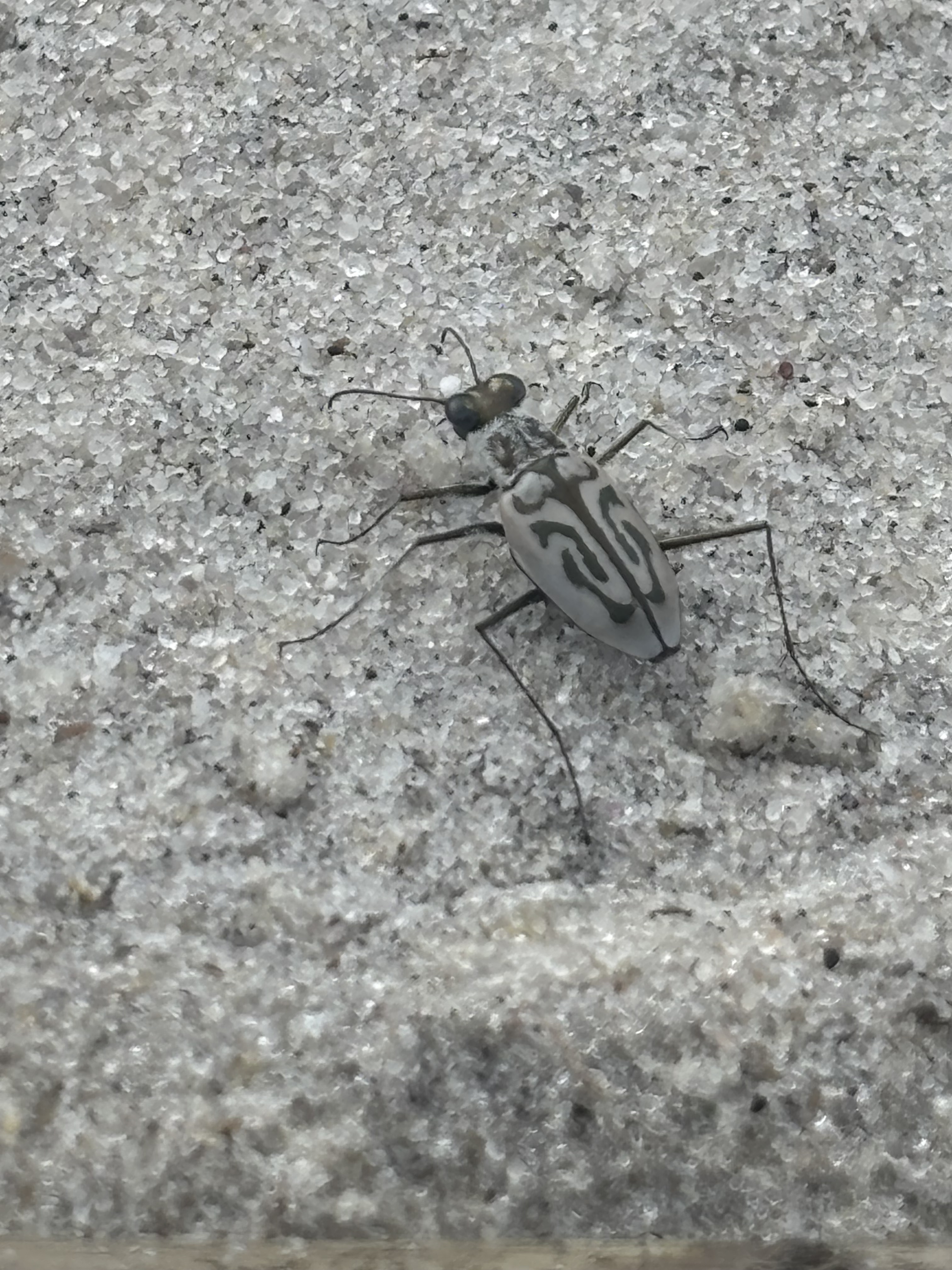
I know I wrote a whole post about having trouble picking favorites, but tiger beetles are definitely my favorite type of beetle. These tiny terrors are named for their behavior rather than their stripes (although some of them are pretty stripey). The adults aggressively hunt insect prey that’s sometimes larger than they are by running them down. The larvae live in narrow but deep burrows from which they launch ambush attacks. Both life history stages have massive jaws and a powerful bite they use subdue their struggling meals. Unlike a lot of ground-dwelling beetles, they also are excellent flyers, quickly taking off at the first sign of trouble. That last behavior makes them quite challenging to photograph, especially with just a phone camera. That’s why I’m excited that I managed to get pictures of four different species over the last month in North Carolina.

I found this Apterodela unipunctata (One-spotted tiger beetle) on a hike at Pilot Mountain State Park.

Here’s Cicindela repanda (bronzed tiger beetle) from a farm outside of Winston.

And Ellipsotera marninata (margined tiger beetle) and Habroscelimorpha dorsalis (eastern beach tiger beetle) were sharing a beach on island near Wilmington.

Pretty much all of the over 2,500 species of tiger beetle need plenty of open space. The adults need clear paths with good lines of sight for their hunting grounds, and the larvae need open sandy soils in order to dig their burrows. Therefore, many species are habitat specialists, residing on sand dunes, the edges of streams, or along game trails. These naturally fragmented habitats have led to patchy and sometimes quite tiny species ranges. For instance, the emerald and ivory gem that is the endangered Ohlone tiger beetle (Cicindela ohlone), only occurs in a few coastal prairie remnants around Santa Cruz, California.

Unfortunately, the open spaces in our country are under direct attack by our federal government. They claim that much of the property we collectively “own” as a nation is useless wasteland that would be better utilized by the highest bidder for resource extraction and, disingenuously, housing. In their view, federal lands are an asset that can be sold off in order to make a quick buck. But tiger beetles aren’t the only beings that need places to freely roam. We humans need and have a right to this space. The National Forest and Bureau of Land Management lands that are on the auction block are some of the most awe-inspiring places in our amazing country. And unlike many state and national parks, access is free, dispersed camping is usually available, and activities like hunting, fishing, and fossil collecting are permitted. The fight to keep our public land should just be about its value to humans, though. Just because a parcel of land doesn’t have a breathtaking view, a productive trout stream, or even easy public access, it doesn’t mean we should sell it off. Our country still has vast swaths of wilderness where species from bears to beetles can roam, and we owe it to the tiny tigers and all the rest to fight for every scrap. These are truly our open spaces, and it’s imperative we keep them that way.

June 18, 2025: Botany or a Chase

It’s already my last week before heading back to California for the summer run of the California Ecology and Conservation course. June is a great month to naturalize in the Carolinas, and with time running out, I’m attempting to squeeze in as many outdoor adventures as possible. Therefore, I decided on a super ambitious itinerary for my last solo trip of spring. I left the house at 3:45 AM to make it to the Carolina Sandhills National Wildlife Refuge in northern South Carolina at dawn. I wanted to hike around and botanize in three different parts of the large refuge. Then, the plan was to drive 90 minutes west to Rock Hill, where there is a Scissor-Tailed Flycatcher pair that currently have fledglings. Finally, I would make the long drive back north, arriving before 5:00 pm.

Scissor-Tailed Flycatchers are a beautiful and graceful bird that mostly breeds Texas, Oklahoma, and Kansas. They are also the most common bird in the entire United States that’s not on my birding life list (currently at 617 species), making them a high priority for me to see. Because they perch in the open and would be staying close to the nest—a nest for which I had the exact coordinates—tracking down this out-of-range family would be quite easy.

When planning a trip, I have the tendency to overschedule or pick the more ambitious option. Then, my completionist tendencies make me want to see the plan through, even if I have to rush or it stops being fun. I’ve dubbed the worst cases over the years Timventures. I’ve also maybe become a bit too enamored with adding species to my life or year lists. While it’s really fun to document what I’ve seen, it’d probably be a good idea for me to pump the breaks a bit on obsessively listing. Was it worth it to drive the extra distance to see an amazing new bird, or was I planning a Timventure?

I arrived at the entrance to the sandhills early enough that the nighthawks were still calling. I’ve sung the praises of sandhills in my March 12th post, when I visited Carver’s Creek State Park. The Carolina Sanhills NWR is another amazing example of the habitat. It’s managed as a gameland for things like ducks, turkey, and bobwhite quail. Therefore, in addition to frequently burning the longleaf pine forest, the Fish and Wildlife staff also maintains a series of ponds and wetlands at appropriate water levels and keeps open fields at varying levels of ecological succession. The result is an amazing diversity of plants.

Immediately upon arriving at my first stop, I found large patches of a plant that was new to me—Stylisma patens (sandhill dawn flower).

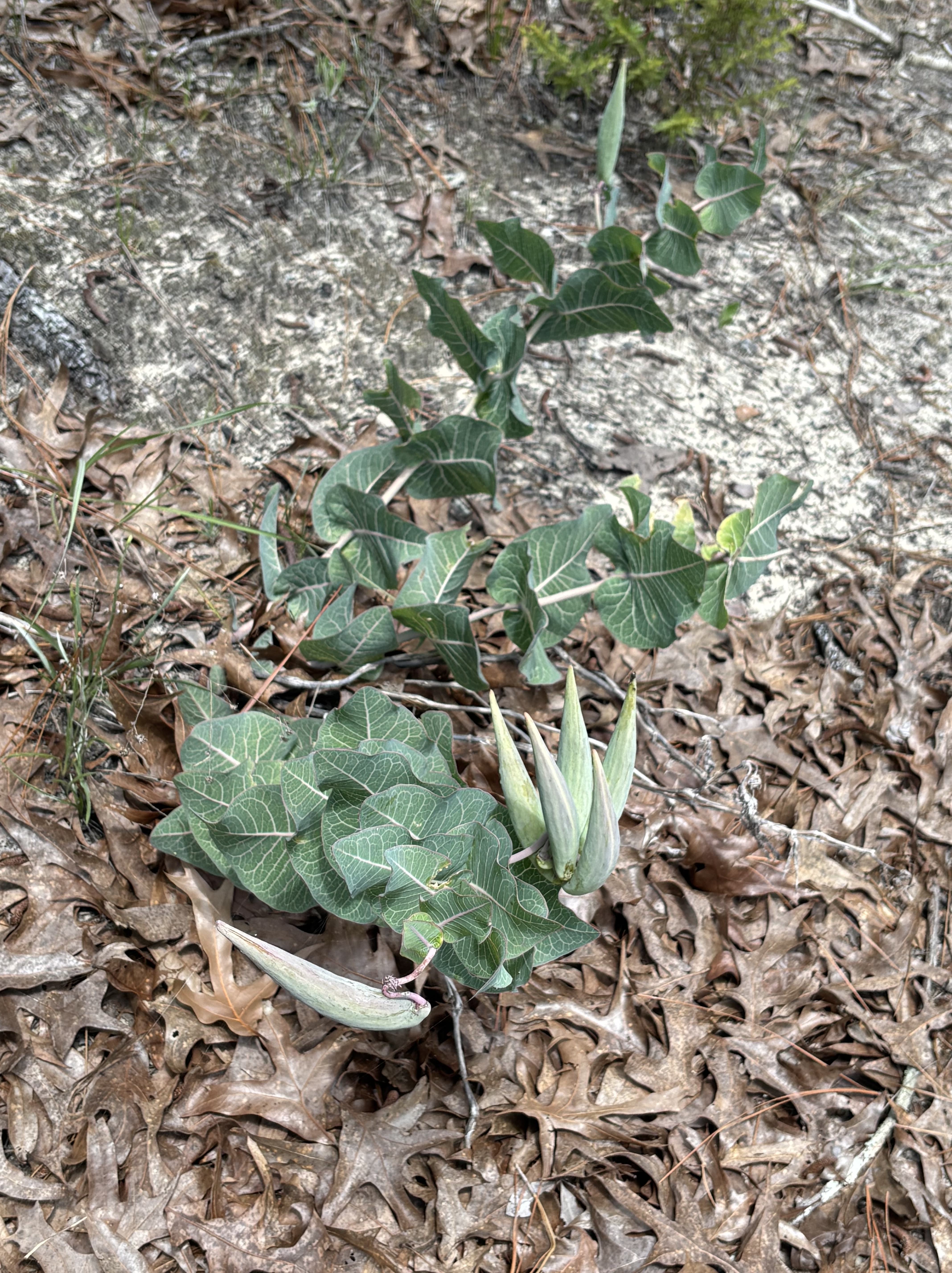
This uncommon little morning glory fits the pattern of many of my favorite finds of the day. It occurs in the sandhills, which run in a narrow strip from south central North Carolina through central Georgia, and also in longleaf pine forests on the coast from Wilmington down through the Florida panhandle. Within that range, it only does well in pristine, fire-managed landscapes. Here are a couple more plants that fit that same profile—Asclepias humistrata (sandhills milkweed) and Penstemon australis (southern beardtongue).

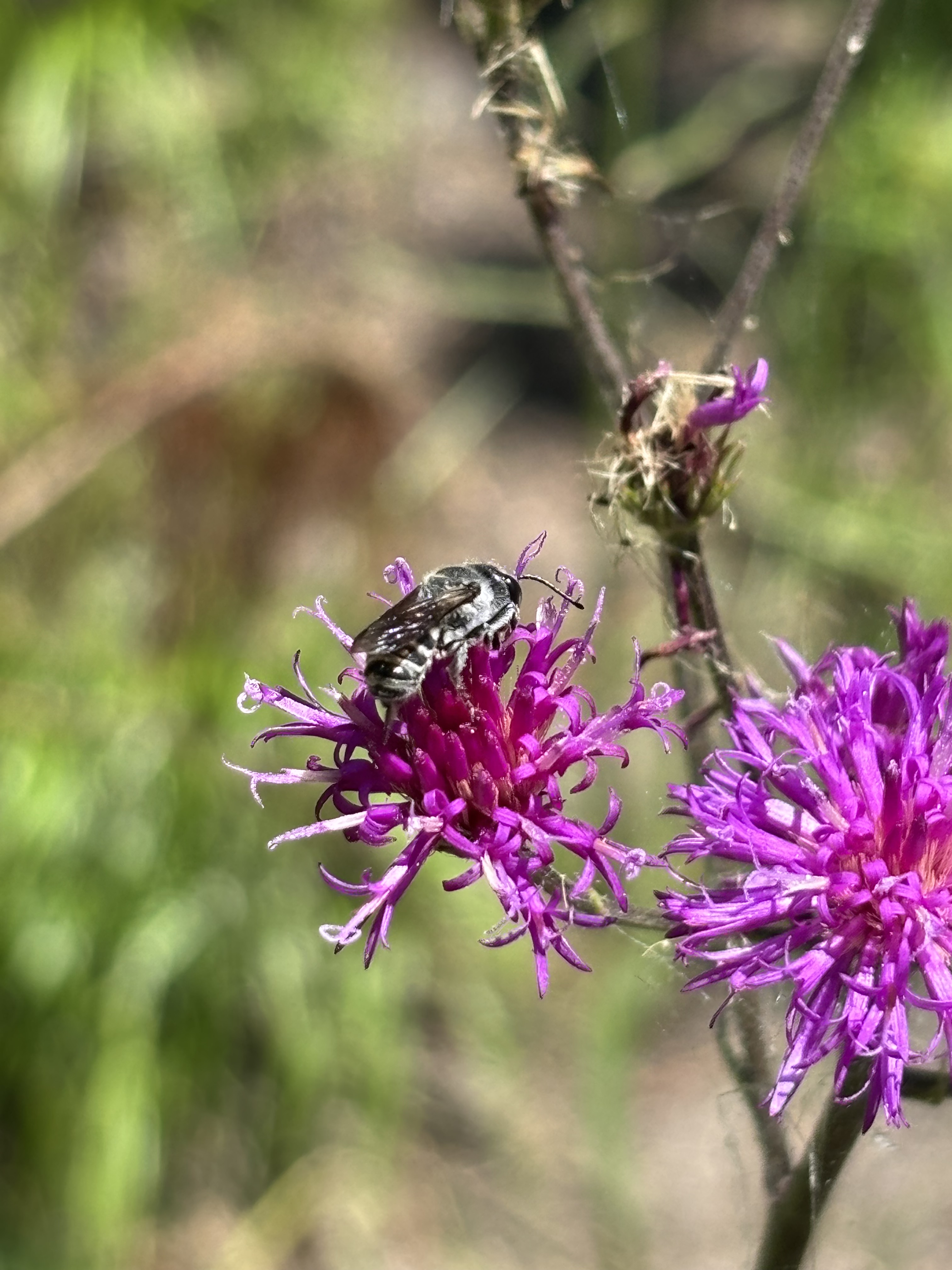
In addition to the cool plants, I was also amazed by the abundance of bees in the area, benefitting from the open ground for nesting and abundance of floral resources. As far as I could tell, they were all native—not a honey bee in sight. Here are three examples of native bees visiting uncommon flowers: Megachile on Vernonia acaulis (stemless ironweed), Lasioglossum on Xyris caroliniana (Carolina yellow-eyed grass), and possibly Halictus on Mononeuria carolinianum (pine barren sandwort).

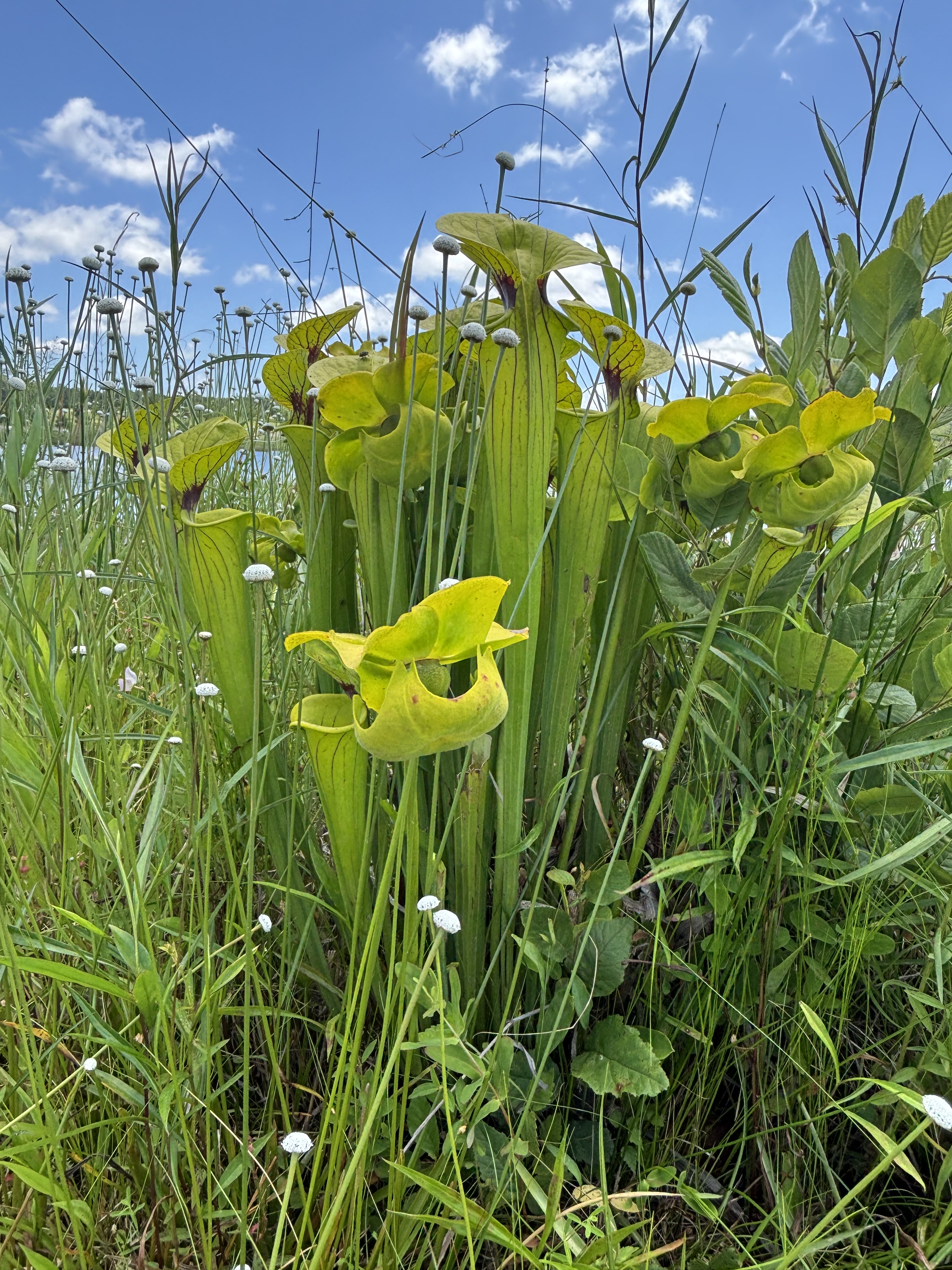
It was already noon when I made it to my third sandhills stop. I stepped out of the car to se a lush green hillside splotched with bright yellow. These were big patches of Sarracenia flava (yellow pitcher plant)!

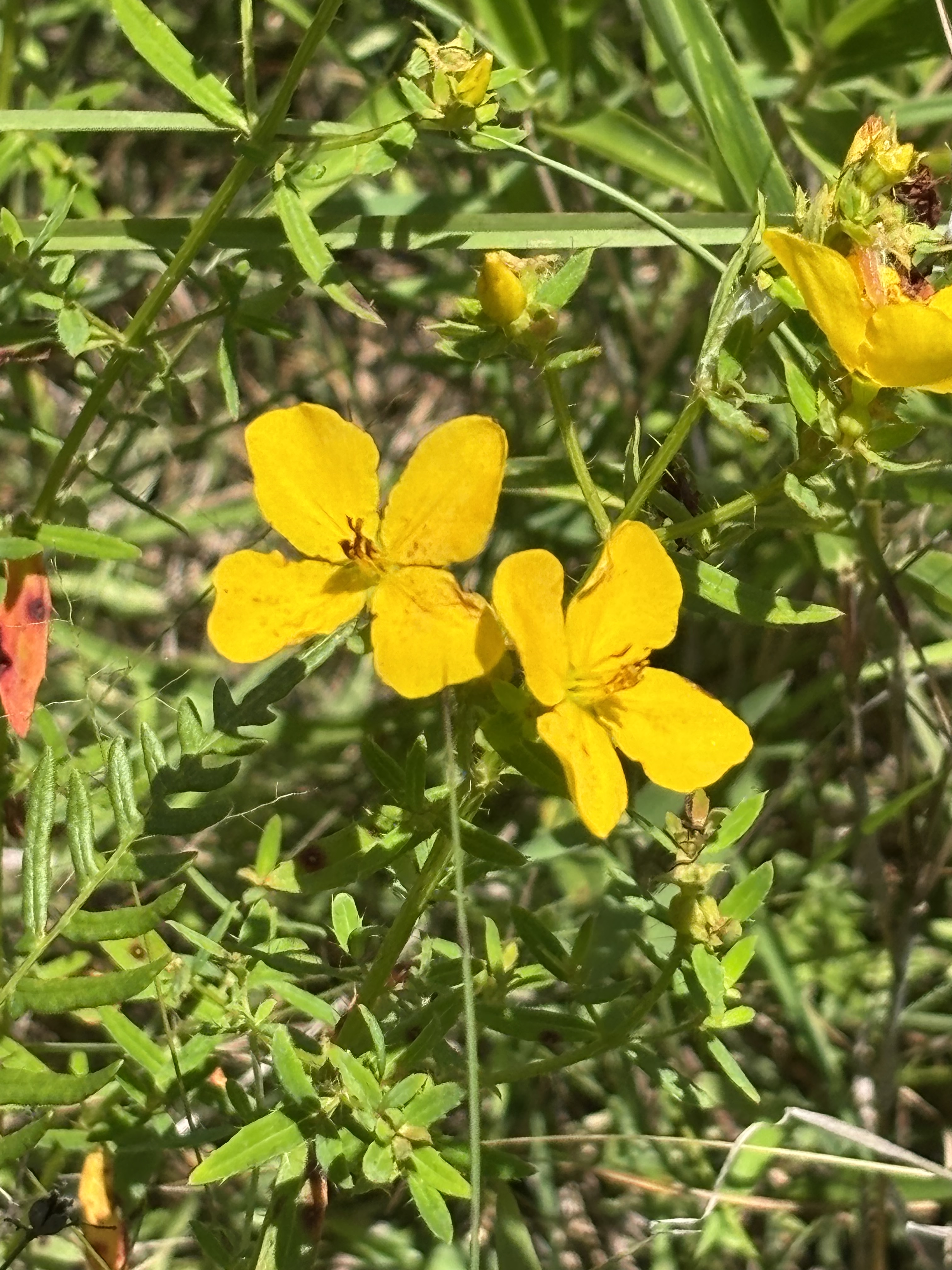
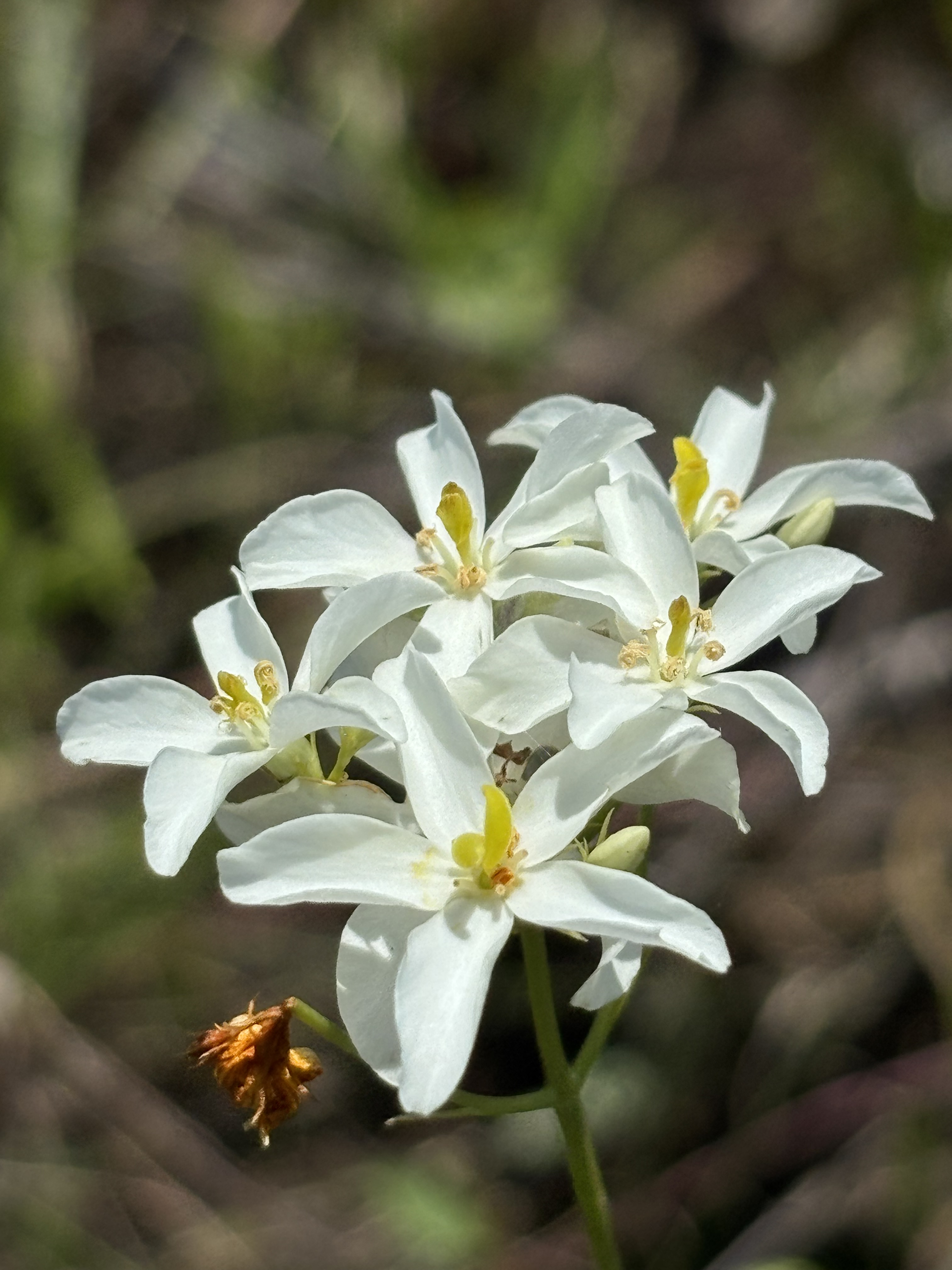
The area was a recently burned seepage slope—a habitat I hadn’t encountered before. I had a choice—take a quick look and hurry over to the flycatchers, or spend some quality time exploring the slope. Uncharacteristically, I chose the latter—I’ll add to my birding life list another day. And I am really happy with my decision. The area had the best botany of the day. Here are my six favorite finds from the seepage slope:

In the future, I’ll have to remember that not rushing to complete a Timventure can be an excellent decision. And it’s not like I missed out on birding entirely—I ended the day with 57 species including the rare Red-Cockaded Woodpecker and Bachman’s Sparrow, the declining Northern Bobwhite and Eastern Meadowlark, and some great observations of Orchard Orioles and Prairie Warblers. It was, all and all, another fantastic day in the sandhills.

June 15, 2025: Terrapin Tally

This weekend, Jenny and I kayaked for science. We surveyed for the Carolina diamondback terrapin (Malaclemys terrapin centrata) along the inner coast of Masonboro Island near Wilmington, NC.

This unique and adorable turtle is a species of special concern in North Carolina, and generally threatened across its range, which extends in the narrow band of cordgrass saltmarshes from Cape Cod to Corpus Christi. We continue to develop this habitat (despite the insane risks of storms and flooding), making it harder for these turtles to find nesting sites. Additionally, these turtles like the same food as crabs, and easily get caught and drown in crab traps. The are also too tasty for their own good. Their apparently sweet meet was a delicacy, and overhunting lead to a range-wide population collapse in the 1920’s from which they’ve never fully recovered.

As part of the Terrapin Tally citizen science project, Jenny and I first had to attend an online training session. We conducted morning surveys on Friday and Sunday along fixed paddle routes of a couple miles (our Saturday route was rained out). We scanned the water along the edges of the marsh at high tide, looking for little turtle noses poking above the surface. We also diligently recorded crab traps—both those set correctly, hopefully with the required turtle excluders in place, and any abandoned pots that could result in entangled turtles. We then sent our data through a nifty survey app where it can be used by the scientists on the project.

The Terrapin Tally, a collaboration among several state and non-profit conservation organizations, is in its 11th year. Over the course of 3 weekends, dozens of participants collect this same data at around 30 sites along the NC coast. Each year, more people like us get involved—allowing more surveys across more dates. Citizen science projects like this one and the firefly projects I mentioned in my last post are becoming increasingly common. More and more people want to get involved, and the threshold for participation is becoming easier with the use of apps and other technology. Additionally (and more cynically) as state and federal funding for conservation continues to be slashed, organizations are looking for ways to fill in the gaps that would normally be covered by staff scientists.

There are some definite drawbacks to the use of volunteers. The biggest problem is definitely data quality and consistency. Individuals are going to differ wildly in their ability to detect turtles on the landscape, because it’s pretty tricky. Counts may be too low, if folks are missing turtles, or too high if people are accidently turning bent blades of grass into turtle heads. Jenny and I definitely lost at “grass or turtle” a number of times before catching our mistakes! Additionally, volunteers are much more likely to not follow through or quit the project—It can be frustrating for staff to keep training volunteers, only to have them show up a couple of times and never again. Finally, the scope of citizen scientist projects can be somewhat limited. Volunteers generally aren’t going to be able to handle or manipulate the organism, especially if it’s a protected species. For instance, attaching radio transmitters or reintroducing species to a location must be done by professionals. While the data from this project may show where turtles are doing well and where they are in trouble, it alone can’t actually result in saving them.

That all being said, I think the benefits of citizen science far outweigh the down sides. There are so many species about which we just don’t know enough to make informed conservation decisions. Without data like we collected, it’s really hard to know if populations are increasing or decreasing, or what sorts of specific habitats the species frequents, or if an intervention, such as enforcing turtle-proof crab pot use in an area is effective. This information can and has helped inform conservation plans and even prevented developments in key locations. Plus, the more the public gets involved, the more people will take pride in their local environment and advocate for its conservation. And it’s just a super fun way to spend the weekend! Here’s some photos Jenny took of our time on the water.

We paddled next to bottlenose dolphins, found some cool bugs and plants on a quick beach stop, and watched least terns dive for fish. And we did manage to find three Carolina terrapins!

June 9, 2025: Finding Fireflies

Improved evening porch-sitting conditions are a huge perk of moving back east. As daytime temperatures shift to borderline intolerable, the days of being able to sit outside after dark with only shorts and a t-shirt begin in earnest. These lovely evenings contrast starkly with the west coast. In California and Oregon, it could be 100 degrees out in the afternoon, but as soon as the sun sets, sweatshirt are required.

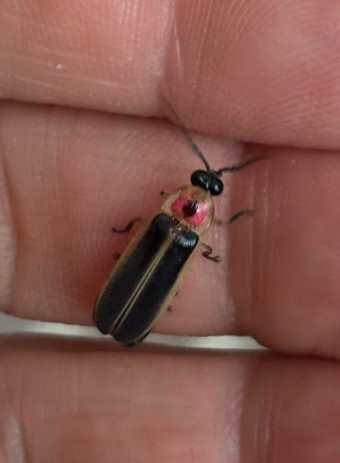
Beyond the cool temperatures, Western evenings also suffer from a dearth of fireflies. That’s not to say there are no species at all. Around 20 of the 179 known species and subspecies of beetle in the family Lampyridae native to the United States can be found in the Pacific States. Here’s a picture of Photinus californicus (California glowworm) I took last year in the northern Sierra.

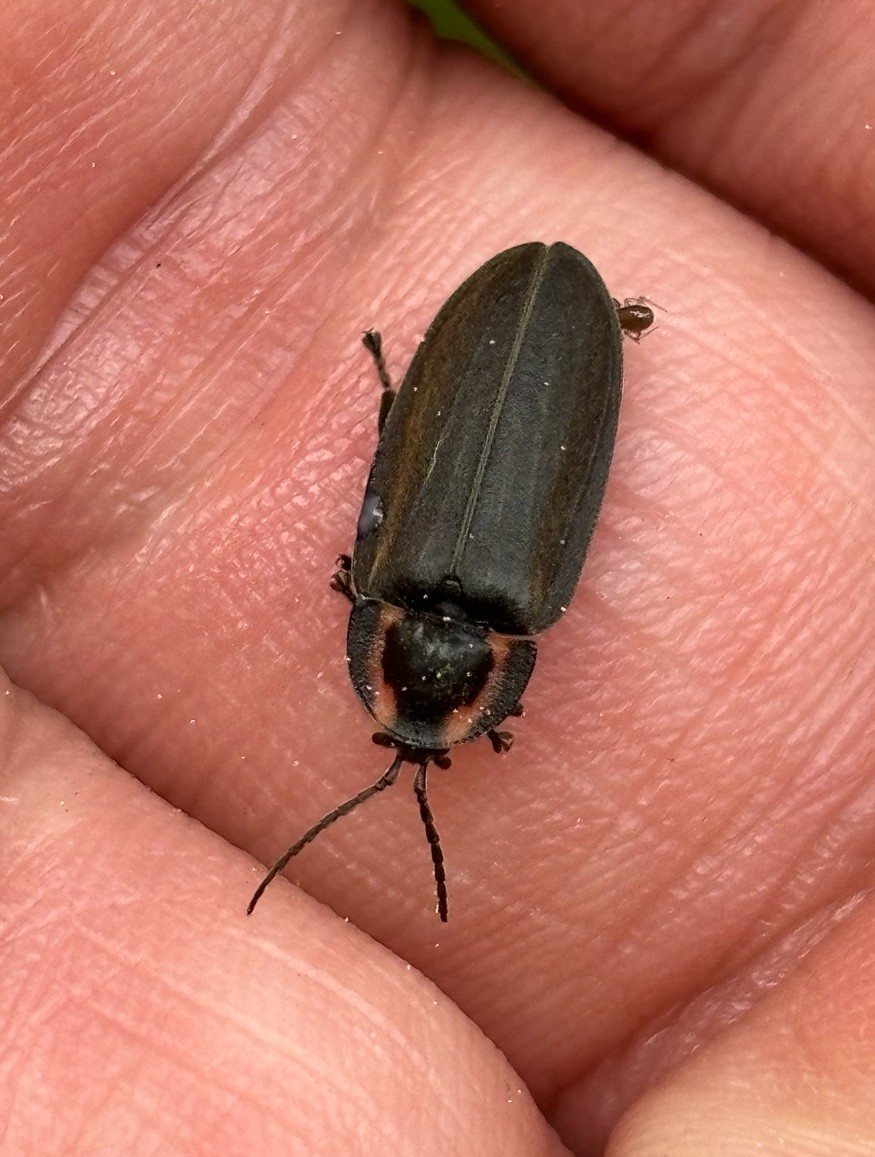
However, fireflies in the West are nowhere abundant, and they basically never put on a dramatic light show. All fireflies glow as larvae. However, within the Lampyridae, there are three styles of courtship that differ in their use of light. In “glowworms”, only the flightless females produce glow that non-glowing males fly towards. In a second group, the “dark fireflies”, both sexes lose their ability to glow as adults. These species fly during the day and use pheromones to find mates, like most other species of beetle do. Here’s a Lucidota atra (black firefly) that I found today in my house.

I also found Photinus corruscus (winter firefly) while we were in Acadia National Park last week.

While glowworms and dark fireflies occur in the west, the third strategy is unfortunately absent. These are the classic “lightning bugs”, where both males and females glow. Males will fly around blinking a specific pattern, to which the females will respond. Here’s the most common lightning bug across much of the East, Photinus pyralis.

The males of this species light up for a second or so, while moving in an upward J from a couple feet above the ground. Other species will differ in the rate, length, location, flight pattern, and even color of the flash. For example, in the Appalachians of Carolina, the Phausis reticulata glows with a long, eerie bluish light. Perhaps most spectacularly, in Photinus carolinus, another Appalachian species, all the males in an area will blink in synchrony.

While the four pictured species are common, unfortunately, many species of fireflies are in trouble. Those evenings of porch sitting aren’t as wondrously lit as they used to be. The culprits are the same ones that are leading to the general global decline in insects—pesticides, habitat loss, changes in weather patterns, and the increase of artificial lights. One of the species in trouble is the state insect of Pennsylvania, Photuris pensylvanica. Like other members of its genus, this species is predatory. Female Pennsylvania fireflies blink the code of a Photinus female, luring in an unsuspecting male in to eat. Unfortunately, least according to the records in iNaturalist, the Pennsylvania firefly no longer occurs in Pennsylvania, and is making its last stand in a few scattered locations on the Delmarva Peninsula.

To at least track the decline, and hopefully aid in making some conservation decisions, there are some great citizen science projects centered around fireflies. The firefly atlas https://www.fireflyatlas.org/, is looking to collect distribution, phenology, and habitat data on all species of fireflies, but they are focused in particular on a few threatened and data deficient species. Locally, Photuris forresti (the loopy five firefly) is a target. Additionally a group of local entomologists are interested recruiting folks to help document a currently undescribed species of Phausis in the North Carolina around the Research Triangle that they are calling the Piedmont Ghost (https://carolinaghosthunt.wordpress.com/). I’m pretty excited to get involved in these efforts and find more species of these amazing beetles.

June 1, 2025: The Lichens of Acadia

              Less than a week after returning to North Carolina from the course, Jenny and I decided to road trip to Maine. We saw amazing birds and flowers; toured mountains, lakes, and coastal islands; and spent quality time with friends and family. So, of course, this post won’t be about any of that. Instead, I’ll show some pictures of cool lichens!

There are over 4,000 species of macrolichens—that amazing tripartite collaboration among a photosynthesizing green algae or cyanobacteria, a filamentous ascomycete fungi that provides structure and water retention, and a basidiomycete yeast whose participation was only discovered in 2016 and whose role in the partnership remains mysterious. I became more aware of the lichens around me though a citizen science project in Eugene, Oregon. One cool and rainy winter, after learning some basics of lichen identification, I helped document the occurrence patterns of some pollution sensitive species in our local arboretum. North Carolina has plenty of lichens as well, but their abundance is greater in the mountains than locally in the Piedmont. Coastal Maine, like Oregon is cool and humid, leading to profusion lichen growth.

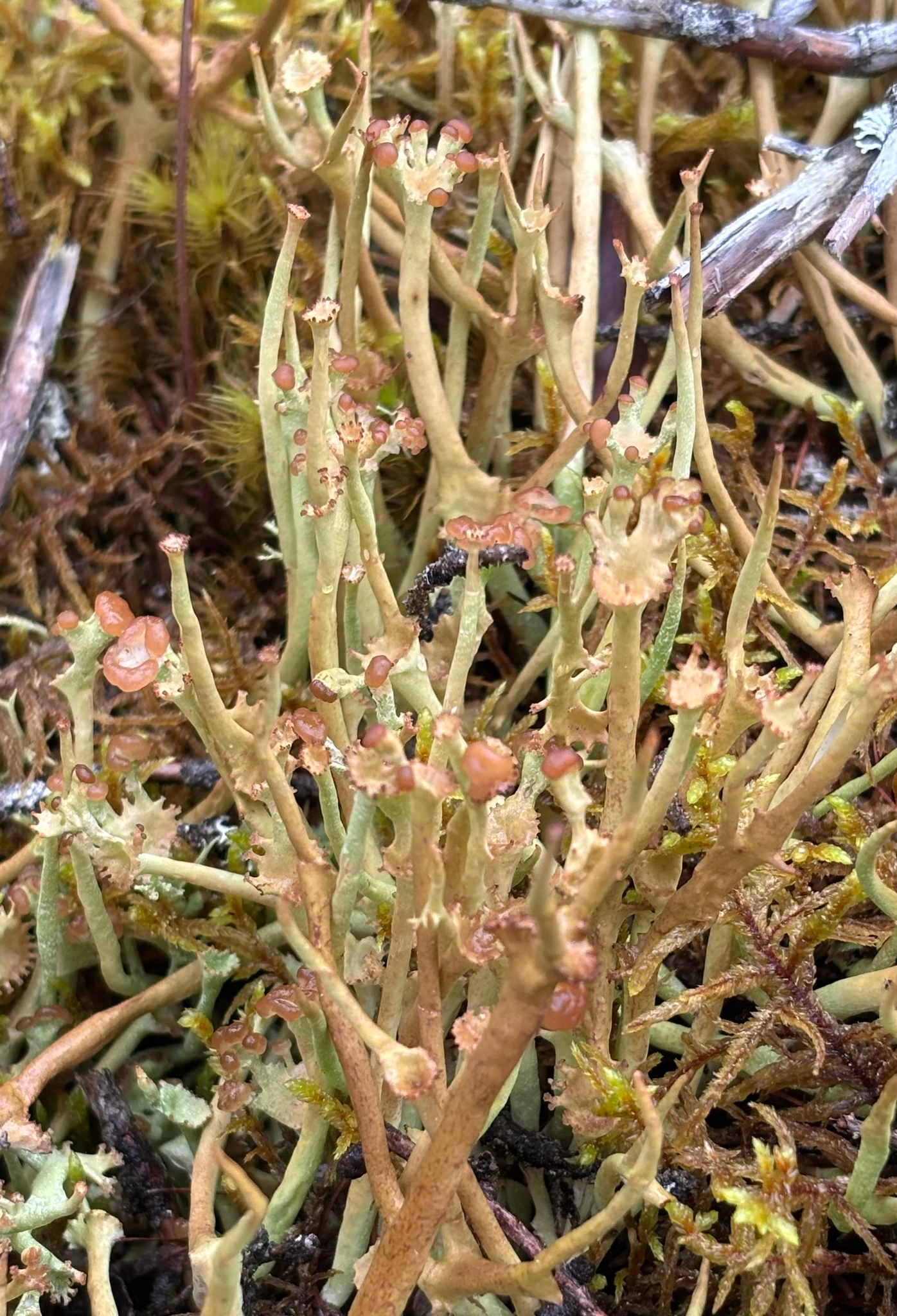
While diverse, many lichen species are fairly broadly distributed due to their ability to disperse via wind. Nevertheless, I hadn’t knowingly seen the following eight species before finding them during our exploration of Acadia National Park. Six of them are in the genus Cladonia, the reindeer lichens. This huge, cosmopolitan genus is characterized by a two-part body that has a scaly “crustose” component and a bushy or stalked “fruticose” component. Most lichen species can reproduce sexually and asexually. The sexual fruiting body is called an apothecium, which produces spores. Here’s two pictures of Cladonia maxima, the first of vegetative individuals, and the second fruiting. The light-brown blobs are the apothecia. This species is quite large for the genus—a few centimeters long, and while it has a broad range, it seems to be rare everywhere except for coastal Maine, Nova Scotia, and Prince Edward Island.

Here are thre more non-reproductive CladoniaC. rangiferina, C. uncialis, and C scabriusula. These are tentative identifications—lichen, especially when they aren’t fruiting, can be quite tricky to get to species.

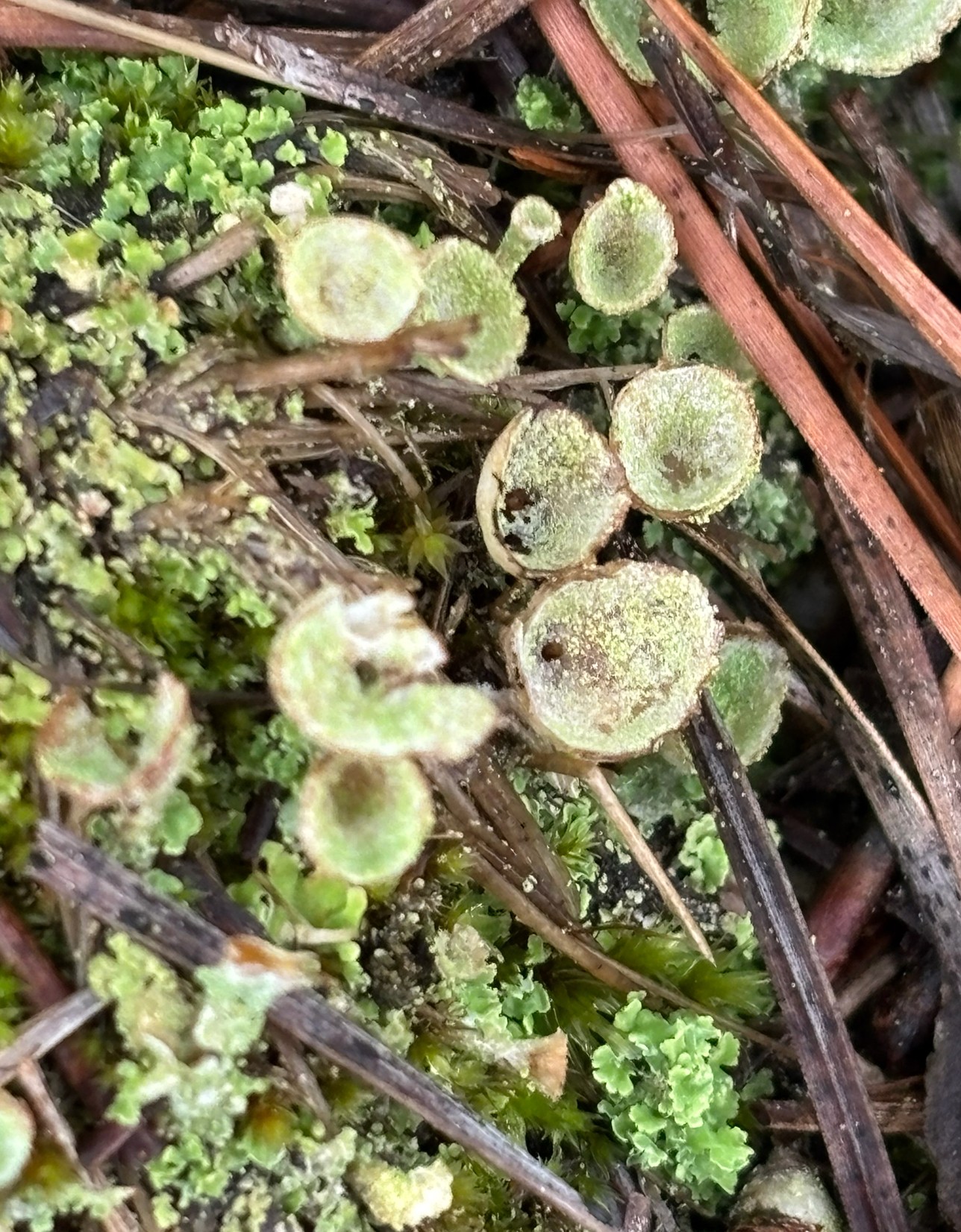
And two Cladonia that were producing apothecia, scaly green cups in C. chlorophaea and red lumps in C. cristatella, the British Soldier lichen.

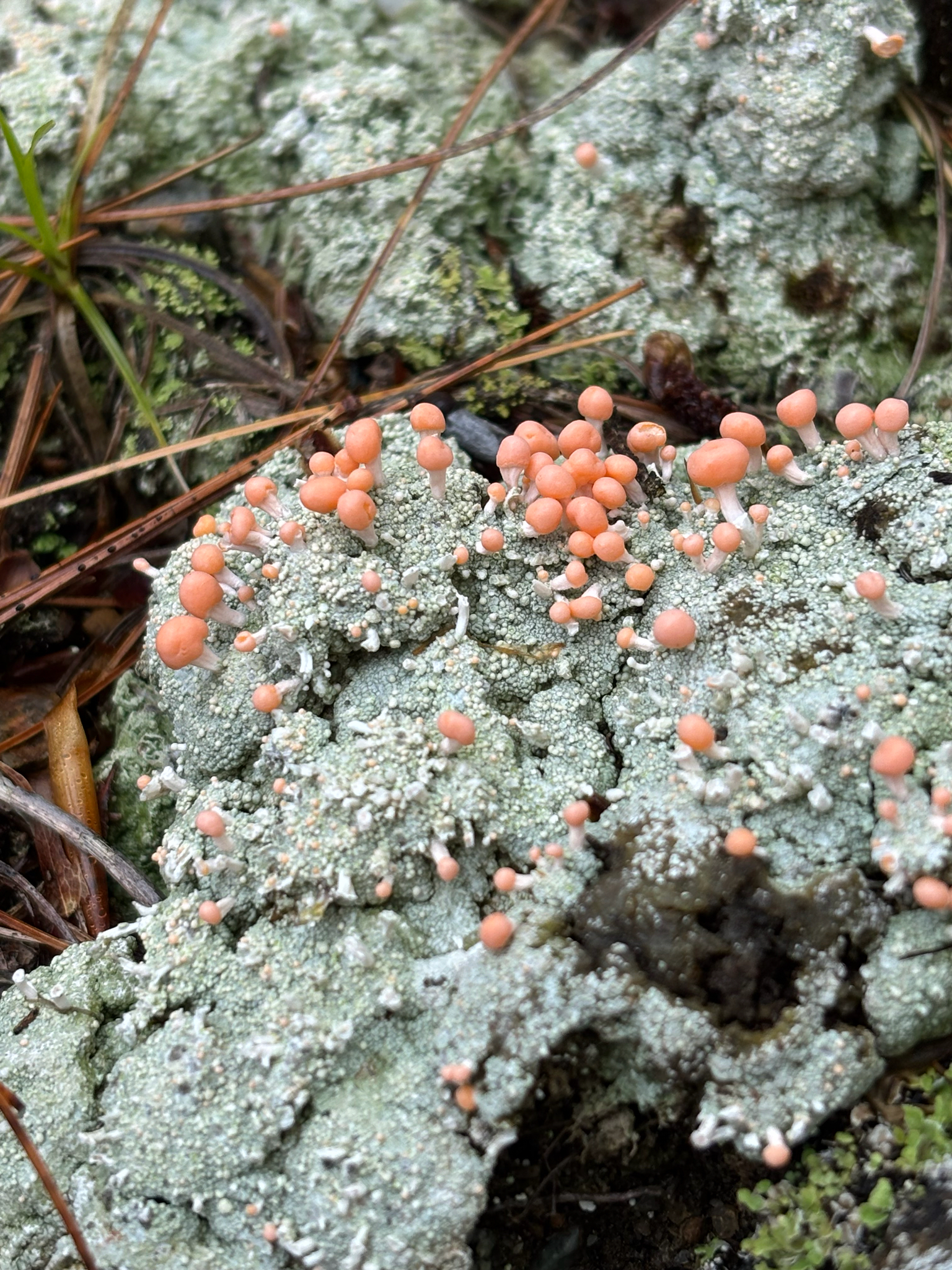
Finally, here are two crustose lichens in different lichen families that caught my eye by having interesting apothecia. The first is Stereocaulon saxatile (rock foam), and the second is Dibaeis baeomyces (pink earth lichen).