Fall in central and southern California is tarantula season. These largest of North American spiders are a treat to see in grasslands, woodlands and deserts—places where, this time of year, many plants and animals are laying dormant, waiting for rain.
All native tarantulas in California are in the genus Aphonopelma. They live in silk-lined burrows, waiting in ambush for their invertebrate prey to wander by. However, every fall, when they are somewhere around 8-12 years old, a male tarantula develop wanderlust. He travels across the landscape, looking for love. Once he finds the burrow of a female, he politely knocks at the door by tapping the ground with his legs and vibrating his body. If she’s interested, she’ll come outside to mate, storing his sperm in specialized structures under her abdomen called spermatheca until she lays eggs in spring.
When encountered on their quest, tarantulas are surprisingly docile. Despite having venom, they won’t bite in self-defense. If you want to get a closer look at one, you can put your hand out flat in front of him and he will walk right onto it. It’s important, however, to keep him low to the ground, because a drop from chest height is likely to damage his fragile body. If he does feel threatened, tarantulas do have a cool move. They can fling urticating hairs from their abdomen onto would-be attackers with their back legs.
The fall class has set a collective goal of seeing 50 tarantulas over the 50-day run. It’s an ambitious total, but they are present at all of the reserves we’ll be visiting. So far we’ve seen 10. Here are two great examples, one from Blue Oak Ranch Reserve, and on from the Granite Mountains in the Mojave Desert.
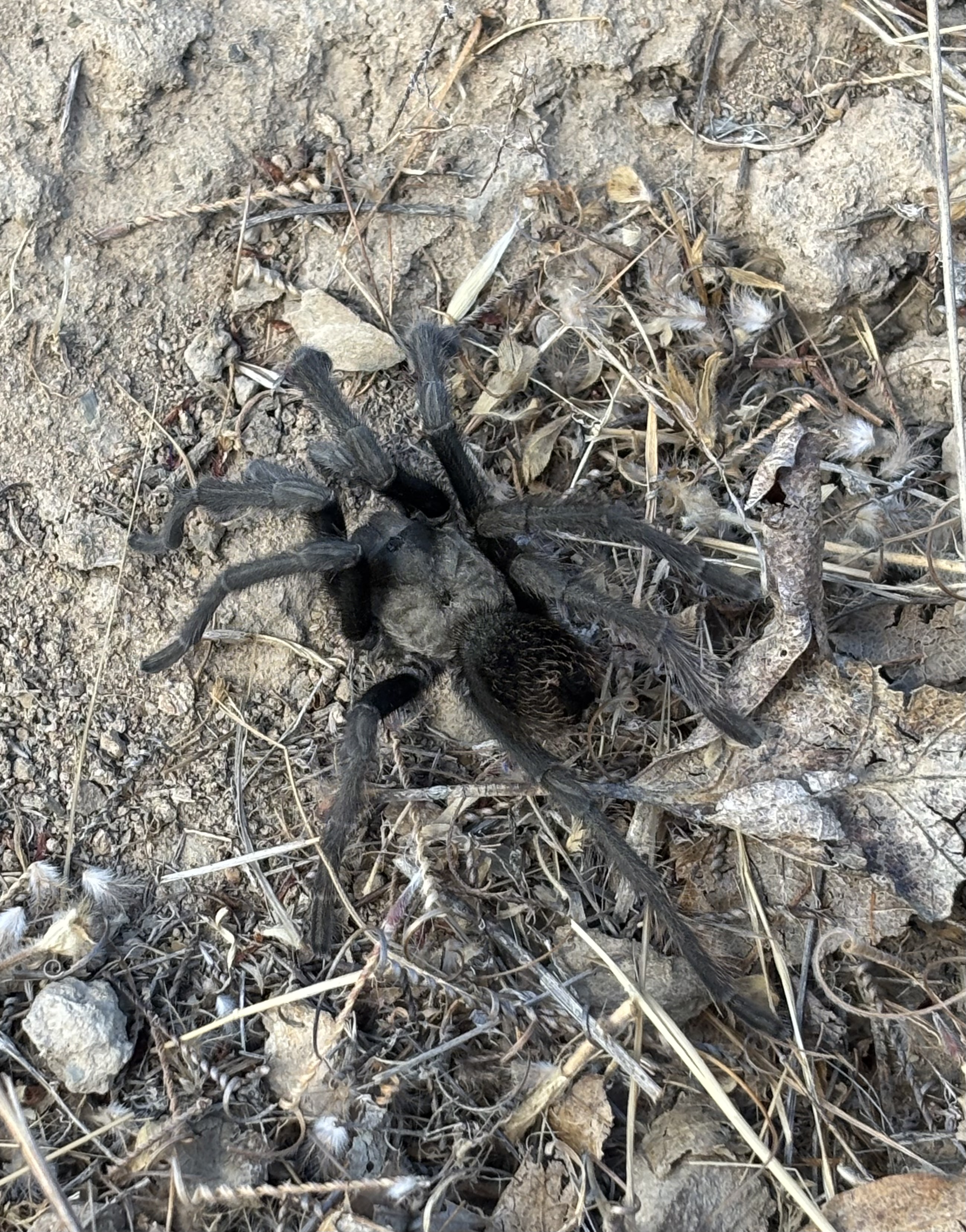
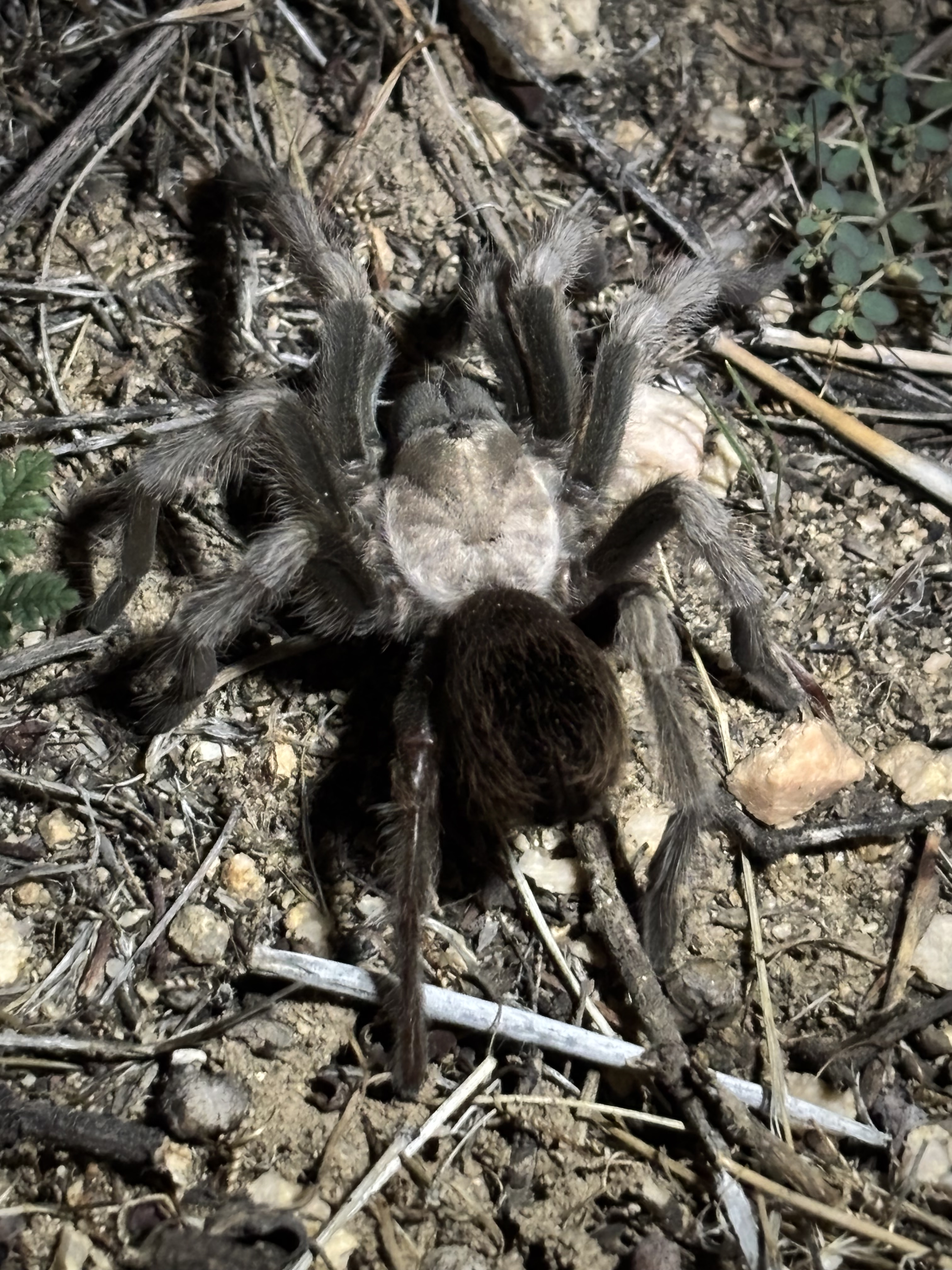
Despite the vast difference in habitat (and hundreds of miles that separate them), the most recent phylogeny of the genus lumps them as the same species, Aphonopelma iodius. Other species are possible at Sedgwick later in the trip. I’d wish these fellows good luck, but regardless whether or not they find a mate, it’s a one-way journey. As the season goes on, we’ll see tarantulas with skinnier and skinnier abdomens. While females can live decades safely tucked away in their burrows, after fully depleting their reserves on their perilous journey, all males will die.
 botanicalramblings