The California Ecology and Conservation class I’m teaching has moved south to Rancho Marino Reserve on the coast of San Luis Obispo County. April is my favorite time of year for wildflowers here, and the serpentine hills in the area are a top ten botanical destination in the state. So, with the students busy working on their research projects, I snuck away for a rare plant treasure hunt.
With over 5,000 native plant taxa in the state, despite all my time botanizing here, I’m not going to run out of new flowers to meet any time soon. However, in places like SLO, where I’ve spent a bunch of time, almost all the plants are familiar to me. It takes some research and planning to make first encounters. On this trip, I decided to hike the Reservoir Canyon loop trail, where there were records of two plants that would be new to me—Layia jonesii and Fritillaria ojaiensis.
Layia is a genus of 15 species in the Aster family. All of them are found in California and half of them are rare or range restricted. Their common name, Tidy Tips, refers to the neat appearance of the ray flowers, which each have three perfectly even lobes that often appear dipped in white. To me, they are one of the flowers that best emblemize spring in the state. They are low-growing, delicate annuals that love open grasslands and woodlands. Given the right conditions, they can carpet whole areas. My first encounter was with Layia platyglossa, which I saw on a trip to Fort Ord Reserve in coastal Monterrey my first spring in the state. There, huge fields of them carpeted the sandy soil while tons of native bees and butterflies visited. Among many subsequent encounters, I’ve seen L. fremontii ringing the edges of vernal pools in Merced, wondered at L. munzii as a large component of a spectacular superbloom in the Carrizo Plain, and successfully searched for the inconspicuous L. carnosa on coastal dunes.
These past encounters were on my mind as I began my hike, heading toward a location where the rare Layia jonesii had been previously collected. Upon arrival, I immediately found a lovely patch of Layia, and snapped some photos! I was already one for two!
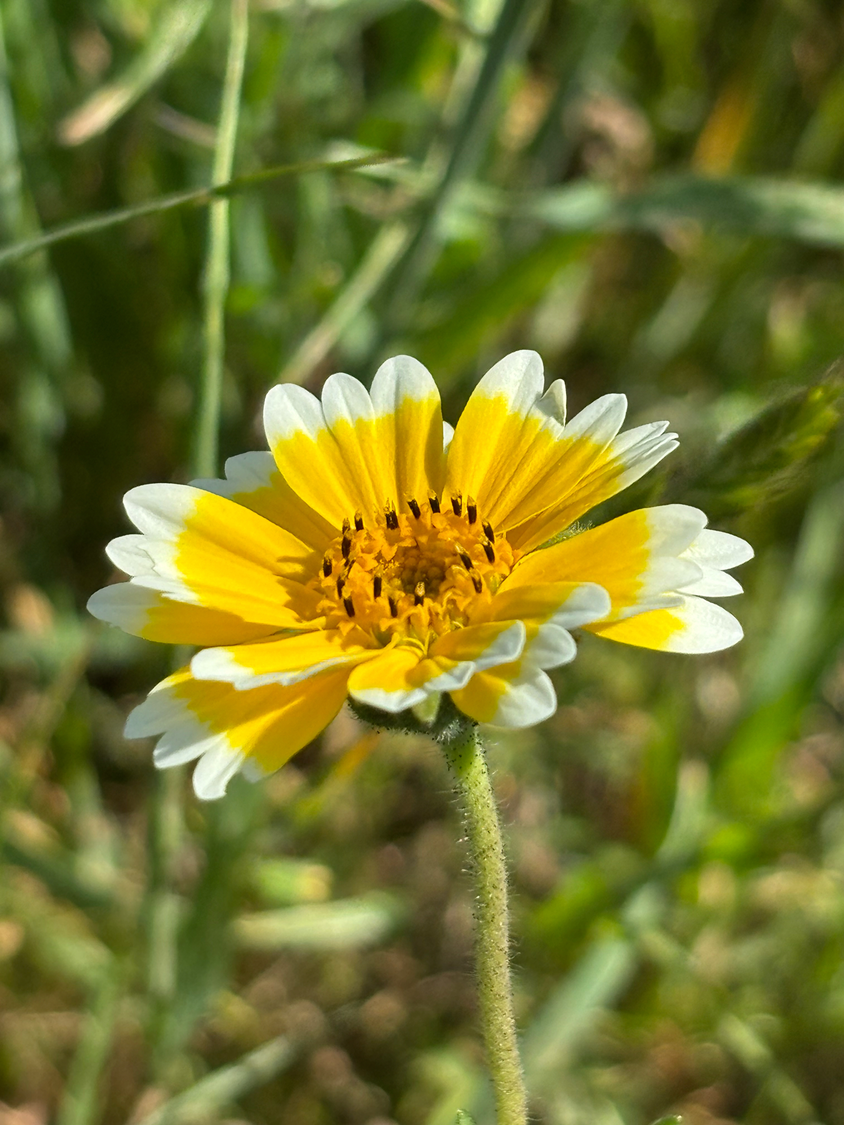
I next headed up the steep side of the mountain to the GPS coordinate where a friend had seen Fritillary ojaiensis just last week. Despite having looked for this species a couple times before without success, I figured this would be a slam dunk! Fritillaria, unlike Layia is not a particularly California genus. Although there are 20 species in the state, there around 100 others distributed across much of Europe and temperate Asia (although, strangely, not in Eastern North America). The name means “dice box” in Latin, which may refer both to the dark spotted petals of some of the species, or to the boxy shape of the fruit. My first Fritillary was a single Fritillaria affinis plant that was in bloom on the path between my office and the classroom where I was teaching on the UC Santa Cruz campus. I quickly fell in love. A couple times a week, I checked on its progress from bud to flower to fruit.
Since then, I’ve logged many hours tracking down most of the Californian species. They can be quite tricky to pin down, often blooming very early in spring, and skipping the bloom in some years by staying as a dormant bulb or a single basal leaf. The beauty, diversity, and weirdness of their flowers is worth the trouble, though. Check out my Fritillary appreciation post, which has photos of the past triumphs. Arriving at the GPS location, I immediately located the plants! However, they had all just finished flowering, or didn’t try to flower this (dry) year.

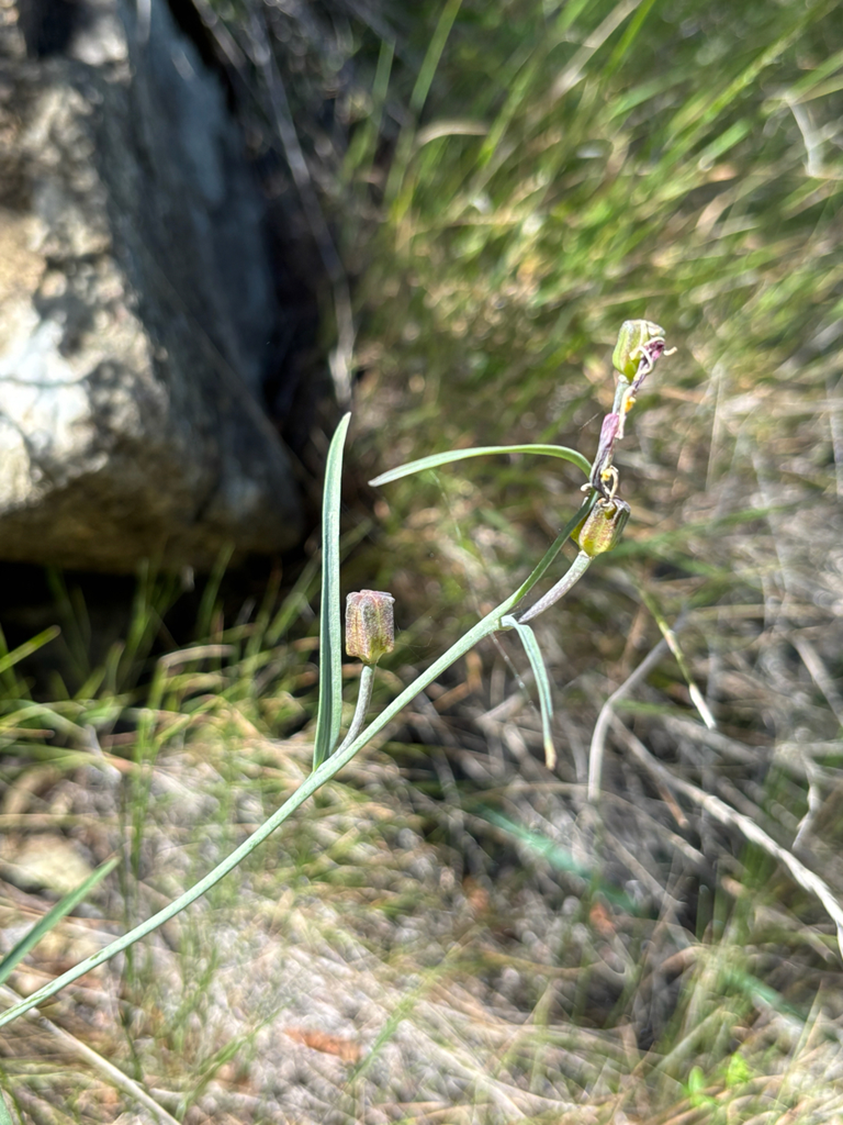

While the fruits and leaves are cool, I really wanted to see the beautiful maroon and yellow spotted flowers. It was okay. I had a back up spot. I decided to hike the rest of the loop before driving across town to it. I continued up the hill, reaching a beautiful wild-flower filled meadow at the top. There were a bunch more Layia in bloom. They looked exactly like the individuals from the L. jonseii spot, but that species wasn’t supposed to occur up here. Uh, oh. I took the time to carefully identify a plant using a dichotomous key, and it came out to the common Layia platyglossa. The pappus (fuzzy bit on top of the seeds) in L. jonesii was supposed to be lanceolate (wide at the base), but in these plants it was linear.

I looped back to the first location and worked the key there. Also Layia platyglossa. I hadn’t found my target, after all! I continued to search the area now that I knew what trait to focus on (something I should have looked up earlier!), but found patch after patch of L. platyglossa. I was about to give up when I noticed a patch in a depression in the meadow that seemed to be a bit farther along in flowering. I checked the fruits—lanceolate pappus!
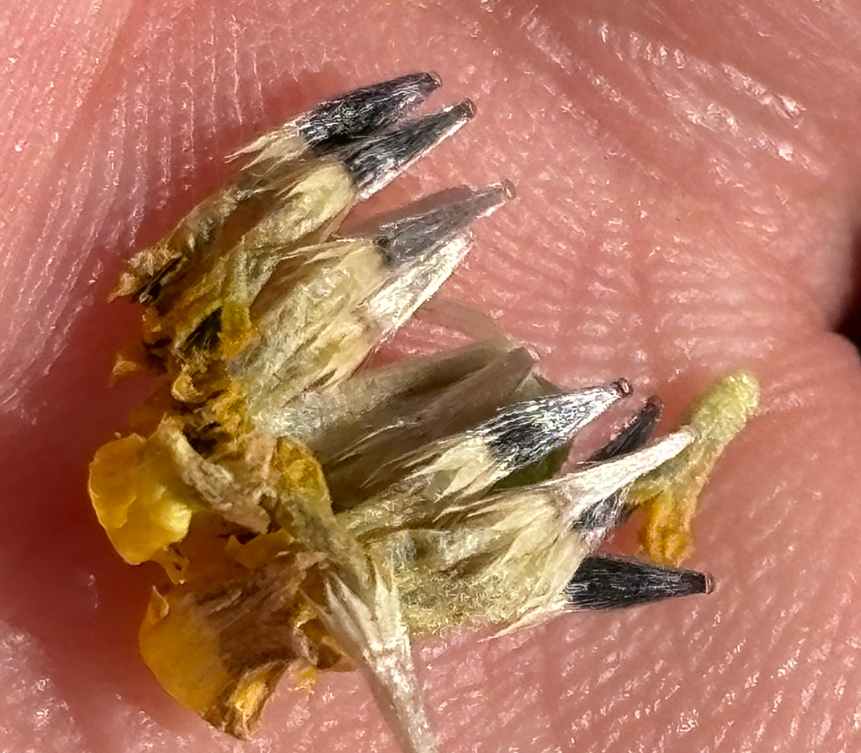
Here’s a shot of the flower of the rare Layia jonesii, known only from about a 20 mile stretch of coastal San Luis Obispo County. Maybe you can forgive my initial poor identification!

I grabbed a nearby L. platyglossa flower for direct comparison, and with the side-by-side, a couple differences do show up. The disk buds are a different color and the phyllaries are a different shape—that’s some real plant nerd content for you.
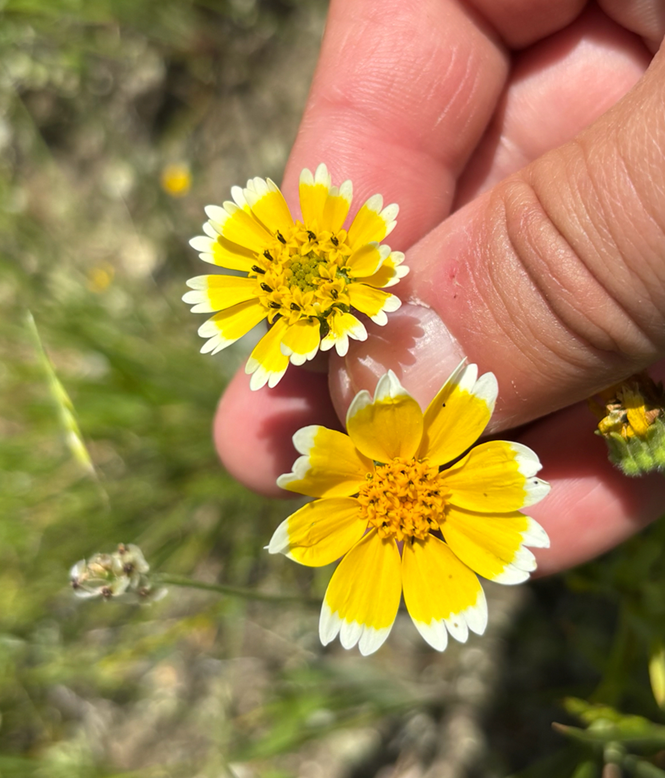

In the two photos, L. jonesii is top and right, and L. platyglossa is bottom and left.
I finished my hike and headed over to the other nearby spot that had Fritillaria ojaiensis records. Despite searching up and down a two mile stretch of canyon for a couple hours, I once again only found plants in fruit and plants that didn’t bloom this year. There was a moment when I got excited over a blooming Fritillaria biflora (Chocolate Lily), but this species is different enough that I didn’t have a repeat of the Layia fiasco!
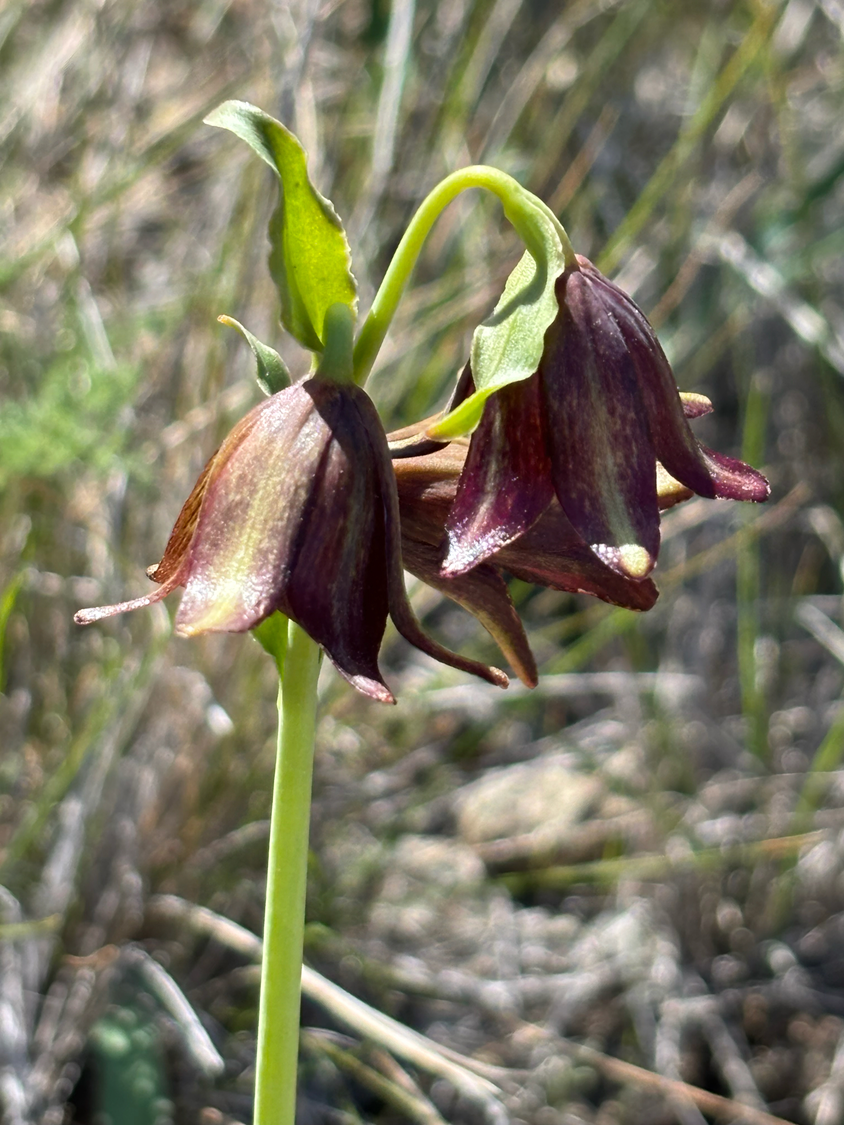

I’ll have to try again for a F. ojaiensis flower earlier in the season or in a wetter year! But even a botany trip with some missed targets is well worth it. Along the way, I saw so many amazing wildflowers, including some that were quite rare. Many of them brought back magical memories of California spring’s past.
 botanicalramblings